
"Conceptual illustration depicting modern energy infrastructure with renewable energy sources, transmission networks, and smart grid technology."

Energy Infrastructure: The Critical Backbone of Modern Power Systems

Energy infrastructure forms the backbone of modern civilization, encompassing a vast network of physical assets, digital systems, and operational frameworks that power our world. From traditional power plants and modern power grid systems to renewable energy installations and distribution networks, this critical infrastructure represents one of humanity’s most complex and essential engineering achievements. As nations transition toward sustainable energy solutions and face evolving security challenges, understanding…


Diverse group of construction professionals reviewing safety procedures and conducting training on an active construction site, with various elements representing safety compliance principles.

Construction Safety Compliance That Actually Works: The 7 Essential Elements

In today’s high-stakes construction environment, mastering safety compliance isn’t optional—it’s imperative for project success and workforce protection. The seven fundamental compliance elements form the backbone of every effective construction safety program, directly impacting project outcomes, worker well-being, and organizational sustainability. Recent industry data reveals that companies implementing all seven elements experience 48% fewer safety incidents and save an average of…

A conceptual split-screen image showing remote construction managers in a virtual meeting with BIM models, and on-site workers using tablets and augmented reality devices, symbolizing the integration of remote and on-site construction teams for better collaboration and efficiency.

Remote Teams Are Transforming Construction: Here’s How to Make Integration Work

Revolutionize construction operations by integrating remote and on-site teams through cloud-based project management platforms, enabling real-time collaboration across multiple locations. Deploy advanced workforce management systems that synchronize scheduling, resource allocation, and performance tracking, dramatically reducing coordination gaps and increasing project efficiency by up to 35%. Implement standardized digital communication protocols across departments, ensuring seamless information flow between field workers, project managers, and office staff while maintaining strict compliance with industry regulations and safety standards…

"Construction professionals using digital tablets to review BIM models on-site, surrounded by cranes and structures, illustrating the integration of digital tools in construction project management."

These Digital Tools Are Revolutionizing Construction Project Management

Transform your construction project delivery with today’s advanced digital management platforms, where real-time collaboration and data-driven decision-making have become essential for maintaining competitive edge. Leading construction firms have reported up to 45% improvement in project completion times and 35% reduction in documentation errors after implementing comprehensive digital project management solutions.
Modern digital tools seamlessly integrate critical functions – from BIM coordination and document control to resource allocation and financial tracking – creating a unified ecosystem that enhances …

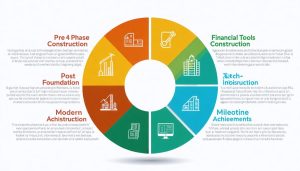
"Illustrative diagram showing the 4-phase model of modern construction finance, with each phase represented by a segment depicting financial tools and milestone achievements."

Modern Construction Finance: How The 4-Phase Model Transforms Project Funding

The four phases of construction represent critical milestones that determine project success and directly impact how developers secure financing for construction projects. From initial planning to final handover, each phase demands precise financial orchestration and milestone-based funding releases. Modern construction projects integrate advanced modeling technologies and risk management protocols across these phases, transforming traditional sequential workflows into dynamic, interconnected …

A visionary construction site illustrating the integration of 5G and edge computing with cranes and autonomous machinery connected through digital data streams, emphasizing real-time connectivity and data management.

5G Edge Computing Transforms Construction Site Data Management

The convergence of 5G networks and edge computing is revolutionizing construction site operations, enabling real-time decision-making and unprecedented levels of automation. By processing data closer to its source, construction firms can now analyze massive streams of IoT sensor data, coordinate autonomous equipment, and manage safety systems with near-zero latency. This technological fusion delivers the robust connectivity and computing power needed for next-generation construction applications – from AI-powered quality control to augmented reality project visualization.
Recent implementations at major infrastructure projects…

Aerial view of S&P Global's new headquarters in Manhattan, displaying the building's double-skin façade, green roof, and cutting-edge sustainable architectural elements.

S&P Global’s New Building Sets Industry Standards for Sustainable Construction

S&P Global’s new headquarters in Manhattan stands as a testament to next-generation sustainable architecture, merging cutting-edge design with environmental responsibility. Rising 64 stories above the vibrant Financial District, this LEED Platinum-certified structure represents a pivotal shift in corporate building standards and smart city development.
The 1.4 million-square-foot tower exemplifies how modern commercial architecture can simultaneously address climate challenges, workplace evolution, and urban integration. Its double-skin façade system reduces energy consumption by 40% compared to conventional buildings, …

Illustration of a futuristic city skyline with blockchain network nodes connecting various buildings, symbolizing integration of smart contracts and technology in the real estate sector.

Real Estate Blockchain Projects Transforming Property Management in 2024

Blockchain technology is fundamentally transforming real estate transactions, creating unprecedented opportunities for property developers, investors, and industry professionals. Blockchain technology in property development has already enabled over $1.4 billion in tokenized real estate assets, demonstrating its potential to revolutionize traditional property management systems.
Smart contracts now automate complex property transactions, reducing closing times from months to days while…

A conceptual illustration of a futuristic Dubai skyline featuring 3D-printed buildings, symbolizing architectural innovation and technological advancement in modern urban development.

Dubai’s Record-Breaking 3D Printed Building Revolution Transforms Construction

Dubai’s pioneering efforts in 3D-printed construction have revolutionized the building industry, positioning the emirate at the forefront of architectural construction innovations. In 2016, the city unveiled the world’s first 3D-printed office building, and since then, has committed to an ambitious target: constructing 25% of all new buildings using 3D printing technology by 2030.
This transformative approach has reduced construction costs by 50-70%, shortened project timelines by up to …

Construction site with workers wearing full PPE, including hard hats and safety vests, alongside a manager reviewing safety plans. The scene also features scaffolding with fall protection and a digital dashboard representing real-time safety data monitoring.

OSHA’s Construction Safety Standards: What Every Project Manager Must Know in 2024

Construction safety compliance saves lives and protects businesses, making OSHA construction regulations the cornerstone of modern jobsite management. Each year, preventable accidents cost the construction industry billions in losses, medical expenses, and productivity disruptions. Yet implementing comprehensive safety standards reduces workplace incidents by up to 85% while delivering measurable returns on investment through decreased insurance premiums and improved operational efficiency.
Recent …