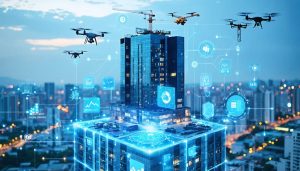
Conceptual illustration of a smart city with a digitally-integrated building, featuring visible IoT connections and AI interfaces, illustrating the transformation in property management through advanced technology.

How AI and IoT Are Reshaping Modern Property Management

The rapid acceleration of the PropTech revolution has fundamentally transformed how construction professionals approach building design, development, and management. As artificial intelligence, digital twins, and advanced automation reshape industry standards, construction leaders must adapt to maintain competitive advantage. These five technological breakthroughs represent more than incremental improvements—they mark a paradigm shift in how we conceptualize, execute, and optimize …

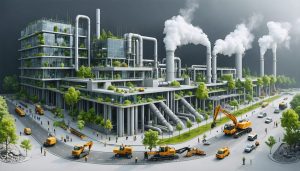
A sustainable construction site showcasing eco-friendly practices with recycling stations and workers employing responsible material sourcing and waste management techniques in alignment with LEED Materials and Resources credits.

LEED Materials and Resources: How Smart Material Choices Drive Sustainable Construction

The Materials and Resources (MR) category in LEED certification stands as a cornerstone of sustainable construction, driving transformative changes in how buildings source, utilize, and dispose of materials throughout their lifecycle. As construction waste continues to occupy valuable landfill space and raw material extraction depletes natural resources, LEED’s MR credits provide a strategic framework for implementing circular economy principles in building projects. Project teams pursuing LEED certification can earn up to 13 points through careful material selection, waste reduction strategies, and responsible procurement practices …

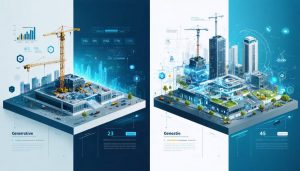
A creative digital illustration split into two sections; the left shows a futuristic construction site with graphs and charts representing predictive AI's analytics, while the right features constantly evolving architectural designs symbolizing generative AI's creative potential in construction.

Generative AI Transforms Construction Forecasting: What Project Managers Need to Know

The rapid evolution of AI in construction presents construction professionals with a critical decision: choosing between generative and predictive AI systems for project optimization. While predictive AI analyzes historical data to forecast outcomes like project delays and cost overruns, generative AI creates new solutions by synthesizing existing design patterns, material specifications, and construction methodologies. This fundamental distinction drives vastly different applications across …

Futuristic smart building with digital interface overlay illustrating interconnected building automation systems in a modern urban environment.

Open Source BAS: The Future of Smart Building Control Is Already Here

Open source building automation systems are revolutionizing how modern facilities operate, offering unprecedented control and cost efficiency without proprietary constraints. As AI-powered building systems continue to evolve, open-source platforms have emerged as robust alternatives to traditional vendor-locked solutions, enabling facility managers to integrate diverse systems seamlessly while maintaining complete control over their infrastructure.
These systems …

Futuristic construction site with diverse workers using eco-friendly materials and digital dashboards, promoting teamwork and sustainability in the construction industry.

Why Sustainable Employee Engagement Actually Sticks (New Research)

Transforming sustainable engagement from buzzword to business reality demands a fundamental shift in how construction firms approach environmental stewardship and employee involvement. Industry leaders who successfully maintain long-term commitment to sustainability initiatives consistently demonstrate three critical elements: measurable impact tracking, embedded organizational values, and clear pathways for employee contribution.
Recent data from leading construction firms reveals that projects with high sustainable engagement scores achieve 23% better resource efficiency and maintain 34% higher employee retention rates. This …

Split-screen image juxtaposing a construction blueprint and cranes on one side with a Gantt chart and project management tools on the other, illustrating the essential balance between building projects and managing them effectively.

Project vs. Project Management: Critical Distinctions That Impact Construction Success

In today’s complex construction landscape, distinguishing between projects and project management represents a fundamental challenge that directly impacts operational success and profitability. While a project encompasses specific deliverables, timelines, and objectives—such as constructing a commercial building or developing an infrastructure system—project management orchestrates the intricate processes, methodologies, and leadership required to bring these visions to reality. This distinction becomes particularly crucial in construction, where multiple stakeholders, substantial resources, and strict regulatory requirements …

Conceptual illustration of blockchain nodes integrated with construction site security features, including access control points, material tracking systems with QR codes, and surveillance cameras.

Blockchain Infrastructure Companies Are Revolutionizing Construction Security

Blockchain infrastructure companies are revolutionizing construction project security through decentralized validation systems and immutable data records. As the construction industry grapples with increasing cyber threats and data integrity challenges, these specialized firms are deploying robust solutions that safeguard critical infrastructure assets and project information. Understanding blockchain security fundamentals has become essential for construction professionals seeking to protect …

Conceptual illustration of a futuristic smart city demonstrating interconnected green spaces, modular buildings, and smart grids, highlighting circular economy principles.

How Smart Cities Are Revolutionizing Urban Design Through Circular Economy

Urban planners worldwide are revolutionizing city development through circular economy in urban construction, delivering measurable environmental and economic benefits. Advanced modeling software now enables precise carbon footprint calculations for entire districts, while integrated green infrastructure systems reduce energy consumption by up to 40% compared to traditional urban designs. Leading municipalities have demonstrated that implementing bio-based materials …

A futuristic smart building with a network of IoT devices and sensors, showcasing energy management metrics on a digital display and dynamic adjustments of HVAC and lighting systems.

Smart IoT Energy Systems Are Transforming Modern Building Management

Transform industrial energy consumption through Internet of Things (IoT) integration, revolutionizing how modern facilities monitor, analyze, and optimize their power usage. Advanced IoT sensors, coupled with sophisticated building energy management systems, now deliver unprecedented control over energy infrastructure, reducing operational costs by up to 30% while enhancing sustainability metrics.
Real-time data analytics from interconnected smart devices enable facility managers to …

Artistic portrayal of a modern construction site utilizing carbon capture technology, depicting machinery capturing emissions and transforming them into sustainable building materials.

Carbon Capture in Construction: How New Technology is Revolutionizing Sustainable Building

As the construction industry grapples with its significant carbon footprint, carbon capture and utilization (CCU) emerges as a transformative solution for sustainable building practices. This innovative technology not only captures CO2 emissions from construction processes but converts them into valuable products, from enhanced concrete materials to sustainable building components.
Recent advancements in CCU technology have revolutionized how construction professionals approach carbon management, offering practical pathways to achieve net-zero goals while maintaining project efficiency. By integrating CCU systems into existing …