
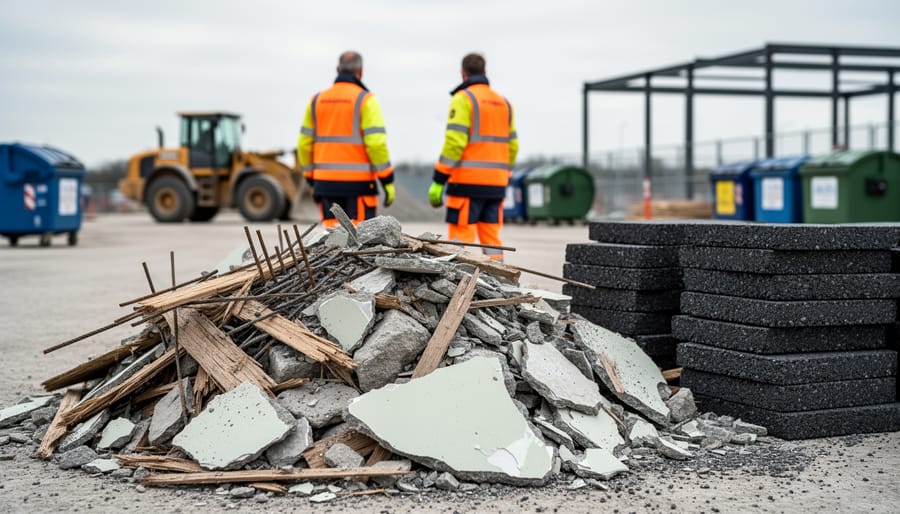
Recycling construction materials refers to the systematic recovery, processing, and reuse of waste generated during building, renovation, and demolition activities to divert resources from landfills and reintegrate them into new construction projects. The practice transforms job site debris like concrete, metals, wood, drywall, and asphalt into valuable feedstock for future builds.
Construction and demolition waste accounts for roughly 600 million tons annually in the United States alone, representing nearly double the volume of municipal solid waste. That staggering figure positions the construction sector as both a significant contributor to landfill strain and a prime opportunity for circular economy implementation. For project managers and sustainability coordinators, material recovery programs are no longer peripheral concerns. They directly affect project budgets, regulatory compliance, LEED certification pathways, and increasingly, client expectations.
This article examines how recycling systems function on active job sites, identifies which materials offer the highest recovery value, and details the economic and regulatory frameworks shaping adoption rates in 2026. Through expert interviews with materials engineers and a detailed case study of a commercial redevelopment project that achieved 89% waste diversion, we provide the operational blueprints professionals need to integrate recycling protocols into procurement and project planning. You’ll find practical guidance on material taxonomy, processing logistics, cost implications, and permitting requirements that affect everything from bid specifications to final inspections.
What Construction Material Recycling Means for the Industry
Construction material recycling is the systematic recovery, sorting, and processing of building materials from demolition, renovation, and construction sites for reintegration into new projects. Rather than routing debris to landfills, this practice identifies materials with reuse value, concrete, steel, wood, asphalt, brick, gypsum, and glass, and channels them through processing facilities that prepare them for subsequent applications. The approach shifts construction waste from a disposal problem into a resource stream, reducing both environmental impact and raw material costs.
This differs fundamentally from traditional waste management, where mixed debris is hauled away and buried. Material recycling requires planning at the design stage, trained personnel for on-site separation, and established markets for recovered products. It operates within the broader framework of a circular economy where materials maintain value across multiple lifecycles rather than following a linear extract-use-discard path.
- Construction and Demolition (C&D) Waste
- Material debris generated during building, renovation, or teardown activities, including concrete, lumber, metals, drywall, roofing, and packaging. C&D waste represents the largest component of solid waste in many jurisdictions, making it a priority target for diversion programs.
- Source Separation
- The practice of sorting materials by type at the construction or demolition site before they are hauled away. This method yields cleaner material streams and higher recovery rates compared to mixed-waste processing.
- Aggregate Recycling
- The crushing and grading of concrete, asphalt, and masonry into gravel-sized particles for use in road base, new concrete mixes, or drainage applications. Recycled aggregate often meets the same performance specifications as virgin stone.
- Salvage
- The careful removal and preservation of intact building components such as doors, windows, fixtures, and architectural elements for direct reuse. Salvage maximizes material value by avoiding reprocessing altogether.
- Deconstruction
- The selective dismantling of buildings to recover materials in usable condition, as opposed to mechanical demolition that produces mixed rubble. Deconstruction is labor-intensive but yields higher-quality materials and greater diversion rates.
For construction firms in 2026, recycling has moved from voluntary initiative to operational standard. Green building certifications require documentation of material diversion, landfill tipping fees continue to rise, and procurement specifications increasingly call for recycled content. Understanding the terminology and process architecture is now a baseline competency for project managers and sustainability coordinators responsible for waste planning and regulatory compliance.
How Construction Material Recycling Works
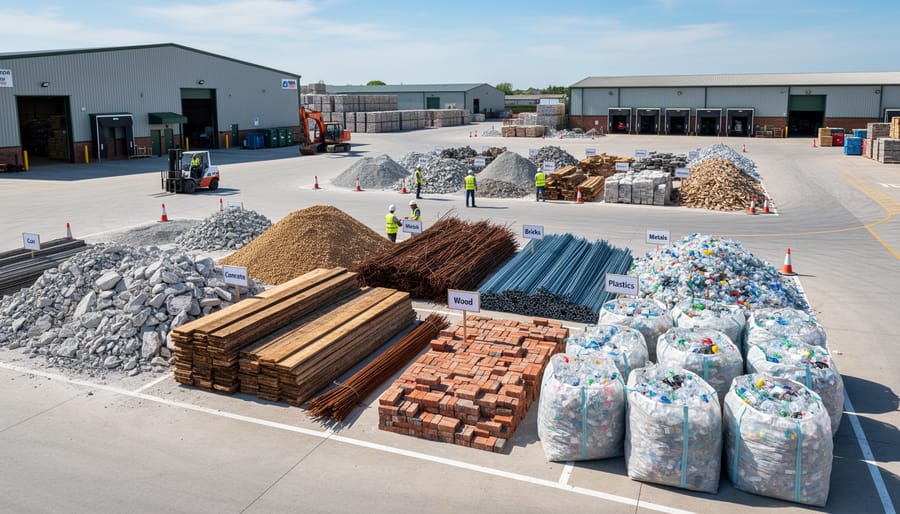
On-Site Separation vs. Off-Site Processing
On-site separation requires crews to sort materials at the point of demolition, steel into one container, concrete into another, wood separately, before hauling them to processors. This approach yields cleaner material streams and higher recovery value because contaminants stay minimal. It works best on projects with adequate space, predictable material volumes, and crews trained to follow sorting protocols. The trade-off is increased site footprint for multiple bins, potential scheduling friction, and reliance on worker discipline to maintain separation quality.
Off-site processing centralizes sorting at a dedicated facility where mixed debris arrives and machinery or manual labor diverts materials afterward. Construction managers choose this route when site constraints limit bin placement, when demolition speed takes priority, or when local processing infrastructure is robust. The advantage is operational simplicity on-site and faster debris removal. The downside is higher contamination rates, lower material grades, and steeper processing fees that can erode economic returns.
The decision hinges on project scale, local recycling infrastructure, contract requirements, and how recycling integrates with broader sustainability strategies. Large demolitions with valuable metal content typically justify on-site separation, while smaller renovations in dense urban areas lean toward mixed off-site processing.
Quality Control and Material Certification
Testing protocols for recycled construction materials begin at the processing facility, where operators conduct physical and chemical analyses to verify composition, strength, and contamination levels. Concrete aggregate undergoes gradation testing and Los Angeles abrasion tests to confirm it matches specifications for structural or road base applications. Metal recyclers use spectrometry to verify alloy composition and detect prohibited substances.
Third-party certification programs such as LEED v5 material tracking and local building authority approvals add credibility and simplify the procurement process. Engineers typically require compressive strength tests for recycled concrete aggregate and tensile tests for reclaimed steel before approving their use in load-bearing applications.
Material certification documents trace the source, processing method, and test results for each batch. These certificates become part of the project’s compliance record, demonstrating that recycled inputs meet the same performance standards as virgin materials. Progressive jurisdictions now mandate certified recycled content for public works contracts, creating market pressure for rigorous quality assurance. Without documentation proving equivalence to code requirements, recycled materials face rejection during inspection, regardless of actual performance capability.
Categories of Recyclable Construction Materials
Concrete and Masonry
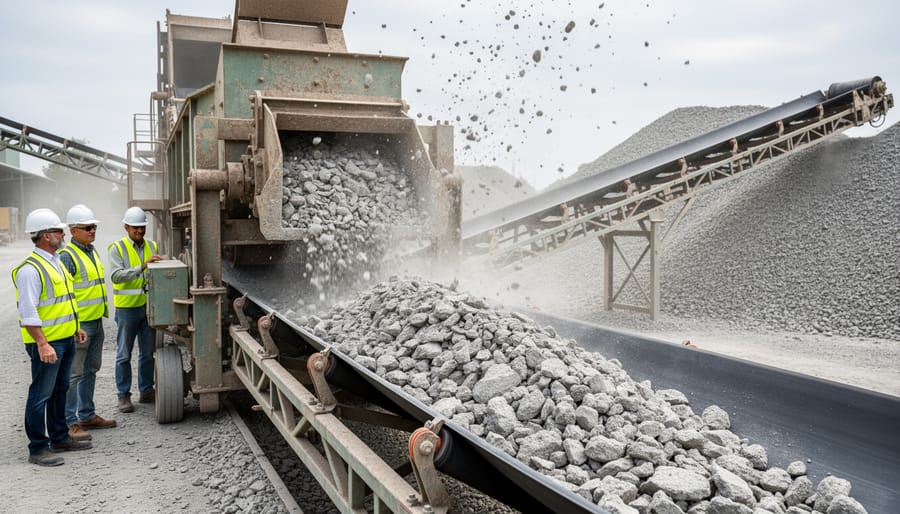
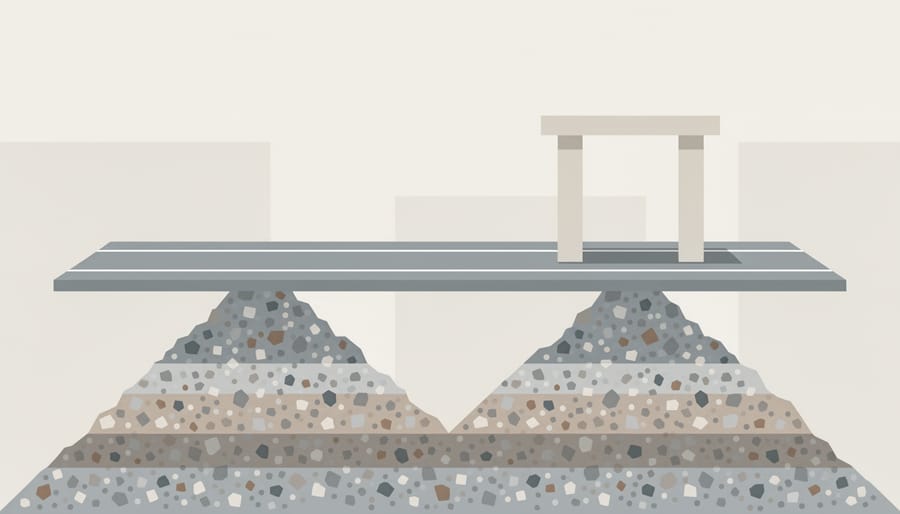
Concrete, brick, and block materials represent the highest volume and most straightforward recycling stream in construction demolition. Concrete rubble is crushed on-site or at specialized facilities using jaw crushers, impact crushers, or mobile crushing units that reduce the material to graded aggregate ranging from fine sand to base-course stone. The resulting recycled concrete aggregate (RCA) typically replaces virgin stone in road sub-base, parking lots, and pipe bedding, where structural specifications are less stringent than in structural applications. Many transportation agencies now specify RCA for highway base layers, and recycled concrete aggregate uses have expanded to include new concrete mixes at replacement ratios up to 30 percent, though engineers must account for higher absorption rates and slightly reduced strength compared to natural aggregate. Brick and concrete masonry units follow similar processing routes, with clean material commanding premium prices for landscaping projects and decorative applications where the weathered texture adds aesthetic value.
Metals (Ferrous and Non-Ferrous)
Steel, copper, and aluminium dominate the metal recycling stream on construction sites because they retain material value through multiple recovery cycles and command strong market prices. Ferrous metals, primarily structural steel beams, rebar, and metal decking, are separated using magnetic systems either on-site or at processing facilities, then melted and reformed with minimal quality degradation. Non-ferrous metals including copper wiring and piping, aluminium window frames, and brass fixtures require manual sorting but yield higher per-ton revenue. Most recyclers pay for scrap metal delivery, creating a direct cost offset that makes metal recovery economically straightforward compared to other material streams. Processing requires no specialized treatment beyond cutting oversized pieces to fit furnace specifications.
Wood and Timber
Wood represents one of the most versatile recyclable resources on demolition and renovation sites, with diversion potential exceeding 80% when proper protocols are followed. Dimensional lumber from framing, sheathing, and structural members can be salvaged intact for direct reuse if free from contamination, splitting, or severe weathering. Salvaged beams, joists, and planks often command premium prices in architectural reclamation markets and provide immediate value as sustainable materials in adaptive reuse projects. Material unsuitable for structural reapplication enters chipping streams for manufactured board production, landscape mulch, biomass fuel, or composting operations. Engineered wood products like plywood, oriented strand board, and laminated veneer lumber present contamination challenges due to adhesives and coatings, limiting their recycling pathways compared to solid-sawn timber. Treated lumber requires segregation and specialized handling to prevent preservative chemicals from entering mulch or compost products, with most jurisdictions mandating separate disposal protocols for chromated copper arsenate and creosote-treated wood.
Asphalt, Glass, and Gypsum
Asphalt pavement removed during road resurfacing or demolition ranks among the most recycled construction materials in the United States, with reclamation rates consistently exceeding 80%. Milled asphalt undergoes screening to remove contaminants, then is crushed and blended with virgin aggregate and binding agents to produce hot-mix asphalt for new paving projects. The material retains structural performance while reducing costs by 20 to 30% compared to all-new asphalt.
Glass from windows, doors, and curtain walls presents greater sorting complexity. Clear architectural glass can be remelted into new glass products, though mixing with treated or laminated variants complicates processing. Crushed glass finds use as drainage aggregate, sandblasting media, and decorative landscaping material. Contamination from frames, coatings, and sealants remains the primary barrier to higher diversion rates.
Gypsum wallboard recycling separates the paper facing from the calcium sulfate core through mechanical processing. The recovered gypsum returns to wallboard manufacturing or becomes a soil amendment in agriculture. Collection logistics and moisture sensitivity during storage limit adoption, though specialized processors in major metropolitan areas now handle significant volumes. New separation technologies using air classification and optical sorting are improving recovery efficiency and paper purity.
Applications and Uses in Modern Construction
Recycled construction materials have moved from niche demonstration projects to mainstream deployment across multiple building sectors in 2026. Infrastructure projects represent the largest consumer of recycled content, with crushed concrete and reclaimed asphalt routinely substituting for virgin aggregate in road construction, parking lots, and municipal utility work. Transportation departments now specify recycled materials in base layers and sub-base applications where performance testing has proven equivalency to quarried stone at lower cost.
Commercial and institutional buildings increasingly incorporate recycled content to meet green building certification requirements and corporate sustainability commitments. Structural engineers specify concrete mixes containing recycled aggregate for non-critical applications, while metal framing, roofing, and MEP systems regularly source recycled steel and aluminum. Office fit-outs and retail renovations create demand for architectural salvage, with reclaimed wood, brick, and decorative elements adding character while reducing embodied carbon.
Residential construction shows growing adoption in both single-family and multi-family developments. Recycled materials appear across common project types and applications:
- Road base and pavement using crushed concrete and reclaimed asphalt
- Structural fill and grading operations with processed demolition materials
- New concrete production incorporating recycled aggregate at 10-30% replacement rates
- Landscape materials including mulch from wood waste and decorative stone from crushed masonry
- Architectural salvage elements such as reclaimed timber beams, brick veneer, and vintage fixtures
Specialty applications have emerged in temporary works, where recycled materials serve as erosion control, site access roads, and construction staging areas before final disposition. Coastal and marine projects use clean concrete rubble for artificial reefs and shoreline stabilization. These diverse applications demonstrate that material recycling has expanded well beyond simple waste diversion to become an integrated component of project planning and material procurement across the construction industry.
Case Study: Large-Scale Recycling on a Commercial Demolition Project
The Riverside Quarter office complex demolition in Minneapolis provides a detailed view of how strategic planning translates material recovery targets into operational reality. When demolition contractor Midwest Reclaim began the project in February 2026, they committed to an 87% diversion rate, significantly above the regional average of 65% for commercial buildings.
Project manager Lisa Chen implemented a phased deconstruction approach rather than conventional demolition. “We started with a three-week soft strip of the interior, pulling out everything with resale or recycling value before heavy equipment touched the structure,” Chen explained. The team recovered 42,000 square feet of acoustical ceiling tile, 18 miles of copper wiring, and 320 aluminum window frames, all documented against sustainability metrics established during pre-demolition audits.
The logistics presented immediate challenges. On-site sorting required 14 separate material streams, each with dedicated containers and trained spotters to prevent cross-contamination. Concrete and brick accounted for 68% of total mass, processed through mobile crushing equipment stationed in the northwest corner of the site. This eliminated 340 truck trips to off-site facilities, cutting transportation costs by $47,000.
Economic analysis revealed nuanced results. Total demolition costs ran 11% higher than conventional methods, primarily due to extended timeline and additional labor. However, material sales generated $183,000 in revenue, and avoided landfill tipping fees saved another $94,000. Net project cost increased only 2.3% while delivering the contracted diversion rate.
The team encountered two significant obstacles. Asbestos-containing flooring mastic contaminated an estimated 15% of the concrete, requiring segregation and specialized disposal that reduced recyclable aggregate yields. Second, the original timeline underestimated coordination demands between deconstruction crews, material buyers, and haulers, resulting in a two-week extension.
Chen identified workforce training as the critical success factor. “You can design the perfect sorting plan, but if the operator loading the crusher doesn’t recognize contaminated material, your entire aggregate batch fails quality testing. We invested four days in crew education upfront, and it paid off in processing efficiency and minimal rejected loads.”
Economic and Regulatory Drivers in 2026
Construction material recycling has shifted from a voluntary practice to an economic and regulatory imperative. Landfill tipping fees in many metropolitan regions now exceed $100 per ton, making diversion financially attractive even before accounting for material resale value. Meanwhile, regulatory pressure continues to tighten: jurisdictions across North America and Europe have implemented mandatory recycling requirements for commercial projects above certain thresholds, with non-compliance triggering permit delays and financial penalties.
Green building certification systems drive significant recycling uptake. LEED v4.1 awards points for construction waste diversion, while newer frameworks like BREEAM and Living Building Challenge set even higher thresholds. For developers pursuing certifications that command rental premiums or satisfy investor ESG mandates, documented recycling performance is non-negotiable.
Material pricing trends further reinforce the economic case. Scrap metal values remain strong, making steel and copper recovery highly profitable. Crushed concrete aggregate typically sells at 30-50% below virgin aggregate prices, creating immediate savings for buyers while generating revenue for demolition contractors. Even lower-value materials like gypsum board can offset disposal costs when regional processing infrastructure exists.
Government incentives have proliferated. Tax credits for recycled-content materials, grant programs for recycling infrastructure, and procurement preferences for projects meeting diversion targets all strengthen the financial argument. Several states and provinces now link contractor prequalification to demonstrated waste management capabilities, effectively requiring recycling competence for public work.
The cumulative effect is a regulatory and economic environment where recycling is no longer optional for cost-conscious, compliant construction operations.
Common Questions About Construction Material Recycling
Construction managers often encounter similar concerns when evaluating recycling programs. Below are direct answers to the questions most frequently raised on job sites and in project planning meetings.
Are recycled construction materials actually cheaper than virgin materials?
Cost depends on material type, local markets, and transportation distance. Recycled aggregate and crushed concrete typically cost 10-30% less than virgin materials in urban areas with established processing facilities, while recycled steel maintains competitive pricing with virgin products due to well-developed scrap markets.
Do recycled materials perform as well as new materials?
When properly processed and certified, recycled materials meet the same performance standards as virgin materials. Recycled steel, for instance, is indistinguishable from virgin steel in structural applications, and recycled concrete aggregate performs comparably to natural aggregate in road base and non-structural concrete applications when graded correctly.
What are a contractor’s responsibilities for material separation on site?
Responsibilities vary by contract and jurisdiction, but generally include designating separate collection areas, training crews on sorting protocols, preventing cross-contamination, and coordinating hauling schedules with recycling facilities. Many municipalities now require waste management plans as part of the permitting process.
How do I source recycled materials for a new project?
Contact local recycling facilities directly, specify recycled content requirements in bid documents, or work with suppliers who stock certified recycled products. Many regional material exchanges and online platforms now connect contractors with available recycled materials from nearby demolition projects.
Contamination remains the primary concern for processors. Even small amounts of hazardous materials, treated wood, or incompatible substances can render entire loads unusable. Clear sorting instructions, visible signage at collection points, and regular crew briefings reduce contamination rates significantly. Contractors who implement pre-demolition material audits identify problem materials before they enter the waste stream.
Code compliance questions typically arise around structural applications. Building officials accept recycled materials that carry third-party certification confirming they meet applicable ASTM or local specifications. Documentation proving material origin, processing methods, and testing results satisfies most inspection requirements. When specifying recycled content, reference the same standards used for virgin materials rather than creating separate specifications.
Construction material recycling has evolved from a niche sustainability practice into a fundamental operational strategy for the modern construction industry. The convergence of rising landfill costs, tightening regulatory requirements, and demonstrable return on investment has shifted the economics decisively in favour of material recovery. Project managers who implement comprehensive recycling programs consistently report cost savings through reduced disposal fees and recovered material value, while simultaneously meeting green building certification requirements and reducing their projects’ environmental footprint.
The infrastructure now exists to support large-scale recycling across most material categories. Processing facilities can handle concrete, metals, wood, and other common demolition materials at scale, and markets for recycled aggregates and reclaimed materials have matured considerably. What once required exceptional effort and commitment has become routine for leading contractors.
For construction professionals planning projects in 2026, the question is no longer whether to incorporate material recycling, but how to optimize the process for maximum diversion and economic benefit. Viewing recycling as integral to project planning, not an add-on or compliance checkbox, positions firms to capture immediate financial advantages while contributing to the industry’s broader transition toward circular material flows and reduced carbon intensity.
