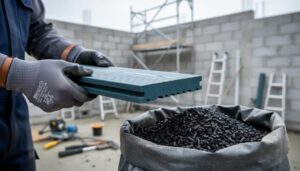
Gloved hands inspecting a recycled-plastic composite lumber board on a construction site near a concrete wall, with granulated plastic additive visible in the background.

Is Recycled Plastic Safe for Construction? What Professionals Need to Know

Recycled plastic in construction refers to post-consumer or post-industrial plastic waste that has been reprocessed into new building materials, ranging from composite lumber and insulation to concrete additives and structural components. For construction professionals evaluating these materials in 2026, safety encompasses three critical dimensions: chemical stability, structural performance, and regulatory compliance.
The construction industry’s adoption of recycled plastics has accelerated as …

Modern office lobby with ceiling LED lighting creating soft, adaptive illumination across desks and walkways in a smart building setting.

What Is an Adaptive Front-Lighting System (and How Does It Work in Smart Buildings)?

An adaptive front-lighting system is a building automation technology that automatically adjusts the intensity, color temperature, and distribution of lighting in response to occupancy, daylight availability, and user activity patterns. Unlike conventional static lighting or simple dimming controls, these systems use networked sensors, intelligent algorithms, and motorized fixtures to create dynamic lighting environments that optimize energy efficiency, occupant comfort, and visual performance throughout the day.
The technology has matured significantly since its introduction in automotive applications, and by 2026 has become a core…

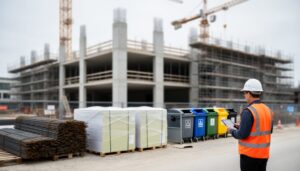
Worker on an active construction jobsite beside organized building materials and a waste-sorting station with multiple dumpsters, conveying smart waste management in action.

8 Wastes in Construction: Real-World Examples for Smart Waste Management Systems

Construction waste eats profit margins and erodes productivity at an alarming rate. The eight wastes framework, rooted in lean manufacturing principles and adapted for the construction industry, identifies specific categories of inefficiency: transportation, inventory, motion, waiting, overproduction, overprocessing, defects, and underutilized talent. Each waste type manifests differently on jobsites than in factory settings, but the financial impact remains consistent. Projects that fail to address these wastes typically experience 15-30% cost overruns and schedule delays that cascade across multiple trades.
Smart waste management …

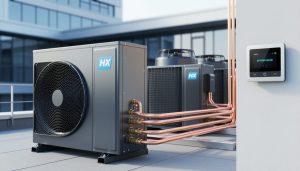
Outdoor air conditioning condenser unit connected to smart HVAC control equipment on a commercial rooftop, photographed in soft daylight.

What Is Thermal Energy Rating in Air Conditioning Units (and How Does It Work)?

Thermal energy rating in air conditioning units is a standardized metric that quantifies how efficiently an HVAC system converts electrical input into cooling or heating output under specified operating conditions. For construction professionals specifying equipment in 2026, these ratings translate directly to lifecycle operating costs, peak demand charges, and compliance with increasingly stringent building energy codes.
The ratings landscape has grown more complex as smart HVAC integration becomes standard practice. Where traditional SEER and EER metrics measure performance at fixed conditions, newer rating frameworks account for …

Ceiling-mounted IoT sensors and discreet air-quality monitoring hardware in a modern building hallway with circadian lighting ambience and visible MEP low-voltage infrastructure.

Why Smart Health Systems Are Now Essential in Modern Buildings

Smart health and wellness systems integrate IoT sensors, environmental controls, and data analytics into buildings to monitor and optimize occupant wellbeing through air quality management, circadian lighting, thermal comfort, and activity-responsive environments. For construction professionals in 2026, these systems represent a distinct building category that requires early design coordination, enhanced MEP infrastructure, and specialized installation protocols beyond conventional HVAC and lighting packages.
The shift from passive wellness features to active monitoring platforms changes how construction teams approach MEP rough-in…

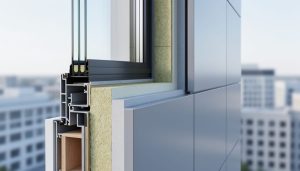
Close-up of a modern building exterior envelope showing insulated wall layers, high-performance window glazing, and ventilated cladding panels in soft daylight.

What Are Energy-Efficient Building Materials (and How Do They Work)?

Energy-efficient building materials are construction products engineered or selected to minimize heat transfer, reduce energy consumption for heating and cooling, and lower a building’s overall environmental footprint throughout its lifecycle. These materials achieve performance gains through enhanced thermal insulation, reduced air leakage, reflective properties, thermal mass, or combinations of these characteristics.
The construction industry accounts for nearly 40 percent of global energy consumption, with operational energy use in buildings representing the largest share. Specifying the right envelope materials can cut …

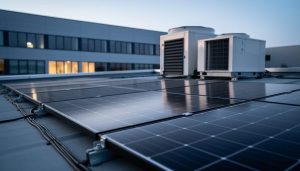
Modern commercial building roof with solar photovoltaic panels and an advanced rooftop HVAC unit in blue-hour lighting

Zero-Energy Buildings Are Redefining What’s Possible in Commercial Construction

Zero-energy buildings achieve net-zero annual energy consumption by generating as much renewable energy on-site as they consume, primarily through the integration of solar photovoltaic arrays with highly efficient HVAC systems and building envelopes designed to minimize thermal loads. For construction professionals and engineers planning ZEB projects in 2026, success hinges on understanding how renewable energy systems, advanced HVAC technologies, and building design work together as an

Layered wall insulation materials including closed-cell spray foam, rigid foam boards, and fiberglass batts arranged to represent an energy-efficient building assembly.

What Are R-Values for Construction Materials and How Do They Work?

R-value is the measure of a material’s resistance to heat flow, with higher numbers indicating better insulating performance. For every inch of thickness, materials like closed-cell spray foam can achieve R-6 to R-7, while fiberglass batts typically deliver R-3 to R-4, and rigid foam boards fall somewhere in between.
Understanding R-values isn’t just about meeting code requirements. It’s about making informed decisions that affect energy performance, long-term operating costs, and occupant comfort across the building’s lifespan. In 2026, as energy codes tighten and owners demand greater efficiency from their …

“Modern construction site with mass timber beams, advanced concrete elements, and modular building panels under soft daylight.”

Innovative Construction Products Transforming Sustainable Building in 2026

The construction industry stands at a pivotal moment. Products emerging today don’t simply improve on existing solutions; they fundamentally reshape what’s possible on job sites. From self-healing concrete that extends infrastructure lifespan by decades to modular building systems that cut project timelines by 40%, the materials and technologies available now represent the most significant shift in construction methodology since the widespread adoption of steel framing.
This transformation addresses the sector’s most pressing challenges. Labor shortages, tightening sustainability mandates, and demands for faster …