
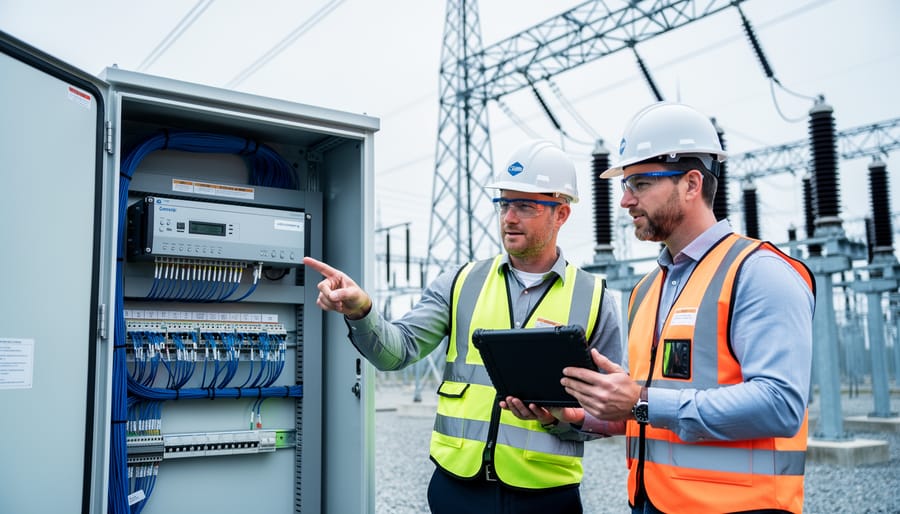
Federal cybersecurity mandates now apply directly to construction teams building or upgrading energy infrastructure requiring contractors, engineers, and project managers to integrate specific security protocols into physical construction workflows from design through commissioning. The Department of Energy’s cybersecurity framework governs how operational technology systems, control networks, and digital infrastructure are specified, installed, and documented in power generation facilities, transmission substations, and critical grid modernization projects.
This isn’t abstract IT policy. Construction professionals must now verify that vendors meet supply chain security requirements, document network architecture during installation, coordinate with facility owners on compliance milestones, and sometimes modify construction schedules to accommodate security assessments. The regulatory shift stems from the increasingly interconnected nature of grid systems, where a compromised building automation controller or improperly configured substation gateway can provide attackers entry points into broader energy networks.
For general contractors, electrical subcontractors, and control systems integrators, the practical impact appears in bid specifications, material procurement decisions, and project delivery timelines. Understanding which facilities trigger compliance requirements, what documentation the Department of Energy expects, and how to coordinate security measures with traditional construction quality control has become essential to avoiding costly delays and change orders.
This article breaks down the Department of Energy cybersecurity framework in construction-specific terms, clarifies which projects must comply, outlines the integration process from preconstruction through closeout, and provides direct paths to authoritative guidance. We’ve included insights from compliance specialists who’ve guided energy construction teams through federal audits and case studies showing how contractors have successfully embedded security requirements into existing project management systems.
What Are DoE Cybersecurity Requirements?
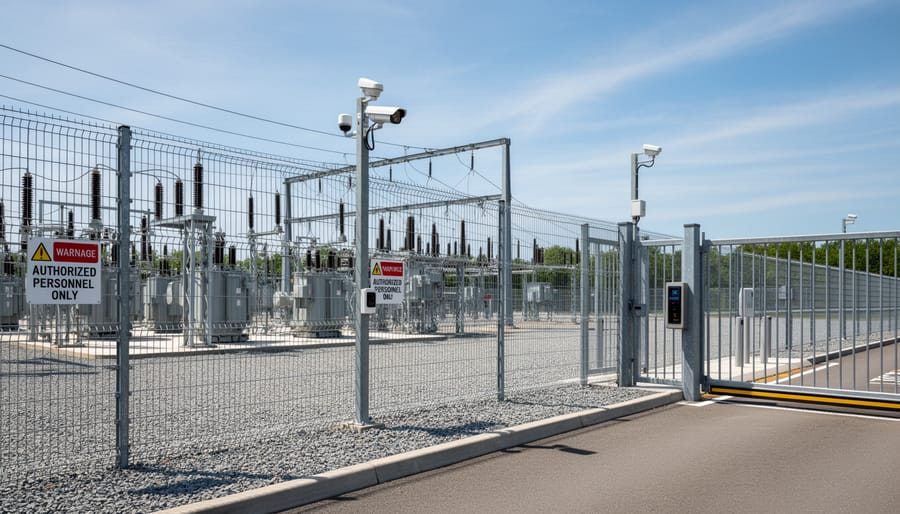
Regulatory Framework and Standards
The Department of Energy’s cybersecurity requirements for energy infrastructure projects rest on several interconnected frameworks. At the federal level, DoE facilities and projects must align with the National Institute of Standards and Technology (NIST) Cybersecurity Framework, which provides risk-based guidance for protecting critical infrastructure. The DoE has released formal Cybersecurity Framework guidance that translates these standards into sector-specific requirements for energy projects.
For grid-connected facilities, North American Electric Reliability Corporation Critical Infrastructure Protection (NERC-CIP) standards impose additional mandatory requirements on bulk electric system assets. These rules govern access control, system monitoring, incident response, and recovery planning. Projects involving smart grid technology, industrial control systems (ICS), or supervisory control and data acquisition (SCADA) networks must also comply with ICS-CERT recommendations and DoE’s Industrial Control Systems Security program.
Construction teams working on qualifying energy facilities encounter these requirements through contract specifications, design standards, and inspection protocols. The regulatory framework shapes decisions about network architecture, physical access controls, equipment procurement, and system commissioning procedures, making early coordination with cybersecurity specialists essential to avoid costly redesigns during construction.
Physical-Cyber Integration in Facility Design
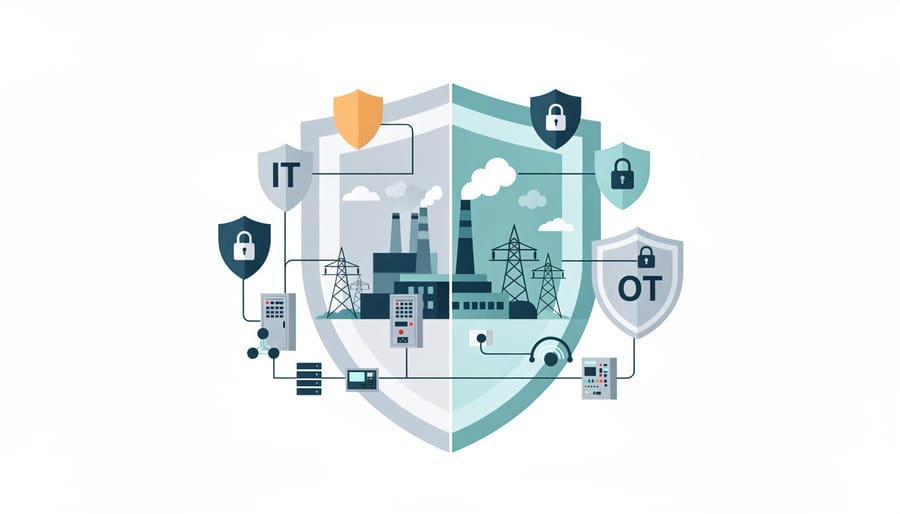
DoE cybersecurity requirements fundamentally reshape how mechanical, electrical, and control systems interact in energy facilities. Rather than treating physical infrastructure and digital controls as separate domains, designers now integrate security from the ground up, specifying network segmentation zones within electrical rooms, installing physically isolated SCADA networks alongside power distribution equipment, and building redundant communication pathways that can operate independently if one system is compromised. This approach affects concrete design decisions: control panels require hardened enclosures with tamper-evident seals, cable routing must prevent physical access to data lines, and mechanical systems need manual override capabilities that function when digital controls are disabled during a cyber incident. Engineers also incorporate air-gapped backup systems for critical equipment, ensure all network-connected devices meet federal security standards before installation, and design monitoring architectures that separate operational technology from enterprise IT networks. As energy infrastructure increasingly relies on technologies like decentralized internet connectivity and distributed control systems, this physical-cyber integration becomes more complex, requiring coordination between structural, electrical, and cybersecurity engineers throughout design development. The result is facilities where security considerations directly influence equipment placement, room layout, conduit routing, and system architecture, adding complexity but ensuring infrastructure resilience against both physical and digital threats.
Which Energy Projects Must Comply?
Department of Energy cybersecurity requirements don’t apply universally to all energy projects. Compliance obligations depend on several factors: the type of facility being constructed, its capacity and connection to the bulk electric system, ownership structure, and whether the project qualifies as critical infrastructure under federal definitions.
Power generation facilities that connect to the bulk electric system typically fall under these requirements, particularly large-scale plants that could affect grid reliability if compromised. This includes natural gas combustion turbines, coal-fired plants, nuclear facilities, and utility-scale renewable installations. The key distinction isn’t the fuel source but rather the facility’s role in the interconnected grid. A rooftop solar array serving a single building operates under different rules than a utility-scale solar farm feeding power into transmission networks.
Transmission infrastructure represents another major category. Projects involving high-voltage transmission lines, substations, and switching stations that form part of the bulk electric system generally must comply. These facilities handle the movement of power across regions and connect generation sources to distribution networks, making them critical points in the energy supply chain. Modern designs increasingly incorporate 3-tier energy architectures that require careful security planning across generation, transmission, and distribution layers.
| Facility Type | Typical Characteristics | Ownership Models | Requirement Level |
|---|---|---|---|
| Bulk Power Generation | Large-scale plants, grid-connected | Investor-owned, municipal, federal | High |
| Transmission Infrastructure | High-voltage lines, substations | Utility-operated, regional operators | High |
| Critical Distribution Facilities | Serves essential services or large populations | Utility-owned, cooperative | Medium |
| Distributed Generation | Smaller-scale, limited grid impact | Private, commercial, municipal | Low to Medium |
Distribution facilities serving critical infrastructure or large population centers may also face requirements, though these vary based on local designations and the facility’s strategic importance. A distribution substation serving a military base or major hospital system carries different compliance obligations than one serving a rural residential area.
Ownership structure influences both the specific requirements and enforcement mechanisms. Investor-owned utilities, federal power marketing administrations, municipal utilities, and rural electric cooperatives each operate under distinct regulatory frameworks, though the core cybersecurity principles remain consistent. Private power producers selling into wholesale markets typically face the same standards as traditional utilities when their facilities meet the same grid-connection and capacity thresholds.
Projects that remain entirely off-grid or serve only on-site loads generally fall outside DoE cybersecurity mandates, though they may face other federal or state security requirements depending on the facility’s purpose and location.
Compliance Process for Construction and Engineering Teams
Pre-Construction Planning and Assessment
Pre-construction planning begins with determining whether a project falls under DoE cybersecurity requirements. Review the facility’s classification, grid interconnection status, and ownership structure against current eligibility criteria. Engage a qualified cybersecurity consultant early to assess the scope of compliance obligations before design work advances.
Once eligibility is confirmed, integrate cybersecurity requirements directly into project specifications. Define security zones for control systems, establish network architecture standards, and identify which equipment must meet specific hardening requirements. This upfront work prevents costly redesigns when vendors propose non-compliant solutions later.
Coordinate with the owner’s IT and operational technology teams to understand their security protocols and documentation expectations. Clarify which systems require independent security assessments, what training construction personnel will need for facility access, and how cybersecurity deliverables fit into the project’s commissioning process. Document these requirements in contract language so all parties understand their obligations before breaking ground.
Budget adequate time and resources for cybersecurity integration. Compliance adds layers to procurement, installation, and testing activities that can extend schedules if not planned from the start.
Design and Procurement Integration
Cybersecurity requirements must be embedded in technical specifications from the earliest design decisions. When specifying control systems, define security protocols for programmable logic controllers, remote terminal units, and distributed control systems before equipment procurement begins. Your specifications should require vendor compliance with identified security frameworks, including secure boot capabilities, encrypted communications, and role-based access controls built into hardware and firmware.
For SCADA equipment, procurement documents must specify network segmentation requirements, authentication protocols, and data encryption standards. Describe how systems will integrate with facility-wide security architecture rather than treating SCADA as isolated equipment. Include requirements for vendor documentation of security features, vulnerability patch processes, and lifecycle support commitments.
Network architecture specifications need to address both operational technology and information technology security zones. Define physical and logical separation between control networks and enterprise systems, firewall requirements at zone boundaries, and secure remote access protocols for maintenance and monitoring. Specify intrusion detection capabilities and logging requirements that allow security monitoring without degrading system performance.
Vendor selection criteria should weight cybersecurity capabilities alongside traditional technical and cost factors. Require vendors to demonstrate security certification, provide evidence of secure development practices, and commit to timely security updates throughout the equipment lifecycle. Evaluate whether vendors maintain dedicated security response teams and how they handle vulnerability disclosures. Request references from similar energy infrastructure projects where security requirements were successfully integrated.
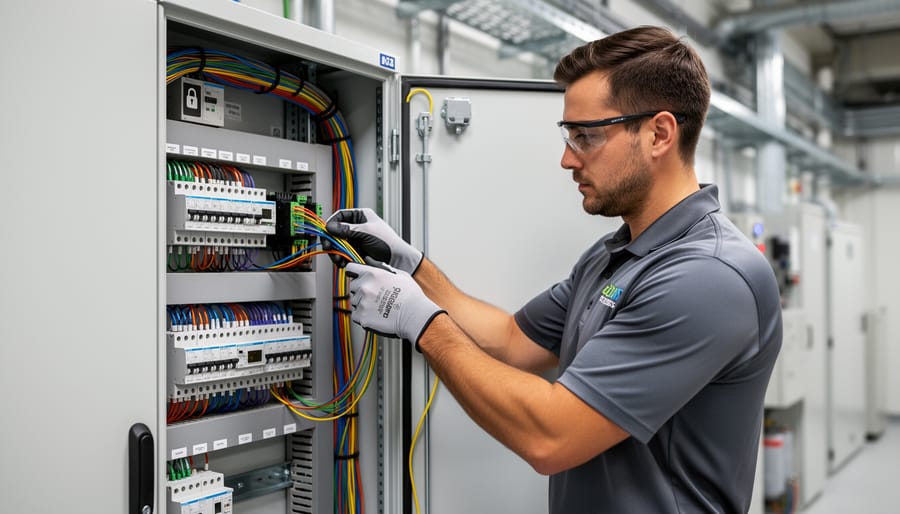
Construction Phase Implementation
During construction, cybersecurity requirements shift from planning documents to physical implementation and real-time coordination. Site teams must maintain security controls while installing and configuring operational technology systems that will connect to energy networks.
Control system installation requires close coordination between electricians, instrumentation technicians, and cybersecurity specialists. When mounting SCADA equipment, programmable logic controllers, or remote terminal units, installers follow manufacturer security configurations and network segmentation plans developed during design. Physical access controls around these systems, locked enclosures, badged access areas, and camera coverage, get implemented according to facility security plans.
Documentation practices intensify during construction. Daily logs should record who accessed control rooms, which systems were configured, and what network connections were made. Photograph cable routes, junction boxes, and equipment installations before walls close in. Maintain custody logs for sensitive equipment from delivery through commissioning. These records prove compliance during audits and support troubleshooting later.
Regular coordination meetings between general contractors, controls subcontractors, and the owner’s IT/OT security team prevent conflicts. Discuss upcoming installations that affect network architecture, resolve access credential issues, and review any deviations from approved designs. When field conditions require changes to control system layouts or network configurations, document the revision and get security team approval before proceeding.
Test installed systems in isolated environments before connecting to operational networks, following the commissioning sequence established in project specifications.
Project Team Rights and Obligations
Understanding who is responsible for what in DoE cybersecurity compliance prevents disputes, delays, and gaps in coverage. Construction firms, engineers, and contractors have distinct obligations that differ significantly from those of facility owners and operators.
Construction teams are typically responsible for implementing cybersecurity specifications into physical systems during the build phase. This includes installing control systems according to specified security configurations, maintaining secure construction site networks, documenting system architectures, and coordinating with IT/OT security consultants during installation. Contractors must also ensure that subcontractors and vendors meet cybersecurity requirements for any equipment they supply or install. Your obligation is to deliver systems that match the security specifications in your contract documents, not to design the cybersecurity framework itself unless explicitly contracted to do so.
Owners and operators retain responsibility for defining cybersecurity requirements, conducting risk assessments, maintaining operational security after project handover, and ensuring ongoing compliance with DoE mandates. They must provide clear specifications to the construction team and coordinate with federal regulators. The owner’s cybersecurity team, not the general contractor, typically manages incident response plans, user access controls, and security monitoring systems.
Documentation requirements are substantial for construction teams. You must retain as-built drawings showing network architecture, equipment lists with firmware versions, installation records for security systems, and any deviation reports from original specifications. Retention periods typically extend beyond standard construction project close-out, sometimes for the facility’s operational lifespan. Your contract should specify exactly what documentation you must deliver and how long you must retain your own copies.
Training obligations vary by role. Project managers and superintendents often need basic cybersecurity awareness training to understand site security protocols. Electricians and controls technicians installing sensitive systems may require more detailed training on secure installation practices. However, ongoing security training for facility operators after handover falls to the owner, not the construction team.
After project handover, your obligations narrow considerably. You are not responsible for security patches, user management, or threat monitoring unless you have a separate operations and maintenance contract. However, you may be called back if installed systems fail to meet contractual specifications or if as-built documentation proves inaccurate. Clear handover procedures and thorough commissioning documentation protect you from liability for operational security issues that arise after you leave the site.
Expert Perspective: Integrating Cybersecurity Into Energy Construction
Michael Torres brings two decades of experience integrating operational technology security into critical infrastructure projects. As lead cybersecurity consultant on five DoE-compliant facilities since 2023, he works at the intersection where construction timelines meet federal security mandates.
“The biggest mistake I see is treating cybersecurity as an IT checkbox rather than a physical infrastructure consideration,” Torres explains. “When you’re building a substation or a generation facility, the control systems, network conduits, and access points need the same level of planning as your electrical or mechanical systems. Waiting until commissioning to address these requirements creates expensive rework.”
Torres emphasizes that early coordination prevents costly delays. “Bring your cybersecurity consultant into design development, not construction documents. We need to review single-line diagrams, control panel layouts, and network architecture before equipment gets ordered. I’ve seen projects pause for weeks because switchgear arrived without the specified network isolation capabilities.”
Cost implications vary by project complexity and facility type. “Budget impacts depend heavily on baseline design practices. Projects that already follow good industrial control system design principles typically see modest increments for enhanced documentation, third-party testing, and specialized equipment specifications. The real cost comes from retrofitting designs that didn’t account for segmented networks or secure remote access from the start.”
The shift toward decentralized systems adds complexity. “Distributed generation and microgrid projects face unique challenges because you’re securing multiple interconnection points rather than one central facility. Each connection to the grid becomes a potential vulnerability that needs documented security controls.”
Torres’s advice for construction teams: “Read the applicable security standards before you submit your first RFI. Understand what ‘defense in depth’ means for physical construction, not just IT. And build relationships with owners’ cybersecurity teams early, they’re partners in getting this right, not obstacles.”
Case Study: Cybersecurity Compliance on a Recent Energy Project
When Texas-based renewable energy developer Meridian Power broke ground on a 200-megawatt solar-plus-storage facility in 2025, the project team knew federal cybersecurity requirements would add complexity, but underestimated how deeply they would reshape the construction workflow.
The facility’s battery energy storage system and grid interconnection meant it fell under Department of Energy cybersecurity mandates. Lead contractor Southwest Energy Builders partnered with a specialized ICS security firm six months before construction began, earlier than typical, to map requirements across design, procurement, and installation phases.
The first challenge emerged during equipment procurement. Standard inverters and battery management systems didn’t meet the segmented network architecture requirements. The team had to source DoE-compliant hardware with isolated control networks, adding three months to procurement timelines and requiring revalidation of electrical drawings. “We learned that cybersecurity can’t be bolted on after equipment selection,” said project manager Elena Rodriguez. “It fundamentally changes what you can buy and how systems communicate.”
During construction, the team implemented physical security protocols that exceeded typical site practices: controlled access to the operations building, documented chain of custody for control system components, and mandatory cybersecurity training for electricians installing SCADA equipment. These measures added administrative overhead but prevented rework that earlier projects had experienced during commissioning audits.
The most significant integration point came at the grid connection interface. Utility coordination for power distribution required detailed documentation of network segmentation and intrusion detection systems, documentation the construction team, not just IT staff, needed to compile and maintain throughout installation.
Budget impacts were substantial but manageable through early planning. Cybersecurity-compliant equipment and consulting services increased project costs, but avoided the retrofitting expenses that had plagued comparable projects where compliance was addressed late. The construction timeline extended by approximately two months, primarily during design and procurement phases rather than physical construction.
Rodriguez emphasized that success hinged on treating cybersecurity as a core engineering requirement from day one, not a compliance checkbox during closeout.
Where to Get Official Guidance and Support
The Department of Energy coordinates cybersecurity guidance through several specialized offices and programs. Construction teams should start with the Office of Cybersecurity, Energy Security, and Emergency Response (CESER), which oversees critical infrastructure protection policy and provides sector-specific guidance for energy facilities. CESER’s website hosts technical advisories, implementation frameworks, and contact information for regional coordinators who can clarify requirements for specific project types.
For technical standards and implementation details, the following resources provide authoritative guidance:
- DoE Office of Electricity: Publishes grid modernization standards and control system security specifications applicable to transmission and distribution projects
- National Electric Sector Cybersecurity Organization Resource (NESCOR): Offers technical guides for integrating security requirements into facility design and construction
- North American Electric Reliability Corporation (NERC): Maintains Critical Infrastructure Protection (CIP) standards that often overlap with DoE requirements
- National Institute of Standards and Technology (NIST): Provides the Cybersecurity Framework and Special Publications referenced in DoE compliance documentation
- Electric Power Research Institute (EPRI): Develops practical implementation guides and training programs for construction and engineering teams
Construction firms should also engage with regional transmission organizations and independent system operators, as these entities often enforce cybersecurity requirements through interconnection agreements. Many maintain dedicated compliance departments that review project specifications before construction begins.
Professional certification programs through organizations like ISA/IEC 62443 and GIAC provide training specifically focused on industrial control systems security in energy infrastructure. These programs help project managers and engineers understand how cybersecurity requirements translate into construction specifications and installation procedures.
For project-specific questions, the DoE Energy Information Administration maintains a helpline for industry stakeholders, though response times vary. Engaging a consultant with DoE compliance experience early in project planning typically proves more efficient than navigating federal resources independently.
How to Apply or Complete the Process
DoE cybersecurity compliance for energy infrastructure projects doesn’t follow a single application form or centralized approval process. Instead, construction teams work within a framework of ongoing requirements that begin during project planning and extend through facility commissioning.
Start by determining which DoE cybersecurity frameworks apply to your specific project. For federally-funded facilities or projects under DoE jurisdiction, the agency’s Office of Cybersecurity, Energy Security, and Emergency Response (CESER) publishes applicable standards. Your owner or utility client typically identifies these requirements in the initial project scope documents.
During the design phase, incorporate the specified cybersecurity controls into your construction documents. This includes documenting how control systems, network architecture, and physical security measures meet the required standards. Submit these design documents through your client’s established approval channels, there’s no separate DoE application for construction compliance.
Throughout construction, maintain detailed records showing how installed systems meet the cybersecurity specifications. Document vendor certifications, system configurations, and security testing results. Your client will need this documentation when they register the facility or system with the appropriate federal oversight body.
For projects involving critical infrastructure designation or specific federal programs, your owner handles the formal registration and reporting to DoE. Construction teams support this process by providing the technical documentation and as-built records that demonstrate compliance with the cybersecurity requirements built into the project specifications.
Where to Get Official Help
For direct assistance with Department of Energy cybersecurity requirements affecting your energy infrastructure project, start with the DOE’s Office of Cybersecurity, Energy Security, and Emergency Response (CESER). Their technical assistance programs connect construction and engineering teams with cybersecurity specialists who understand the physical-digital integration challenges in facility design and construction.
The Cybersecurity Risk Information Sharing Program (CRISP) offers guidance on applying federal security frameworks to specific project types. Contact them through the DOE’s main portal, where you’ll find program-specific email addresses and regional contact information for technical staff familiar with construction-phase compliance.
Industry associations also maintain helplines and consultant directories. The National Electrical Contractors Association (NECA) and Associated General Contractors of America (AGC) both run advisory services focused on federal energy project requirements, including cybersecurity mandates that affect contractors. Their networks include consultants experienced in translating abstract security standards into actionable construction specifications.
For immediate questions about whether your project falls under DOE jurisdiction, the Federal Energy Regulatory Commission (FERC) maintains a public inquiry line that can clarify facility classifications and applicable requirements before you commit resources to detailed compliance planning.
Common Questions About DoE Cybersecurity in Construction
Construction teams working on energy infrastructure projects frequently ask similar questions about cybersecurity requirements before and during project execution. Understanding these common concerns helps project managers plan more effectively and avoid costly surprises.
Do cybersecurity requirements significantly increase project costs?
Yes, integrating cybersecurity controls typically increases project budgets, particularly for control systems, network infrastructure, and specialized equipment procurement. The exact impact varies widely based on facility type, existing security posture, and specific compliance requirements, so early assessment with qualified consultants is essential for accurate budgeting.
How much extra time should we add to the project schedule?
Cybersecurity compliance generally extends timelines due to additional design reviews, specialized equipment procurement lead times, and documentation requirements. The delay depends on project complexity and how early requirements are incorporated, integrating cybersecurity from the initial design phase minimizes schedule impact compared to retrofitting later.
Who is responsible for cybersecurity on our construction site?
Responsibility is typically shared: construction firms handle physical security of control systems during installation and follow protocols for network equipment, while owners or specialized consultants manage IT/OT security configuration, testing, and ongoing monitoring. Clear responsibility matrices in contracts prevent gaps and disputes.
Can we use our standard electrical and control system subcontractors?
Standard subcontractors can often participate, but they may need additional training or supervision to meet cybersecurity requirements for control system installation, network configuration, and documentation. Some projects require subcontractors with specific certifications or experience in secure industrial control systems.
Many contractors worry about liability exposure when handling cybersecurity-critical equipment. Construction agreements should explicitly define the boundaries of responsibility, generally, builders are accountable for physical protection and proper installation according to specifications, while system configuration and security testing fall to the owner’s IT/OT teams or specialized consultants. Requiring clear handover protocols and acceptance testing helps protect all parties.
Another frequent concern involves vendor coordination. Energy projects often involve multiple equipment suppliers providing components that must integrate securely. Early vendor engagement, clear specification of cybersecurity requirements in procurement documents, and coordination meetings between vendors, the owner’s security team, and construction managers help prevent integration issues that delay commissioning.
Understanding Department of Energy cybersecurity requirements from the start of an energy infrastructure project is no longer optional, it’s essential for keeping work on schedule and on budget. Construction professionals who treat these mandates as an afterthought typically face costly redesigns, procurement delays, and extended timelines when compliance gaps surface during inspections or commissioning.
The most successful project teams integrate cybersecurity planning into their earliest design discussions, bringing qualified consultants and control systems specialists to the table before specifications are finalized. This proactive approach allows teams to select compliant equipment, coordinate physical and digital security measures, and build accurate cost estimates that reflect the true scope of work. It also prevents the common scenario where general contractors discover mid-construction that installed systems require replacement or significant modification to meet federal standards.
Energy infrastructure projects carry enough inherent complexity without adding avoidable compliance crises. By treating DoE cybersecurity requirements as fundamental design criteria rather than regulatory hurdles to clear later, construction firms protect their schedules, their budgets, and their reputations while delivering facilities that meet the security standards our critical energy systems demand.
