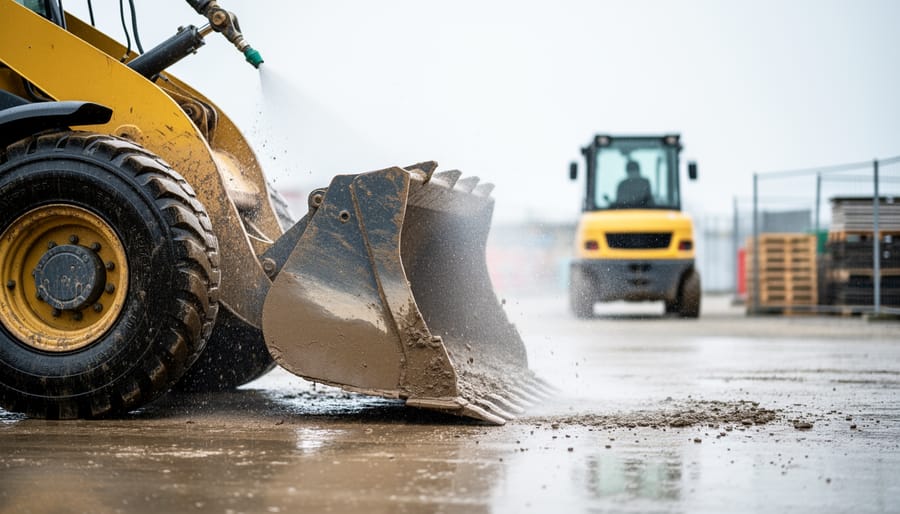
Choosing the right pressure washer for site vehicles and plant comes down to matching three core specifications to your operational demands: pressure (PSI), flow rate (GPM), and power source compatibility with your site infrastructure. For most construction applications, you’ll need between 2,500 and 4,000 PSI with at least 3 GPM flow to remove caked mud, diesel residue, and hydraulic oil from excavators, loaders, and haul trucks without spending excessive time per unit.
The selection process differs significantly from choosing pressure washers for cars. Heavy plant demands industrial-grade components, hot water capability for grease breakdown, and portability solutions that work across large sites where fixed mains pressure may be unavailable. Site managers often underestimate the total cost of ownership, focusing on purchase price while overlooking fuel consumption, maintenance intervals, and downtime costs when units fail during critical cleaning operations.
This guide walks you through a systematic selection framework tested across multiple fleet operations. You’ll learn how to calculate actual PSI and GPM requirements based on your specific vehicle types, evaluate power source trade-offs between electric, petrol, and diesel units, and identify which features justify premium pricing versus marketing hype. We’ve interviewed fleet supervisors managing 50-plus equipment rosters and examined case studies where improper specification led to either inadequate cleaning performance or unnecessary capital expenditure. Unlike domestic pressure washers for cars industrial units require different considerations, giving you the practical intelligence to specify confidently and avoid costly mistakes in your 2026 procurement decisions.
Essential Equipment and Specifications to Consider
Selecting a pressure washer for construction site use requires understanding the technical specifications that directly affect cleaning performance and operational practicality. The two fundamental measurements determine what a unit can achieve: water flow rate, measured in gallons per minute (GPM), and pressure output, measured in pounds per square inch (PSI). Flow rate governs how quickly you can rinse away loosened dirt and cover large vehicle surfaces, while pressure determines your ability to break the bond between stubborn contaminants and metal or painted surfaces.
For construction vehicles and plant, target a minimum of 2.5 GPM to handle the surface area of excavators, dumpers and lorries efficiently. Pressure ratings between 2000-3000 PSI suit most site applications without risking damage to decals, hydraulic seals or rubber components. Heavy earthmoving equipment caked in dried clay may justify 3000-3500 PSI, but anything beyond that range enters industrial territory where operator training becomes critical and surface damage risks increase.
Power source selection hinges on your site infrastructure and mobility requirements. Electric pressure washers (typically 240V single-phase) deliver consistent performance for yard-based cleaning where mains power is accessible, but they tie you to a fixed location. Petrol units offer complete portability across sites without power supply, though they require fuel storage, produce exhaust fumes, and need more maintenance. Diesel-powered models suit high-duty operations where runtime and power output matter more than initial cost.
Beyond the pressure washer itself, effective site vehicle cleaning requires supporting equipment and consumables:
- High-pressure hoses in 10-15m lengths for reaching around large plant without constantly repositioning the unit
- Quick-connect nozzle sets (0°, 15°, 25°, 40° and soap nozzle) to match spray pattern to surface type and contamination level
- Rotating turbo nozzles for removing concrete splatter and hardened mud deposits
- Detergent injection systems or onboard tanks (5-10L capacity) for degreasing engines and undercarriages
- Foam cannons for applying cleaning agents to vertical surfaces before pressure rinsing
- Inlet water filters to prevent sediment from site water supplies damaging the pump
- Surface cleaners (flat rotating attachments) for efficiently cleaning lorry beds and large flat panels
Hose quality matters more than many buyers expect. Construction sites demand abrasion-resistant, kink-proof hoses rated above your machine’s maximum PSI. Cheap hoses fail at connectors, waste time with tangles, and create safety hazards when they rupture under pressure. Similarly, invest in industrial-grade nozzles rather than consumer variants; site conditions destroy plastic components rapidly, and brass or stainless steel options withstand daily knock-about use.
Water source compatibility deserves consideration. Some sites rely on bowsers or static tanks rather than mains pressure. Verify your chosen pressure washer can operate with the inlet pressure available, or budget for a buffer tank and feed pump to maintain consistent supply pressure.
Critical Safety Requirements and Operating Warnings
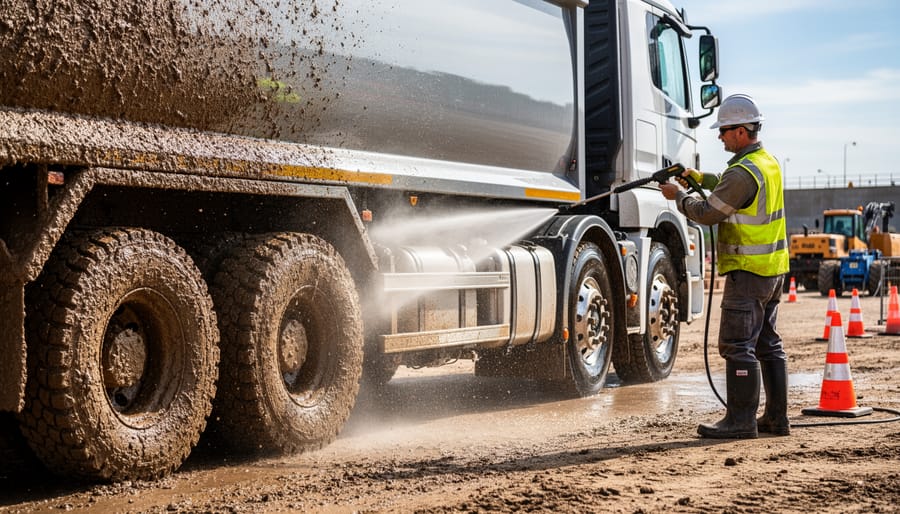
Operating pressure washers around heavy plant and site vehicles introduces significant hazards that require strict protocols and awareness. High-pressure water jets exceeding 1000 PSI can penetrate skin, causing deep tissue damage and potentially injecting contaminants or air into the bloodstream, injuries that often appear minor initially but demand immediate medical attention. Never point the lance at people, and maintain awareness of ricochet from hard surfaces that can redirect water forcefully back toward the operator.
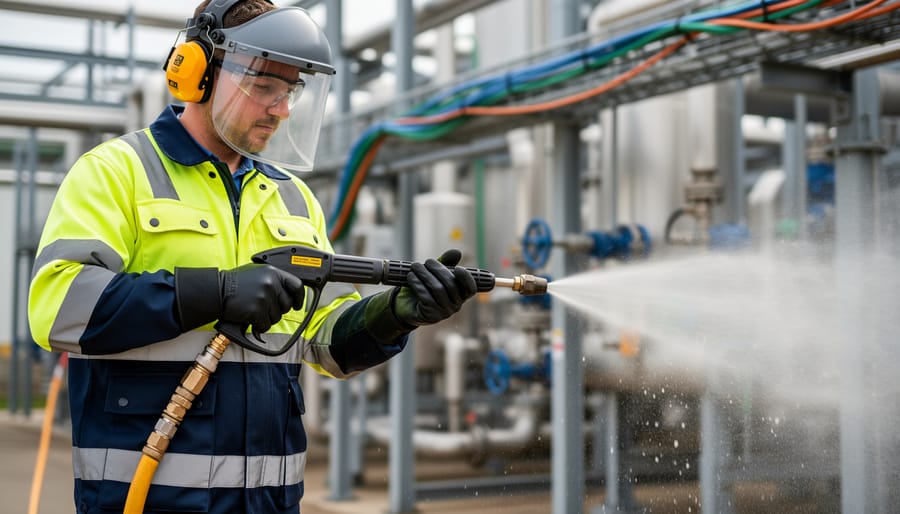
Use correct pressure washer PPE for all operations: impact-resistant eye protection, waterproof gloves, steel-toe wellington boots, and hearing protection for petrol or diesel units. Standard work gloves offer no protection against high-pressure injection injuries. Operators should wear high-visibility clothing that remains effective when wet, and consider face shields when cleaning overhead components where debris and chemicals may fall.
Electric pressure washers on construction sites present electrocution risks. Use an RCD for outdoor sockets rated at 30mA or less, and inspect cables daily for damage from vehicles or sharp edges. Position electric units away from standing water and ensure connections remain elevated and protected. For sites without compliant electrical infrastructure, diesel or petrol models eliminate this hazard entirely.
When using detergents or degreasers, consult safety data sheets and ensure adequate ventilation, particularly in enclosed wash bays or when cleaning inside vehicle cabs. Wear chemical-resistant gloves during concentrate handling, and never mix different cleaning agents. Runoff containing oils, fuels, or chemicals must be contained and disposed of according to environmental regulations, direct discharge to drains or watercourses violates current legislation.
Aligning pressure washing procedures with broader construction safety compliance frameworks ensures these risks are managed systematically. Document safe operating procedures, conduct toolbox talks before introducing new operators, and record near-misses involving high-pressure equipment to refine protocols continuously.
Step-by-Step Pressure Washer Selection Process
Assessing Your Fleet and Cleaning Requirements
Start by cataloguing every vehicle and piece of plant that needs regular cleaning. Walk your site or depot and list excavators, dumpers, concrete mixers, telehandlers, delivery vans, and site cars. Note the typical soiling each experiences: earthmoving equipment accumulates heavy mud and clay; concrete mixers need aggressive cleaning to prevent hardening; oil stains affect delivery vehicles and maintenance plant.
Record how often each vehicle type requires cleaning. Daily washing suits high-visibility client-facing equipment, while weekly cycles work for internal plant. Match this frequency to your operational tempo and site presentation standards, which often connect to broader procurement for projects where equipment appearance affects client confidence.
Document your worst-case cleaning scenario: the dirtiest vehicle after the muddiest conditions. This baseline determines your minimum PSI and GPM requirements. A 20-tonne excavator caked in winter clay demands far more cleaning power than a site van with road spray. List specific soil types you encounter, chalk, peat, concrete residue, hydraulic oil, because each requires different pressure and detergent approaches.
Matching Technical Specifications to Site Needs
Once you’ve catalogued your fleet and cleaning tasks, convert those operational realities into technical numbers. Start with pressure: light commercial vehicles with road grime need 1500-2000 PSI, while excavators caked in clay demand 3000 PSI or more. Concrete residue on mixers sits in between at 2500 PSI. Underspecifying means repeated passes and wasted time; overspecifying risks damaging decals, paintwork, and rubber seals on hydraulic components.
Flow rate matters as much as pressure for heavy plant. A 2.5 GPM unit shifts mud from a van quickly enough, but an excavator’s undercarriage needs 4 GPM minimum to flush debris from tracks and bogie wheels before the operator gives up. Calculate your cleaning cycle: if you wash ten dumpers daily and each takes twenty minutes at 3 GPM, you’re using 600 gallons. Can your site supply that volume consistently?
Power source follows from those numbers. Electric models top out around 2000 PSI and suit depot locations with three-phase supply. Diesel units deliver 3500+ PSI anywhere but cost more upfront and need fuel storage. Petrol splits the difference for mobile site cabins with generator backup.
Match the specification to your dirtiest, bulkiest asset rather than averaging across the fleet. A 3000 PSI diesel washer handles everything from Transit vans to tracked loaders; a 1800 PSI electric unit leaves half your plant inadequately cleaned.
Evaluating Practical Site Constraints
Technical specifications alone won’t deliver results if your site infrastructure can’t support them. Start by surveying electrical supply at wash locations, diesel units suit sites without reliable three-phase power, while electric models require dedicated circuits to prevent tripping when other equipment runs simultaneously. Modern smart water systems can improve efficiency, but basic mains pressure must exceed 2 bar for most washers; sites relying on bowsers or tanks need self-priming models with larger inlet fittings.
Storage determines longevity. Pressure washers left outdoors deteriorate rapidly, freezing temperatures crack pumps, UV degrades hoses, and moisture corrodes electrical components. Budget for weatherproof storage or portable units you can secure in existing facilities.
Portability matters when you’re washing across multiple zones or rotating between projects. Wheeled frames and lifting eyes suit site moves, but add 15-20kg to base weight. Balance mobility against stability, lighter units tip during operation on uneven ground.
Finally, integrate equipment choices into broader cost management planning. Rental suits short contracts; purchase makes sense when weekly hire costs exceed 5% of purchase price over projected project duration.
Pressure Washer Categories for Construction Applications
Light-duty pressure washers (under 2000 PSI) deliver 1.5-2 GPM and suit small fleet operations focused on light commercial vehicles. These electric-powered units handle vans, pickups, and welfare cabins effectively, removing road grime and light mud accumulation. They cost £150-400 and work well for sites with minimal plant equipment, but struggle with caked-on mud or concrete residue on heavy machinery. Consider these only if your fleet consists primarily of road vehicles rather than earthmoving equipment.
Medium-duty pressure washers (2000-3000 PSI) provide 2-3 GPM and represent the sweet spot for mixed construction fleets. These units, available in both electric and petrol variants, clean dumpers, telehandlers, mini-excavators, and welfare facilities without risking surface damage to painted surfaces or decals. They remove most dried mud, cement dust, and oil stains within reasonable cleaning cycles. Expect to pay £400-1200 depending on power source and build quality. This category handles typical construction site soiling effectively while remaining portable enough for multi-site operations.
Heavy-duty pressure washers (3000+ PSI) deliver 3-5 GPM and tackle the demands of large earthmoving plant. These diesel or petrol-powered units cut through compacted mud on excavator tracks, remove concrete buildup from mixer drums, and clean greasy engine compartments on bulldozers. They’re essential for sites operating 20-tonne-plus machinery or dealing with clay-heavy soils. Budget £1200-3500 for professional-grade equipment that withstands daily use on major projects.
Hot water systems add £500-2000 to equipment costs but dramatically improve cleaning efficiency on oil, grease, and diesel contamination. They cut cleaning time by 40-60% compared to cold water on hydraulic systems and engine bays. Cold water handles mud and general dirt adequately but requires more dwell time and chemical assistance for petroleum-based soiling. Sites with predominantly earthmoving plant benefit from hot water systems, while those focused on light plant and vehicles manage effectively with cold water units.
Verification and Performance Testing
Before committing to full deployment, run structured verification tests to confirm your chosen pressure washer genuinely matches your site needs. Start with a controlled trial on representative vehicles from your fleet, test a heavily-soiled excavator track, a concrete-splattered mixer drum, and a mud-caked dumper chassis to gauge whether the unit delivers consistent cleaning results across different equipment types and soil conditions. Time each cleaning cycle: if your medium-duty washer takes 45 minutes to adequately clean a single tracked vehicle when you projected 20 minutes, you’ve either underspecified the PSI or need different nozzle configurations.
Check painted surfaces, decals, and rubber seals after washing for damage, streaked paint, lifted stickers, or water ingress around cab seals indicate you’re running excessive pressure or holding the nozzle too close. Adjust accordingly or fit wider-angle nozzles that distribute force over a larger area. Gather feedback from operators who’ll use the equipment daily: awkward hose management, trigger fatigue from poor gun ergonomics, or insufficient cord length all surface during hands-on testing, not on a spec sheet.
Test runoff capture and filtration if your site operates under environmental discharge permits. Run a full wash cycle and inspect where wastewater flows, confirm your drainage setup channels contaminated runoff to settlement tanks or oil separators rather than directly into surface drains. If testing reveals your power source can’t sustain extended operation (breakers tripping on a 13A supply, diesel unit overheating after 90 minutes), you need to upgrade electrical infrastructure or specify a different power configuration before the washer enters regular service.
Expert Insights: Fleet Manager Perspective
I initially made the mistake of specifying hot water washers for light vans, completely unnecessary cost. We run about 40 vehicles across three sites, from Transit vans to 20-tonne excavators, and I’ve learned that a single 3000 PSI machine doesn’t solve everything.
The biggest mistake I see is managers buying on PSI alone. Our first washer was 4000 PSI, brilliant on excavator tracks, but our operators kept damaging paintwork on pickup trucks. We now run two machines: a 2200 PSI electric unit for light commercials, and a diesel-powered 3500 PSI hot water system for the heavy plant. The diesel unit pays for itself in about 18 months purely through time savings, hot water cuts cleaning time by half when you’re dealing with dried concrete and hydraulic oil.
People also underestimate portability. We tried a static wash bay setup initially, but moving plant to a fixed location wasted hours every week. Investing in trailer-mounted units meant we could clean on-site between jobs, which improved hire-return turnaround significantly.
My advice: match your fleet composition first, then think about where and when you’ll actually use it. Don’t assume one machine handles everything, and factor in realistic operator training time. A 3000 PSI washer in untrained hands causes expensive damage quickly.
Common Questions About Pressure Washer Selection
Should I rent or buy a pressure washer for my site?
Buy if you’re cleaning vehicles weekly or operating multiple sites year-round, ownership pays for itself within 12-18 months of regular use. Rental makes sense for occasional deep cleans, short-term projects, or testing specifications before committing to purchase. Factor in delivery charges and daily rates when comparing; many site managers find that rental costs accumulate quickly once cleaning becomes routine.
Does the power source really matter for construction applications?
Absolutely. Electric models need mains power or a generator, which limits mobility around large sites. Petrol and diesel units operate anywhere but require fuel storage, emit exhaust, and cost more to run per hour. Choose electric for yard-based washing stations with reliable power; go petrol or diesel for remote locations, field sites, or when you’re moving between job locations without infrastructure.
When does hot water justify the extra cost?
Hot water cuts through oil, grease, and diesel residue far faster than cold water alone, typically halving cleaning time on plant equipment. If you’re washing excavators, mixers, or any machinery with hydraulic leaks and fuel contamination, hot water systems recover their premium through labour savings and cleaner results. Stick with cold water for general mud and light soiling on commercial vehicles.
Can I use any detergent with my pressure washer?
Only use detergents specifically formulated for pressure washers and compatible with your model’s chemical injection system. Household cleaners foam excessively and can damage seals and pumps, voiding your warranty.
What warranty coverage should I expect?
Commercial-grade pressure washers for construction use typically carry 1-3 year warranties on pumps and motors. Look for manufacturers offering parts availability guarantees and UK-based service networks, downtime costs exceed repair costs on active sites.
How often will my pressure washer need maintenance?
Expect pump oil changes every 50-100 hours, nozzle inspection monthly, and filter cleaning after each heavy session. Units washing muddy plant daily need more frequent servicing than those handling occasional van cleaning.
Most technical issues stem from mismatched specifications rather than equipment failure. If your 2000 PSI unit struggles with caked concrete on mixer drums, you’ve underspecified for the task. Review your fleet’s actual soiling conditions before purchase, and keep records of cleaning cycles to inform future equipment decisions or additional unit purchases as your operation scales.
Selecting the right pressure washer for your site vehicles and plant comes down to methodical assessment rather than defaulting to the highest specifications. Match your equipment’s PSI and GPM ratings to your actual fleet composition, soil conditions, and cleaning frequency. A dumper fleet operating in clay-heavy ground needs different capability than light commercial vehicles with road grime.
Over-specifying wastes budget on unnecessary power and increases operating costs. Under-specifying leaves you with inadequate cleaning performance and extended cycle times that disrupt site schedules. The systematic approach outlined here, auditing your fleet, translating requirements into technical specifications, and validating choices through testing, ensures you invest in equipment that genuinely serves your operational needs.
Proper pressure washer selection delivers returns beyond immediate cleaning. Regular, effective washing extends vehicle lifespan by preventing corrosive soil buildup, maintains hydraulic seals and electrical components, and demonstrates professional standards to clients and regulatory bodies. Sites with clean plant reduce cross-contamination risks and present a controlled, organized image that influences contract renewals and safety audits.
Remember that equipment selection is only the starting point. Establish maintenance protocols for your pressure washer itself: regular pump oil changes, nozzle inspections, and winterization where necessary. Train operators on proper techniques and safety requirements. Document cleaning schedules and compliance with environmental runoff regulations. The pressure washer that matches your specifications today will continue delivering value only with consistent maintenance and proper deployment across your fleet operations.
