
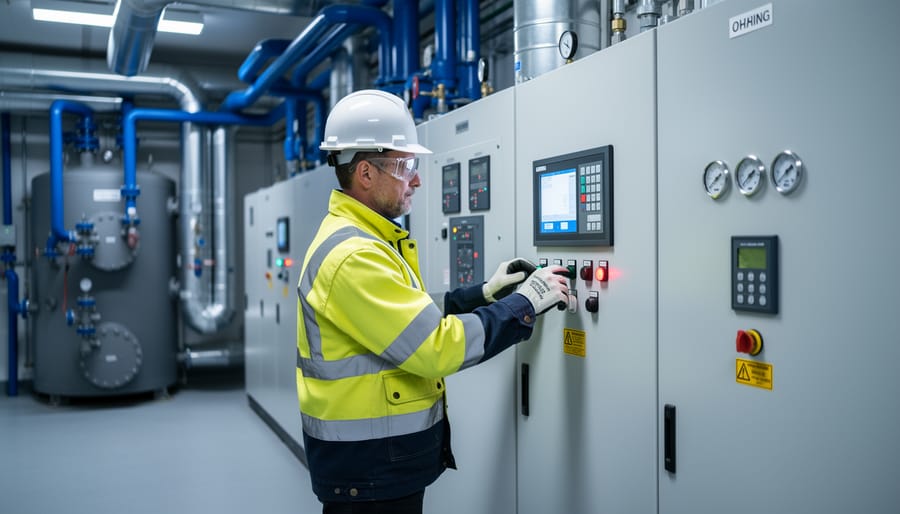
Mechanical electrical plant operators in Western Canada earn between $65,000 and $95,000 annually, with experienced professionals in Alberta’s commercial and industrial sectors commanding the higher end of that range. These skilled tradespeople keep the critical building systems running in hospitals, office towers, manufacturing facilities, and institutional complexes across British Columbia, Alberta, Saskatchewan, and Manitoba.
The role demands comprehensive knowledge of HVAC systems, boilers, chillers, electrical distribution equipment, and building automation systems. Operators monitor and adjust equipment performance, troubleshoot failures, perform preventive maintenance, and ensure compliance with provincial safety regulations. In Western Canada’s diverse climate zones, where building systems face extreme temperature swings and prolonged heating seasons, competent plant operators directly impact energy costs, occupant comfort, and asset longevity.
Regional compensation varies significantly. Alberta’s robust energy and construction sectors drive higher wages, particularly in Calgary and Edmonton where operators with Fourth or Third Class Power Engineering certificates see stronger demand. British Columbia’s Lower Mainland offers competitive base salaries but lower purchasing power given housing costs. Saskatchewan and Manitoba present more modest pay scales but correspondingly lower living expenses.
Three factors shape earning potential: certification level, facility complexity, and shift premiums. Operators holding Power Engineering certificates typically earn 15 to 25 percent more than those with basic mechanical qualifications. Large institutional facilities with complex central plants pay premium wages compared to smaller commercial properties. Night, weekend, and on-call responsibilities add substantial income, often pushing total compensation well above base salary figures, comparable to power engineer salary in BC and Alberta benchmarks.
The Role: What Mechanical Electrical Plant Operators Do in Commercial Buildings
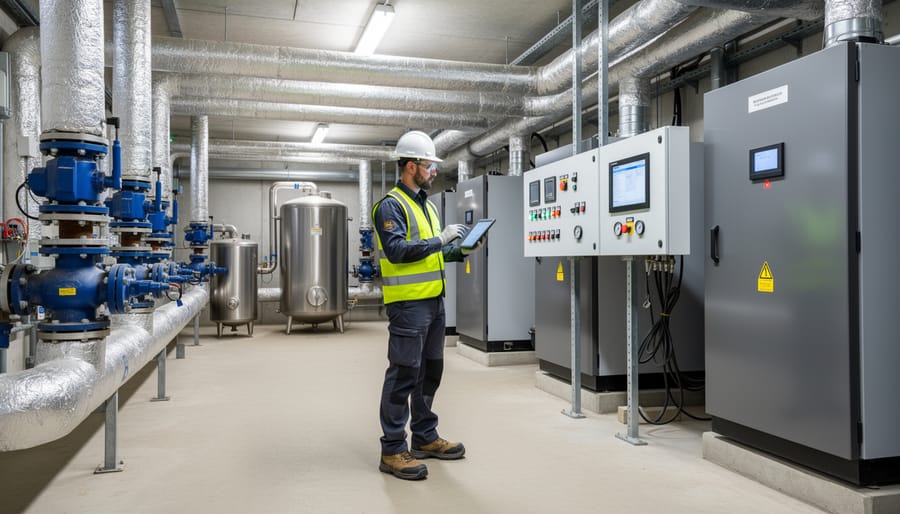
A mechanical electrical plant operator is the person who keeps a commercial building’s critical systems running smoothly, day in and day out. Think of them as the frontline technician responsible for everything from heating and cooling to electrical power distribution and water systems. While tenants flip a switch or adjust a thermostat without a second thought, the plant operator ensures those simple actions work reliably.
The core of the job revolves around monitoring and maintaining HVAC systems. This means overseeing boilers that provide heat during Western Canada’s harsh winters, managing chillers that cool large office towers in summer, and ensuring air handling units circulate fresh air throughout the building. Operators spend considerable time in mechanical rooms, checking gauges, adjusting setpoints, and responding to alarms when systems deviate from normal parameters.
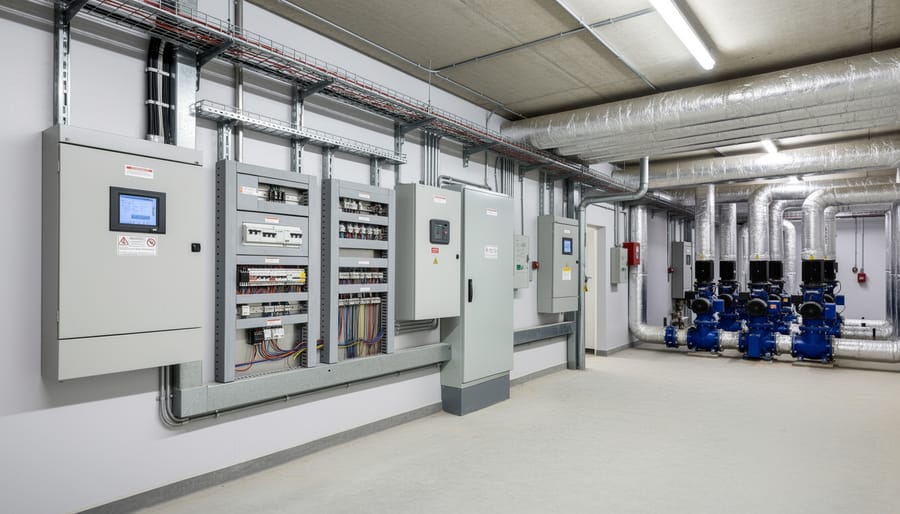
Electrical distribution represents another major responsibility. Operators monitor main switchgear, transformers, and emergency generators, ensuring uninterrupted power supply to critical building functions. When utility power fails, they start backup generators and manage the transition to keep elevators, fire safety systems, and emergency lighting operational. Regular testing of these systems falls squarely on their shoulders.
Modern commercial buildings integrate building automation systems that control HVAC, lighting, and security from centralized platforms. Plant operators interact with these digital interfaces constantly, reviewing trend data, acknowledging alarms, and making control adjustments to optimize energy consumption while maintaining occupant comfort. This technological layer has shifted the role from purely mechanical work toward a blend of hands-on maintenance and digital troubleshooting.
Daily tasks include conducting rounds through mechanical spaces, recording equipment readings, performing preventive maintenance, and documenting work in computerized maintenance management systems. Operators also coordinate with outside contractors during major repairs, brief incoming shift personnel during handoffs, and respond to tenant comfort complaints by investigating zone temperature issues or air quality concerns.
The position carries real responsibility. Building systems failures can mean frozen pipes causing millions in damage, power outages disrupting hundreds of businesses, or HVAC breakdowns creating unsafe indoor conditions. Plant operators act as the first line of defense against these scenarios, catching small issues before they cascade into emergencies. Their vigilance directly impacts building uptime, tenant satisfaction, energy costs, and the physical asset’s longevity. In high-rise offices, hospitals, universities, or shopping centres across Western Canada, these operators form the essential backbone of facility operations.
Salary Breakdown: What Plant Operators Earn Across Western Canada in 2026
British Columbia Compensation
Mechanical electrical plant operators in British Columbia command higher wages than other Western Canadian provinces, reflecting the province’s elevated cost of living and competitive commercial real estate market. Entry-level operators in BC typically earn $55,000, $62,000 annually, while experienced operators secure $70,000, $85,000, with chief engineers in large facilities reaching $90,000, $105,000.
Metro Vancouver presents a significant premium. Operators managing systems in downtown office towers, hospital complexes, and institutional buildings earn 12-18% more than provincial averages. A mid-career operator in Vancouver’s core typically makes $72,000, $80,000 compared to $62,000, $68,000 in Victoria or Kelowna for comparable responsibilities.
Regional markets like Prince George, Kamloops, and the Fraser Valley offer lower base salaries but better purchasing power. Operators in these centres earn $58,000, $72,000, though positions are less numerous than in metropolitan areas. Island communities and northern BC occasionally offer northern allowances or isolation premiums to attract certified operators.
Alberta Market Rates
Alberta’s commercial building operators command some of Western Canada’s highest wages, reflecting the province’s robust energy sector expertise and active construction market. Entry-level plant operators in Calgary and Edmonton earn $58,000, $68,000 annually, with intermediate operators making $70,000, $80,000. Senior operators with 1st or 2nd Class Power Engineering certificates routinely exceed $85,000, particularly in Calgary’s downtown office towers and Edmonton’s institutional facilities.
The province’s concentration of Class A commercial buildings drives demand for operators skilled in complex chiller plants and building automation systems. Many Calgary positions offer premium compensation for operators managing integrated energy management systems in LEED-certified towers. Fort McMurray and Grande Prairie facilities sometimes match metro wages despite lower living costs, especially when extended shift rotations are involved.
Saskatchewan and Manitoba Wages
In Saskatchewan and Manitoba, mechanical electrical plant operators typically earn $50,000, $72,000 annually, reflecting lower cost-of-living compared to BC and Alberta while maintaining competitive purchasing power. Regina and Saskatoon operators with 4th Class certificates start around $50,000, $55,000, advancing to $65,000, $70,000 with experience and higher certifications. Winnipeg’s market sits slightly higher at $52,000, $72,000, particularly in healthcare facilities and university campuses where complex systems demand specialized skills.
The prairie provinces offer distinct advantages: housing costs run 30-40% below Vancouver or Calgary, and many positions include stable Monday-to-Friday schedules with minimal on-call demands. Public sector employers, hospitals, government buildings, educational institutions, dominate the market and provide strong pension plans that significantly enhance total compensation. Saskatchewan’s resource sector proximity occasionally creates competition for certified operators, pushing industrial facility wages toward $75,000 for senior roles. While base salaries trail western counterparts, the combination of affordability, job security, and quality of life makes these markets attractive for operators prioritizing stability over peak earnings.
Career Pathways and Advancement Opportunities

Most mechanical electrical plant operators begin their careers through apprenticeships or technical college programs while working under licensed operators in commercial buildings. Entry positions typically involve monitoring basic systems, performing routine rounds, and assisting senior operators with preventive maintenance tasks. These foundational roles pay $45,000, $55,000 annually and provide hands-on experience with HVAC systems, boilers, and electrical distribution equipment before operators pursue formal licensing.
The standard progression path follows Power Engineering certification levels in reverse numerical order. An operator holding a 4th Class certificate can advance to 3rd Class after additional training and experience, opening positions in larger commercial properties and industrial facilities. Each certificate level requires specific operating hours and examinations, but each jump typically adds $8,000, $12,000 to base salary. Operators who reach 2nd Class or 1st Class certificates qualify for chief engineer positions at major office towers, hospitals, or university campuses, where compensation reaches $75,000, $95,000.
Lateral specialization offers compelling alternatives to traditional advancement. Many operators pivot toward building automation systems (BAS), becoming controls specialists who program and optimize digital building management platforms. This path requires computer literacy and understanding of control sequences but can match or exceed chief engineer salaries in tech-forward commercial portfolios. Energy management represents another growing specialty, particularly as building owners pursue green building certifications and net-zero targets. Operators with energy auditing skills or LEED credentials command premium pay for reducing operational costs and environmental impact.
The ultimate career destination varies by preference. Some operators transition into facilities management, overseeing entire property portfolios and managing teams of technicians and trades. Others become consultants or technical trainers, sharing expertise with building owners or educating the next generation of operators. A subset moves into equipment sales or manufacturer technical support, leveraging field experience to assist with specification and commissioning. In Western Canada’s tight labour market, operators with strong certifications and a decade of experience have genuine choice in shaping their career trajectory rather than following a single prescribed path.
Required Certifications and Training in Western Canada
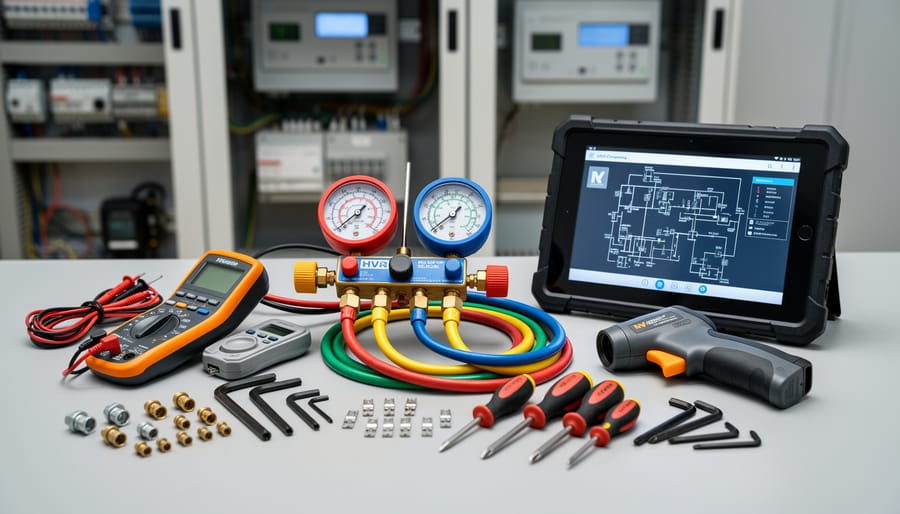
Entry into the profession requires a fourth-class power engineering certificate in most jurisdictions, though pathways vary significantly across Western Canada. British Columbia mandates the Fourth Class Power Engineering Certificate from the Safety Standards Authority for anyone operating high-pressure boilers or refrigeration systems above specified capacities. Alberta follows a similar framework under the Alberta Boilers Safety Association, requiring certification based on equipment capacity and complexity rather than universal building type.
Saskatchewan and Manitoba maintain their own certification structures through provincial safety authorities, with Manitoba’s Power Engineering curriculum administered by Apprenticeship Manitoba and Saskatchewan operating through the Technical Safety Authority. The certification levels progress from fourth class through first class, with each tier authorizing operation of larger and more complex systems.
- Fourth Class Power Engineering
- Entry-level certification allowing operation of smaller boilers and refrigeration plants in buildings like apartment complexes, small commercial properties, and light industrial facilities. Required across all four western provinces with similar scope definitions.
- Third Class Power Engineering
- Intermediate certification expanding authority to mid-sized commercial buildings including office towers, shopping centres, and institutional facilities. Typically requires two years of documented operating experience beyond fourth class.
- Second Class Power Engineering
- Advanced certification covering large district heating systems, major hospital complexes, and industrial plants. Positions operating at this level command the higher end of the salary range across Western Canada.
- Refrigeration Operator Certificate
- Supplementary credential required in all provinces for buildings with refrigeration systems exceeding certain horsepower thresholds. Covers chillers, ice rinks, cold storage facilities, and large HVAC installations.
The refrigeration ticket deserves particular attention because many commercial buildings require both power engineering and refrigeration certification. Operators working in facilities with substantial cooling loads, such as data centres or food processing plants, must hold both credentials. This requirement aligns with similar standards in other regions, including certification required in Newfoundland for comparable equipment.
Alberta distinguishes itself by offering an alternative pathway through the Building Operator certificate program, which provides limited scope for specific building types without full power engineering credentials. This option suits operators in buildings with less complex mechanical systems but pays accordingly lower, typically $48,000 to $62,000 annually versus the broader certification’s range.
Continuing education remains mandatory across all provinces. Certificate holders must complete annual update courses covering code changes, new technologies, and safety protocols. British Columbia requires eight hours of continuing education credits annually, while Alberta mandates specific training modules on refrigerant handling and pressure vessel safety every two years. These requirements ensure operators stay current with building automation advances and evolving energy efficiency standards that increasingly define the role.
Industry Demand and Job Market Outlook
Western Canada’s commercial real estate sector shows sustained demand for qualified plant operators, driven by several converging factors. The region added approximately 15 million square feet of Class A office and institutional space between 2024 and 2026, each requiring skilled operators to manage increasingly sophisticated building systems.
Retirement demographics create the most immediate pressure. Industry estimates suggest 40-45% of experienced operators across BC, Alberta, and the prairie provinces will retire within the next five years, opening positions faster than training programs currently fill them. Calgary and Vancouver face particularly acute shortages as senior operators with 1st and 2nd Class Power Engineering tickets leave the workforce.
Building automation systems are reshaping rather than eliminating the role. While modern BAS platforms automate routine monitoring tasks, they increase demand for operators who understand system integration, data analysis, and energy optimization. Operators capable of interpreting building analytics and implementing predictive maintenance protocols command premium compensation and enjoy stronger job security.
Sustainability mandates across Western Canada are creating specialized niches. BC’s energy benchmarking requirements for large buildings, Alberta’s emissions reduction incentives for commercial properties, and federal net-zero commitments all require operators who can optimize system performance beyond basic functionality. Operators with training in heat recovery, cogeneration systems, or renewable energy integration find themselves particularly marketable.
Healthcare and institutional sectors show the strongest consistent hiring. Universities, hospitals, and government facilities across the region maintain large in-house operations teams rather than contracting out plant operations, offering stable long-term employment with comprehensive benefits.
The shift toward mixed-use developments and district energy systems is expanding the role’s scope. Edmonton’s downtown district heating network and similar projects in other cities need operators who understand centralized generation and distribution, skills that command higher wages and open management pathways unavailable in single-building positions.
How Building Type and Employer Sector Impact Compensation
Your earning potential as a mechanical electrical plant operator in Western Canada shifts considerably based on where you work and who employs you. Class A office towers in downtown Calgary, Vancouver, and Edmonton typically pay $68,000, $85,000 annually for experienced operators, reflecting the sophisticated building automation systems, high-stakes tenant expectations, and premium property values these facilities represent. Healthcare facilities, hospitals, long-term care centres, and medical complexes, often match or exceed office tower rates at $70,000, $88,000, driven by 24/7 operational requirements, critical life-safety systems, and stringent regulatory oversight. These environments demand operators who can maintain uninterrupted power to surgical suites, manage medical gas systems, and respond instantly to equipment failures.
Universities and public institutions present a different value proposition: base salaries range $62,000, $78,000, slightly below top-tier private sector rates, but total compensation packages include defined-benefit pension plans (often worth 15-20% of salary), comprehensive health benefits, and job security that private employers rarely match. Public sector operators also enjoy clearer advancement pathways and structured pay scales, though they may encounter more bureaucratic processes and slower adoption of new technologies.
Shopping centres and retail complexes generally pay $55,000, $68,000, positioning them at the lower end of the commercial scale. Industrial facilities vary widely, manufacturing plants with complex process systems pay $65,000, $80,000 and value Power Engineering certificates highly, while warehouse and distribution centres typically offer $58,000, $70,000. The industrial sector often involves shift work premiums and overtime opportunities that can boost annual earnings by $8,000, $15,000.
Union membership significantly impacts both pay and working conditions. Unionized positions, common in healthcare, public institutions, and some large office portfolios, typically pay 12-18% more than comparable non-union roles and include stronger protections around scheduling, overtime rates, and workload limits. Union contracts often tie wages to energy management performance incentives and certification advancement, creating structured paths to higher earnings. Non-union private sector roles offer more flexibility and potentially faster advancement but less predictable compensation growth and fewer protections during economic downturns.
Frequently Asked Questions
Do mechanical electrical plant operators work regular business hours or shifts?
Most plant operators work rotating shifts including evenings, nights, weekends, and holidays since commercial buildings require continuous monitoring and operation. Large facilities typically staff operators 24/7, while smaller buildings may combine day shifts with on-call coverage.
What are the physical demands of this job?
The role requires moderate physical fitness including climbing stairs and ladders, working in mechanical rooms with temperature extremes, lifting equipment and tools up to 50 pounds, and standing or walking for extended periods during rounds and inspections.
How often are plant operators required to be on-call?
On-call requirements vary by employer and facility size. Operators typically rotate on-call duty weekly or bi-weekly, responding to emergency equipment failures, alarm conditions, or extreme weather events. Weekend on-call shifts are common, and response times usually range from 30 minutes to two hours.
What’s the difference between a plant operator and a building maintenance technician?
Plant operators focus specifically on operating and monitoring major mechanical and electrical systems like boilers, chillers, and electrical distribution, requiring Power Engineering certification. Maintenance technicians handle broader building repairs, tenant service requests, and general upkeep without necessarily holding power engineering credentials.
Can I work as a plant operator in Western Canada with certification from another province?
Power Engineering certificates are generally transferable across Canadian provinces through reciprocal agreements, though you may need to apply for equivalency recognition with your new province’s regulatory body. Each province maintains its own certification authority, so confirm requirements before relocating.
Is previous construction experience required to become a plant operator?
Construction experience isn’t mandatory, though mechanical trades backgrounds in HVAC, plumbing, or electrical work provide valuable knowledge. Many operators enter the field directly through apprenticeship programs or by completing Power Engineering training at technical colleges without prior construction industry employment.
How is building automation changing the plant operator role?
Modern building automation systems and open source BAS platforms are shifting operators toward system optimization and data analysis rather than manual adjustments. This evolution increases the value of operators who develop IT skills and learn advanced building management software, often leading to higher compensation and specialized positions in energy management.
These questions reflect the real concerns of professionals considering or advancing in the plant operator career. Shift work remains standard across Western Canada’s commercial building sector, particularly in Class A office towers, hospitals, and university campuses that maintain continuous operations. The physical nature of the work, while not extreme, requires reasonable fitness and comfort working in varied environmental conditions.
The distinction between plant operators and maintenance technicians matters significantly for career planning and salary expectations. Operators command higher wages because their Power Engineering certification qualifies them to legally operate pressure vessels and high-voltage equipment. Maintenance staff may earn $45,000 to $60,000 annually in Western Canada, while certified plant operators typically start above that range and reach $85,000 or more at senior levels.
On-call expectations represent one of the profession’s trade-offs. While operators earn premium pay for on-call availability and callout responses, the requirement can affect work-life balance. Unionized positions often provide clearer on-call compensation structures, and some employers offer rotation schedules that limit consecutive on-call weeks. Understanding these expectations upfront helps candidates assess whether the career aligns with their lifestyle preferences and family commitments.
Mechanical electrical plant operators occupy a vital niche in Western Canada’s commercial building sector, combining technical expertise with hands-on systems management that keeps facilities operating efficiently and safely. The compensation reflects this responsibility, with most operators earning between $55,000 and $85,000 annually depending on certification level, experience, and location. Metro markets like Vancouver and Calgary typically offer premiums that offset higher living costs, while smaller centres provide competitive wages with more affordable lifestyles.
The profession offers genuine career stability. Commercial buildings require continuous oversight regardless of economic cycles, and the wave of retirements creating openings shows no signs of slowing. Operators who pursue higher-class power engineering certificates or specialize in building automation systems position themselves for advancement into chief engineer roles or facilities management, often breaking the $90,000 threshold.
Western Canada’s push toward net-zero buildings and energy efficiency creates expanding opportunities rather than threatening the role. Modern systems require skilled interpretation and optimization that automation alone cannot deliver. Operators who adapt to evolving technology while maintaining core competencies in mechanical and electrical systems will find themselves increasingly valuable.
For those willing to obtain the necessary certifications and commit to continuous learning, mechanical electrical plant operation provides a tangible career path with clear progression, respectable compensation, and the satisfaction of maintaining the critical infrastructure that keeps Western Canada’s commercial buildings functioning day and night.
