
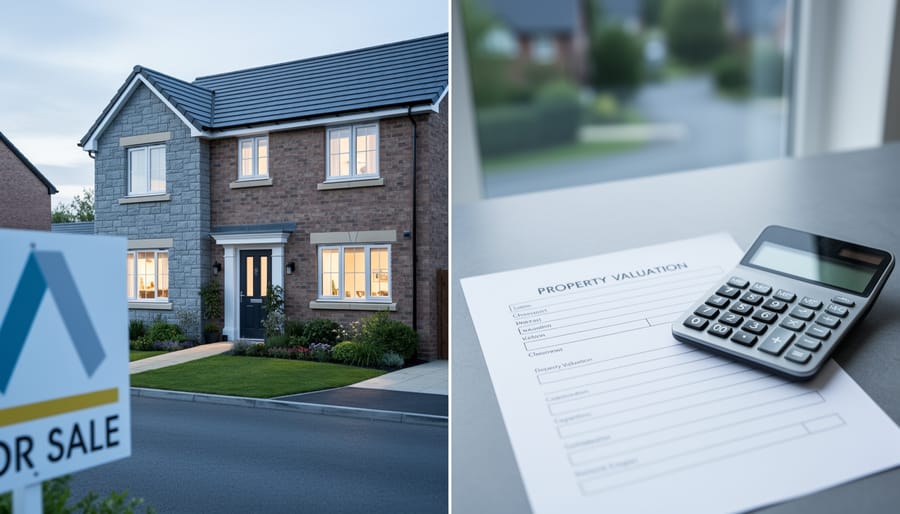
Cash house buying companies evaluate properties through seven primary criteria: structural condition, legal title status, location fundamentals, development potential, market liquidity, occupancy status, and transaction speed viability. These factors collectively determine whether a property fits the commercial parameters that enable rapid acquisition at below-market valuations.
The cash buying sector has evolved considerably since its emergence in the early 2000s. What began as opportunistic purchasing during economic downturns has matured into a sophisticated segment of the property market, with companies deploying advanced valuation algorithms and risk assessment frameworks. Industry data from 2026 indicates that cash buyers now complete approximately 4-6% of all UK residential transactions, with particular concentration in urban centres and areas undergoing regeneration.
Understanding these evaluation criteria serves two distinct professional audiences. Property owners facing time-sensitive disposals, whether due to probate, financial pressure, or relocation, benefit from realistic expectations about how their assets will be assessed. Construction and property development professionals gain strategic insight into acquisition patterns that influence development pipelines, distressed asset opportunities, and competitive positioning.
The valuation approach differs markedly from traditional estate agency methods. Cash buyers typically discount properties by 20-30% below market value to account for speed, certainty, and the removal of chain risk. This discount structure reflects genuine commercial considerations rather than exploitation, covering holding costs, refurbishment budgets, legal expenses, and profit margins on subsequent resale or rental.
For those exploring this route, understanding what drives a we buy any house offer ensures informed decision-making aligned with business objectives or personal circumstances.
How Cash Buyers Evaluate Properties: Selection Criteria Behind the Offer
Cash house buying companies operate on fundamentally different valuation models than traditional purchasers. Where conventional buyers assess properties through emotional appeal and lifestyle fit, cash buyers run hard calculations built around three core metrics: acquisition cost, renovation expense, and resale value. Their methodology strips away sentiment to focus purely on numerical outcomes, typically targeting profit margins between 15-25% after all costs.
The assessment process begins with rapid property evaluation, often completed within 24-48 hours. Cash buyers deploy experienced surveyors who identify structural defects, building regulation breaches, and renovation requirements during brief site visits. Unlike mortgage-dependent purchasers who rely on lender-approved valuations, cash companies conduct their own appraisals focused on worst-case scenarios rather than optimistic projections.
Speed-to-market calculations drive offer formulas. A cash buyer factors in current market absorption rates, seasonal demand variations, and holding costs during refurbishment. Properties requiring six months of renovation work face steeper discounts than those needing cosmetic updates achievable in six weeks. This timeline sensitivity explains why cash buyers heavily penalise properties with planning complications or extensive structural issues that extend project duration.
Construction industry context matters significantly. Cash buyers maintain relationships with contractors and quantity surveyors who provide real-time pricing for materials and labour. They account for current building regulation compliance costs, including fire safety upgrades, electrical rewiring to 18th Edition standards, and energy efficiency improvements. Unlike traditional buyers who might underestimate renovation scope, cash companies price in contingencies for hidden defects discovered during construction, typically adding 10-15% to initial cost estimates. This conservative approach protects their profit margins but inevitably compresses seller returns.

1. Structural Condition and Building Integrity

Structural condition stands as the foremost consideration for cash house buying companies because it directly determines both refurbishment costs and resale viability. Unlike traditional buyers who may rely on emotional appeal or future potential, cash buyers conduct systematic structural assessments that prioritise speed and risk mitigation, they need to quantify repair expenses within hours, not weeks.
The rapid evaluation process typically involves visual inspections focused on visible indicators of deeper problems. Cash buyers and their surveyors concentrate their attention on several critical structural elements:
- Foundation stability and evidence of movement or settlement
- Load-bearing walls showing cracks, bowing, or structural compromise
- Roof integrity including timber condition, weatherproofing, and remaining lifespan
- Drainage systems and their effectiveness in managing water flow
- Damp course functionality and protection against rising moisture
Foundation issues represent the most serious red flag. Subsidence, even historic and stabilised cases, triggers significant offer reductions because insurers view these properties as higher risk. Structural engineer David Pemberton notes that “active subsidence will often kill a quick sale entirely, whilst historic subsidence with a clean insurance record might reduce the offer by 15-20% to account for future marketability concerns.”
Dampness severity determines whether cash buyers proceed at all. Surface condensation is manageable, but penetrating damp requiring extensive replastering, timber treatment, or cavity wall work substantially impacts valuations. Rising damp affecting ground-floor rooms can reduce offers by £8,000-£15,000 depending on property size, reflecting both remediation costs and the cost management required during refurbishment.
Roof condition merits particular scrutiny because replacement represents one of the highest single repair expenses. A roof nearing end-of-life (15-20 years for standard tiles) will see offers reduced by projected replacement costs plus a buffer, often £12,000-£25,000 for typical residential properties. Cash buyers won’t gamble on “a few more years” when they’re factoring rapid turnaround into their business model.
2. Location and Market Demand

Geographic location remains the foundation of property valuation for cash buyers, influencing every subsequent assessment they make. Unlike structural issues that can be remedied, location is fixed, making it a primary determinant of both immediate resale potential and long-term market appeal.
Cash buying companies conduct thorough market analysis examining multiple geographic factors simultaneously. They assess transport connectivity first, proximity to motorway junctions, railway stations, and major road networks directly impacts resale speed. Properties within 15-minute walks of stations typically command premiums, whilst those requiring car dependence face valuation reductions of 10-15%.
Local amenities weigh heavily in their calculations. Schools rated ‘Good’ or ‘Outstanding’ by Ofsted, supermarkets within a mile radius, and healthcare facilities all contribute to neighbourhood desirability. Cash buyers cross-reference these against demographic data to identify whether an area attracts families, young professionals, or retirees, each segment having distinct resale timelines and price sensitivities.
Employment hubs create predictable demand patterns. Properties within commutable distance of major business districts, manufacturing centres, or logistics parks maintain stronger resale potential. Cash buyers favour locations near established employment corridors over speculative developments still awaiting tenants.
Regional variations significantly affect cash buyer appetite. Northern markets typically see more aggressive cash buyer activity due to lower entry costs and higher yields, whilst Southern properties face tighter margins. Regeneration projects transform valuations, areas receiving infrastructure investment, new transport links, or commercial development trigger increased cash buyer interest. They monitor council planning portals and construction regulations announcements to identify emerging opportunities before wider market awareness drives up acquisition costs.
Properties in declining areas receive substantially reduced offers, as cash buyers factor in extended holding periods and uncertain exit strategies.
3. Required Renovation Scope and Cost

Cash house buying companies approach renovation costs with spreadsheet precision, calculating every expense from first demolition to final sale. Unlike traditional buyers who might underestimate refurbishment scope, cash purchasers employ quantity surveyors and experienced project managers to produce detailed cost assessments during their initial property evaluation.
The renovation budget calculation extends beyond obvious repair costs. Cash buyers factor in materials at current market rates, skilled labour charges (which vary significantly by region and trade), project management fees, utilities during works, insurance, and critically, holding costs. These holding costs accumulate daily: mortgage interest if borrowed funds are involved, council tax, building insurance, and security for vacant properties. A six-month renovation timeline on a £200,000 property acquisition could add £8,000-£12,000 in holding costs alone before a single brick is laid.
Different renovation scenarios carry vastly different cost implications. Cosmetic refurbishment, new kitchen and bathroom fittings, fresh decoration, updated flooring, might run £15,000-£25,000 for a standard three-bedroom property. Cash buyers typically offer 20-30% below market value for these straightforward cases because the work presents minimal risk and short turnaround.
Mid-level renovations involving rewiring, new heating systems, window replacement, and minor structural repairs push costs to £35,000-£60,000. Here, offers drop to 30-40% below comparable sold prices because project duration extends to three or four months and complexity introduces delay risks.
Major structural work, underpinning, roof replacement, damp-proofing entire properties, removing load-bearing walls, can exceed £80,000-£120,000. These projects trigger the steepest discounts, often 45-55% below market value, because cash buyers face six to nine-month timelines, increased planning scrutiny, and substantial capital tied up with uncertain completion dates. A structural engineer’s report revealing foundation movement or significant roof deterioration immediately recalibrates the entire financial model, sometimes making the difference between a viable purchase and walking away entirely.
4. Planning and Regulatory Compliance

Planning permission and building regulations compliance rank among the most scrutinised factors when cash house buying companies value a property. These buyers conduct thorough regulatory audits because non-compliance translates directly into additional costs, project delays, and legal risks that erode profit margins. Unlike traditional purchasers who might overlook minor infractions, cash buyers systematically price in every regulatory discrepancy.
The assessment begins with verifying that all structural work, extensions, and alterations have proper planning consent and building control sign-off. Cash buyers request completion certificates, planning approval documents, and any retrospective permissions. They cross-reference these against Land Registry records and local authority planning histories to identify discrepancies. Missing documentation raises immediate red flags, even if work appears professionally executed, absence of certification creates legal liability and complicates future sales.
Cash buyers particularly scrutinise properties for unauthorised development. A loft conversion without building control approval, a rear extension exceeding permitted development rights, or internal structural alterations lacking certification all trigger valuation reductions. The buyer must factor in regularisation costs, including surveyor fees, retrospective applications, and potential enforcement action risks. Several regulatory complications consistently reduce offers:
– Unauthorised extensions or structural alterations without planning permission
– Missing building control completion certificates for major works
– Properties in conservation areas with unapproved external changes
– Listed buildings with alterations breaching heritage consent requirements
Extension and conversion potential influences valuations positively when clear. Cash buyers pay premiums for properties with existing planning permissions for additional square footage or change of use, these represent ready-made profit opportunities. A three-bedroom house with approved plans for a two-storey extension commands better offers than an identical property requiring fresh applications.
Non-compliance impacts vary by severity. Minor infractions like replaced windows in conservation areas might reduce offers by five to ten percent. Major issues, an entire floor added without consent, can slash valuations by thirty percent or more, sometimes rendering properties unsaleable to cash buyers who avoid protracted legal complications. Properties requiring enforcement notice resolution typically receive heavily discounted offers or outright rejections, depending on rectification complexity and the buyer’s risk appetite.
5. Energy Efficiency and Environmental Performance

Energy Performance Certificate (EPC) ratings increasingly influence cash buyer valuations as regulatory pressures intensify across the property sector. Cash house buying companies scrutinise a property’s environmental performance because poor ratings translate directly into compliance costs and reduced marketability when they come to resell.
Properties with EPC ratings below C face particular scrutiny. Since April 2025, new Minimum Energy Efficiency Standards (MEES) for residential lettings require landlords to achieve at least a C rating in most scenarios, making lower-rated properties less attractive to investor buyers. Cash companies calculate the expense of bringing properties up to standard, insulation upgrades, heating system replacements, double glazing installation, and renewable energy integration, then deduct these costs from their offer.
The financial impact can be substantial. Upgrading a typical three-bedroom house from an E rating to a C can cost between £8,000 and £15,000, depending on the property’s condition and required interventions. Cash buyers factor in not just materials and labour but also the project timeline and holding costs during improvement work.
Structural engineer James Whitmore, who advises several cash buying firms, notes that properties with single-glazed windows, uninsulated cavity walls, and outdated boilers receive immediate downward adjustments. “We’re seeing cash buyers request detailed breakdowns of proposed energy upgrades before finalising offers. The calculation is straightforward, lower EPC ratings mean higher refurbishment budgets, which reduce profit margins unless reflected in the purchase price.”
Beyond MEES compliance, forward-thinking cash buyers consider upcoming regulations targeting carbon emissions and the broader shift toward net-zero housing stock. Properties requiring extensive environmental upgrades to meet anticipated standards face steeper valuation penalties, particularly in markets where buyers increasingly prioritise sustainability credentials. Cash companies must balance current compliance requirements against future regulatory trajectories when determining what they’re willing to pay.
6. Legal Status and Title Complications

Legal title complications represent one of the most significant risk factors cash house buying companies evaluate, as unresolved legal issues can delay transactions, increase costs, or even render a property unsellable through conventional channels. Unlike mortgage-dependent buyers who face strict lender requirements regarding clean title, cash buyers possess the flexibility to proceed with legally complex properties, though they adjust their offers accordingly to account for resolution costs and risk.
Cash buyers conduct comprehensive title searches to identify encumbrances, restrictions, and potential disputes that might affect ownership or future resale value. Common legal complications include restrictive covenants limiting property use or modifications, unregistered rights of way granting neighbouring property access, boundary discrepancies between title plans and physical fences, and outstanding charges from previous improvement works. Each issue carries different implications for valuation depending on resolution difficulty and cost.
Leasehold properties receive particular scrutiny, with cash buyers examining remaining lease terms, ground rent escalation clauses, service charge histories, and any breach of lease covenants. Properties with fewer than 80 years remaining on the lease typically face substantial offer reductions reflecting lease extension costs, which can exceed £10,000 even before legal fees. Short leases under 70 years often trigger marriage value considerations, further complicating and inflating extension expenses.
Absolute deal-breakers remain rare but include unresolvable access disputes preventing legal entry, missing freeholder details on leasehold properties, and properties subject to compulsory purchase orders. Most other legal complications remain negotiable, with cash buyers reducing offers by estimated resolution costs plus a risk premium typically ranging from 15 to 30 percent. This premium compensates for uncertainty around legal proceedings duration and potential hidden complications emerging during resolution processes.
Properties with minor title defects, outdated restrictive covenants unlikely to be enforced, or straightforward boundary adjustments requiring neighbour agreement generally see modest offer reductions between £2,000 and £8,000 depending on complexity.
7. Time Sensitivity and Seller Motivation

Cash house buying companies understand that urgency is often worth more than pounds to certain sellers, and they structure their offers accordingly. Unlike traditional purchasers who may take three to four months to complete, cash buyers can typically finalise transactions within seven to fourteen days, a timeline that fundamentally shifts the value equation for time-pressed vendors.
The degree of seller urgency directly influences offer amounts. When a property owner faces imminent repossession, pending probate deadlines, or urgent relocation requirements, cash buyers recognise reduced negotiating leverage and adjust their pricing. This isn’t opportunism; it reflects the premium sellers pay for certainty and speed. A developer needing to liquidate an asset quickly to fund a new project might accept 15-20% below market value to secure completion within two weeks, whereas the same property sold conventionally over three months might fetch a higher price but miss critical funding windows.
Sarah Mitchell, a quantity surveyor from Leeds, experienced this trade-off first-hand when her firm won a major infrastructure contract in Edinburgh requiring immediate relocation. “I had a Victorian terrace that needed substantial work, probably six months to prepare for open market sale. The cash buyer completed in ten days at 78% of estimated market value. I lost £40,000 on paper, but gained the Edinburgh contract worth £200,000 annually. The maths was straightforward.”
Cash buyers assess seller motivation through several indicators: property condition suggesting estate sales or inherited properties, marketing duration on portals, price reductions, and direct conversation about timescales. They position themselves as problem solvers rather than bargain hunters, offering speed, certainty, and minimal transaction complexity as their core value proposition. For construction professionals managing multiple projects or portfolio transitions, this speed can prove invaluable despite the pricing discount.
How Construction Professionals Can Leverage This Knowledge
Understanding how cash house buying companies evaluate properties gives construction professionals a strategic advantage in portfolio management and project planning. By addressing the seven assessment factors proactively, you can position properties to attract competitive cash offers and accelerate transaction timelines.
Start by assembling comprehensive documentation before approaching cash buyers. Compile recent structural surveys, EPC certificates, planning permissions (including any retrospective approvals), building regulation completion certificates, and clear title documentation. This preparation demonstrates professionalism and removes valuation uncertainty, typically resulting in stronger initial offers. For properties with known issues, commission specialist reports addressing specific concerns, damp surveys, structural engineer assessments, or asbestos inspections, rather than leaving buyers to assume worst-case scenarios.
Developers managing multiple properties should identify which assets suit cash sales versus traditional market listings. Properties requiring extensive refurbishment, those with legal complications that delay conventional sales, or units in areas with slower market activity often achieve better net outcomes through cash transactions. The speed and certainty let you redeploy capital quickly into higher-return projects rather than tying up funds in prolonged sales processes.
Contractors and project managers can leverage cash buyer relationships when circumstances demand rapid exits, project relocations, partnership dissolutions, or unexpected capital requirements. Establishing connections with reputable cash buying companies before you need them creates options during time-sensitive situations. Some cash buyers specialise in construction professional networks and understand industry-specific scenarios, offering more nuanced valuations than general operators.
What’s the typical timeline from initial contact to completion with a cash buyer?
Reputable cash buying companies typically provide initial valuations within 24-48 hours and can complete transactions in 7-14 days if documentation is ready. Complex cases involving legal work may extend to 3-4 weeks.
Where do construction professionals have negotiation leverage with cash buyers?
Leverage comes from having detailed documentation that reduces buyer risk, presenting multiple interested parties, and demonstrating property potential through feasibility studies or planning permissions already secured. Clear title and minimal legal complications also strengthen your position.
What documentation accelerates the valuation process?
Recent structural surveys, current EPC certificates, building regulation completion certificates, planning permissions, title deeds, and evidence of recent works (invoices, guarantees, certifications) significantly speed valuations. For commercial or mixed-use properties, include financial performance records.
When should construction professionals choose cash sales over traditional listings?
Cash sales make sense when speed matters more than maximising price, when properties have complications deterring mortgage lenders, when managing portfolio liquidity for new acquisitions, or when holding costs and extended marketing periods erode the traditional sale premium.
Time the market intelligently. Cash buyers often increase their activity and offer premiums during periods when traditional buyer demand softens, creating opportunities to exit properties that might languish in conventional listings. Monitor local market conditions and maintain relationships with several cash buying operations to benchmark offers and understand current appetite for your property types.
Understanding what cash house buying companies look for when valuing properties gives construction professionals a strategic advantage in portfolio management and project planning. The seven factors, structural condition, location dynamics, renovation scope, planning compliance, energy efficiency, legal status, and time sensitivity, form the foundation of every cash buyer’s assessment model. Each element directly impacts the final offer, with structural issues and legal complications typically carrying the heaviest weight in negotiations.
For developers, contractors, and property managers, this knowledge transforms how you approach asset disposal and acquisition decisions. Knowing that cash buyers prioritise speed over maximum price helps you evaluate whether a quick sale serves your business needs better than waiting for traditional buyers. Similarly, understanding how renovation costs and compliance issues affect valuations allows you to make informed choices about which properties to improve before selling versus offloading in current condition.
The cash buying sector continues adapting to regulatory changes, environmental standards, and market pressures. Companies that demonstrate technical expertise in construction and property assessment will likely gain market share, while those offering transparent valuation methodologies build stronger reputations among industry professionals. Staying informed about these evaluation criteria ensures you’re positioned to make decisions that align with your project timelines and financial objectives.
