
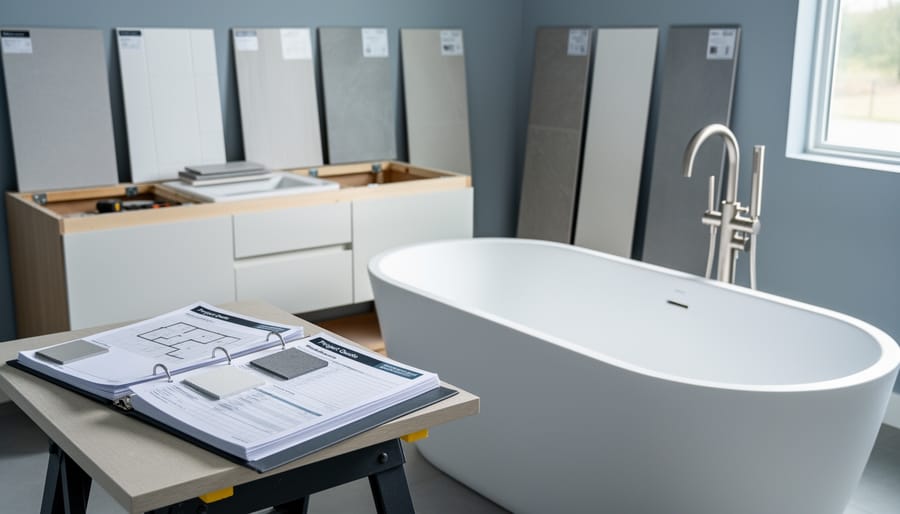
For most Kitchener bathroom renovations in 2026, fixed-price quotes deliver better budget certainty and fewer surprises than cost-plus arrangements, provided you’ve fully defined your scope before requesting proposals. Homeowners who invest the time upfront to specify fixtures, finishes, and layout changes can lock in a total project cost and avoid the stress of tracking hourly charges and material markups throughout construction. However, that clarity depends entirely on how thoroughly you document your requirements before contractors price the work.
The challenge facing Kitchener homeowners isn’t simply collecting multiple quotes, it’s understanding what those numbers actually represent. A $28,000 fixed-price bid and a $22,000 cost-plus estimate aren’t directly comparable until you analyze what each contractor has included, excluded, and assumed about your project. Without a clear scope definition, you’re essentially comparing proposals for different projects, and the lowest number often signals missing work rather than genuine value.
Professional contractors structure their quotes in fundamentally different ways, each with distinct implications for risk allocation, budget control, and design flexibility during construction. Fixed-price contracts transfer cost overrun risk to the contractor but require detailed specifications to prevent scope disputes. Cost-plus arrangements preserve design flexibility and transparency but expose homeowners to material price volatility and efficiency variations between trades.
This comparison examines both quoting approaches across the dimensions that matter most during bathroom renovations: budget predictability, change order handling, contractor selection criteria, and documentation requirements. We’ve consulted with experienced Kitchener renovation specialists, including PD Renovations to identify which homeowners benefit from each structure and what red flags to watch for when evaluating proposals.
What Each Option Is
Before diving into the comparison, it’s essential to understand what fixed-price and cost-plus quotes actually represent.
A fixed-price quote (sometimes called a lump sum or stipulated price) is a single, all-inclusive price your contractor commits to for completing your bathroom renovation as specified. You pay this agreed amount regardless of how much time or materials the contractor ultimately uses. The contractor absorbs cost overruns but keeps any savings from efficient execution.
A cost-plus quote (also known as time and materials) works differently. Instead of a total project price, the contractor provides their hourly labor rates and agrees to charge you actual material costs plus a markup percentage or fixed fee. You pay for the documented time spent and materials purchased, with the final project cost determined as work progresses rather than locked in upfront.
The fundamental difference is risk allocation. Fixed-price transfers cost risk to the contractor, while cost-plus keeps it with you, the homeowner. This distinction drives every other aspect of how these quoting approaches function in practice.
Comparing Bathroom Remodel Quotes at a Glance

Kitchener homeowners planning bathroom renovations face a fundamental choice in how contractors structure their quotes. The decision between fixed-price and cost-plus pricing shapes everything from your financial exposure to how design changes are handled mid-project.
Fixed-price quotes lock in a total cost upfront, transferring most financial risk to the contractor. You pay an agreed amount regardless of what unexpected conditions emerge during demolition or how long installation takes. Cost-plus quotes flip this arrangement: you pay actual material costs and hourly labor rates plus a contractor markup, keeping detailed receipts and timesheets as documentation. Your final bill reflects what the project actually consumed rather than what was estimated months earlier.
The trade-off centers on certainty versus flexibility. Fixed pricing delivers budget predictability but requires comprehensive scope definition before work begins. Every fixture, finish, and construction detail must be specified to get an accurate quote. Changes during construction trigger formal change orders that often carry premium pricing since the contractor has already committed resources based on the original scope.
Cost-plus structures accommodate evolving decisions and uncertain conditions more gracefully. You can refine tile selections or upgrade fixtures as the project unfolds without renegotiating the entire contract. But you sacrifice the comfort of knowing your total cost upfront, and you bear the risk if demolition uncovers extensive repairs or if installation takes longer than anticipated.
| Quote Type | Budget Certainty | Project Flexibility | Risk Allocation | Typical Use Case |
|---|---|---|---|---|
| Fixed-Price | High, total cost known upfront | Low, changes require formal amendments | Contractor absorbs cost overruns | Well-defined scope, budget-driven projects |
| Cost-Plus | Low, final cost varies with actuals | High, decisions can evolve during work | Homeowner pays actual costs incurred | Uncertain conditions, custom work, evolving design |
Neither approach is inherently superior. Fixed-price quotes suit straightforward renovations with standard finishes where you have made all selections before construction starts. Cost-plus arrangements work better when you are tackling an older Kitchener home with unknown plumbing configurations or when you want flexibility to upgrade materials as the project reveals opportunities. The right choice depends on how much scope uncertainty you face and whether budget control or design adaptability matters more to your particular bathroom remodel.
What Each Quoting Approach Involves

Fixed-Price (Lump Sum) Quotes
A fixed-price quote commits the contractor to complete your bathroom remodel for a predetermined total amount, regardless of actual time or material costs incurred. The contractor calculates labour hours, material quantities, equipment needs, overhead expenses, and desired profit margin, then presents a single lump-sum figure covering the entire scope of work. This pricing structure transfers financial risk to the contractor, who absorbs cost overruns if the project takes longer than estimated or materials cost more than anticipated.
The quote itemizes major components (demolition, plumbing, electrical, tiling, fixtures) but locks in the total price. Kitchener contractors typically include a contingency buffer within their fixed price to protect against minor unforeseen conditions or material price fluctuations. This built-in cushion, often 10-15% of project costs, allows contractors to manage normal variations without requesting additional funds.
However, any change to the defined scope triggers a change order with an additional charge. If you decide mid-project to upgrade from standard tiles to imported mosaics, relocate a vanity, or add heated flooring, the contractor prices that variation separately. These change orders carry higher unit costs than original quote items because they disrupt workflow and require cost management adjustments.
The fixed-price structure works only when scope is fully defined before quoting. Vague specifications like “mid-range finishes” or “standard fixtures” leave room for disputes about what the original price included. Successful fixed-price quotes require detailed drawings, specific product selections, and comprehensive scope documentation that both parties sign off on before work begins.
Cost-Plus (Time and Materials) Quotes
Under a cost-plus arrangement, you pay the actual documented cost of materials plus an hourly rate for labor, with the contractor adding an agreed-upon markup to cover overhead and profit. This structure shifts pricing from a predetermined total to a running tally based on real expenses as they accumulate throughout your bathroom renovation.
Your contractor purchases fixtures, tiles, plumbing supplies, and other materials at their actual cost, then bills you the receipt amount plus a percentage markup, typically ranging from 10% to 25% in the Kitchener market. Labor charges separately at an hourly or daily rate for the crew, usually between $50 and $95 per hour depending on trade specialty and contractor experience. The markup or management fee compensates the contractor for supervision, business overhead, insurance, and profit margin.
Transparency becomes paramount in this model. Expect to receive detailed weekly or bi-weekly invoicing showing material receipts, hours worked by each tradesperson, and all subcontractor bills. Reputable contractors provide copies of supplier invoices and time sheets, allowing you to verify charges against actual expenditures. Many Kitchener contractors use project management software that gives clients real-time access to costs as they accrue.
The contract should specify exact markup percentages, hourly rates for different trades, how materials are procured, what documentation you will receive, and billing frequency. Without clear documentation standards upfront, cost-plus arrangements can breed disputes over whether charges are reasonable or necessary.
Comparing Quote Types Across Key Dimensions
Budget Predictability and Financial Risk

Fixed-price quotes offer maximum budget predictability. Once you sign the contract, your cost is locked regardless of how long the work takes or minor material price fluctuations. This certainty simplifies financial planning and mortgage applications, but contractors build risk premiums into their pricing, typically 10-15% for unforeseen conditions. You’ll need minimal contingency funds (5-10%) to cover only true scope changes you initiate.
Cost-plus quotes shift financial risk to you. Your final cost depends on actual labor hours, material waste, and how efficiently the contractor works. While you avoid paying risk premiums upfront, budget uncertainty persists until project completion. Effective procurement management becomes essential to track spending. Kitchener homeowners choosing cost-plus should maintain 15-20% contingency funds to absorb unexpected conditions and longer-than-estimated timelines. The trade-off: potential savings if the project goes smoothly, but exposure to overruns if complications arise or the contractor works inefficiently. Budget-constrained renovators generally prefer fixed-price for its financial certainty, while those prioritizing flexibility over cost control accept cost-plus variability.
Scope Definition and Documentation Requirements

Fixed-price quotes demand exhaustive upfront documentation because the contractor assumes all risk for costs that aren’t explicitly defined. Before pricing a lump-sum bathroom remodel, Kitchener contractors need detailed floor plans, fixture specifications with model numbers, exact tile selections including layout patterns, electrical and plumbing fixture locations, cabinetry dimensions and finishes, and material grade callouts. Ambiguity creates disputes, if your quote doesn’t specify 12×24 porcelain versus ceramic tile or semi-frameless versus fully frameless shower doors, the contractor will price the minimum standard and charge extra for upgrades. This documentation requirement typically adds two to four weeks to the pre-construction phase while you finalize every decision.
Cost-plus arrangements tolerate more initial flexibility because you’re paying actual costs as they occur rather than committing to a predetermined total. You can proceed with conceptual layouts and general finish categories, then make specific selections during construction without triggering formal change orders. While you still need basic scope definition, approximate fixture count, rough finish level, structural work required, the documentation standard is looser. You might start demolition knowing you want a walk-in shower while still comparing tile options, a scenario that would prevent accurate fixed-price bidding but works fine under time-and-materials billing.
Change Order Management and Project Flexibility
Fixed-price quotes create a formal barrier to changes. When you modify tile selections, relocate plumbing fixtures, or upgrade vanity cabinets mid-project, each alteration requires a written change order documenting the revised work and additional cost. Kitchener contractors typically add 15-25% markup to change-order labor and materials compared to original quote rates, this premium covers scheduling disruption, purchasing inefficiencies, and administrative overhead. The process protects budget certainty but slows decision-making. Expect 3-5 days for contractors to price significant changes, and anticipate negotiation friction if modifications are frequent.
Cost-plus structures handle changes fluidly. You can adjust fixture specifications, add accent tile, or modify layout details without formal amendments, the contractor simply bills actual costs at the agreed markup. This flexibility suits evolving design preferences and accommodates unexpected conditions like hidden water damage or obsolete plumbing without contractual renegotiation. However, the ease of modification can erode budget discipline. Without change-order friction, scope creep becomes likely. Kitchener projects on cost-plus arrangements often exceed initial estimates by 20-30% when clients make incremental upgrades throughout construction. The administrative burden shifts to tracking invoices rather than negotiating amendments.
Contractor Selection and Competitive Bidding
Fixed-price quotes enable straightforward competitive bidding. When three Kitchener contractors receive identical scope documents, you can compare their bottom-line numbers directly and identify the best value. This transparency benefits price-conscious homeowners and creates natural downward pressure on contractor margins. The competitive dynamic works best when your scope is comprehensive, vague specifications invite inflated contingencies that obscure true pricing.
Cost-plus quotes resist apples-to-apples comparison. One contractor might charge $65 per hour while another charges $80, but the higher-rate firm may work faster or carry better insurance. Material markups vary from 10% to 25% across Kitchener renovators. You’re essentially selecting a contractor based on trust, process, and references rather than competing on final price. This approach suits homeowners who’ve identified a preferred contractor through reputation or past work and aren’t primarily shopping on cost.
The Kitchener market supports both models. Established renovation firms typically offer fixed pricing for standard bathroom remodels, while boutique contractors and design-build firms often prefer cost-plus for custom projects where their expertise justifies premium rates.
Timeline and Project Pace Implications
Fixed-price quotes typically require longer upfront planning but enable faster execution once work begins. Because the entire scope must be defined before contract signing, homeowners spend more time making finish selections, approving drawings, and finalizing specifications. However, this front-loaded decision-making means fewer mid-project delays waiting for client choices. Contractors can order materials in bulk, schedule trades efficiently, and maintain steady progress toward a predictable completion date.
Cost-plus arrangements flip this timeline. Projects can start sooner since detailed specifications aren’t required upfront, making this approach attractive when timeline pressures exist or when homeowners need to begin work before finalizing all design decisions. The trade-off is slower execution as ongoing material selections and design refinements interrupt workflow. Each choice becomes a decision point that can stall progress.
For phased bathroom renovations, where structural work precedes finish installations, cost-plus offers flexibility to pause between phases without renegotiating contracts. Fixed-price works better when continuous completion matters, such as single-bathroom homes where extended timelines create hardship.
Defining Your Bathroom Remodel Scope Before Requesting Quotes
Accurate contractor quotes depend on precise scope definition, regardless of which pricing structure you pursue. Kitchener contractors cannot provide realistic estimates without understanding exactly what you want changed, what stays in place, and what quality level you expect. The completeness of your scope documentation directly affects how comparable the quotes you receive will be.
Start by documenting your existing bathroom conditions and what specifically drives the renovation. Measure the current space, photograph existing fixtures and finishes, and note any known problems like water damage, mold, or inadequate ventilation. This baseline lets contractors understand what demolition involves and what hidden conditions they might encounter behind walls or under flooring.
The most critical scope decisions center on layout modifications versus cosmetic updates. Moving a toilet requires rerouting drain lines through the floor, expensive work that often involves concrete cutting in Kitchener’s typical basement bathrooms. Relocating a shower valve means opening walls and potentially upgrading supply lines to meet current code. These structural changes drive costs far more than finish selections, so decide early whether you’re keeping the existing layout or redesigning it.
At minimum, define these scope elements before requesting quotes:
- Layout changes: fixture relocations, wall removals, room expansion, doorway modifications
- Fixture selections: toilet, vanity, sink, shower/tub, faucets with specific models or equivalent quality specifications
- Plumbing relocations: any changes to drain, supply, or vent line locations
- Electrical upgrades: additional outlets, GFCI protection, heated floors, new lighting fixtures, exhaust fan capacity
- Tile and finish selections: wall tile type and coverage area, floor tile, trim profiles, paint specifications
- Ventilation requirements: exhaust fan CFM rating, ducting path, makeup air considerations
- Waterproofing standards: membrane systems, backer board type, shower pan construction method
Beyond these fundamentals, specify accessibility features you want incorporated. Curbless showers, grab bar blocking, comfort-height toilets, and lever-handle faucets should appear in your scope documentation if relevant to your household, not introduced as afterthoughts during construction.
Create a simple written scope document with room dimensions, desired fixtures listed by type and approximate quality level, and planned layout shown on a sketch or marked-up floor plan. Include reference photos showing tile styles, vanity aesthetics, and finish expectations. This documentation package gives every contractor the same information foundation, making their quotes genuinely comparable and reducing the misunderstandings that lead to change orders regardless of pricing structure.
Who Should Choose Which Quote Type
When Fixed-Price Quotes Work Best
Fixed-price quotes deliver the most value when your bathroom renovation scope is fully defined before contractor selection begins. If you’ve finalized layout decisions, selected fixtures, specified tile and finishes, and documented all structural changes, a lump-sum contract protects your budget and enables apples-to-apples comparison among multiple contractors. This approach particularly suits first-time renovators who need budget certainty and may lack experience managing ongoing cost decisions during construction.
Conventional bathroom configurations with standard dimensions and readily available materials generate the most competitive fixed-price bids in Kitchener’s contractor market. When you’re replacing a bathtub with a similar-sized unit, upgrading finishes within established footprints, or working within existing plumbing and electrical locations, contractors can accurately estimate labor hours and material quantities. Budget-conscious projects benefit from fixed pricing’s cost discipline, forcing both client and contractor to address scope decisions upfront rather than deferring choices that inflate costs mid-project.
Competitive bidding scenarios favor fixed-price quotes because they establish clear quality standards and deliverables that all bidders price identically. Three contractors quoting the same detailed specification sheet produce genuinely comparable proposals, whereas cost-plus estimates vary too widely for meaningful comparison.
When Cost-Plus Quotes Make More Sense
Cost-plus quotes prove advantageous when your bathroom remodel involves significant unknowns or requires exceptional flexibility. If you’re renovating an older Kitchener home where opening walls might reveal outdated plumbing, knob-and-tube wiring, or structural issues, cost-plus allows contractors to address problems as discovered without renegotiating the entire contract. This approach eliminates the hefty contingency padding contractors build into fixed-price quotes for uncertain conditions.
Homeowners pursuing high-end custom work benefit from cost-plus structures because design decisions can evolve throughout construction. You might start with one tile concept, see it installed in a small area, then pivot to something better, without triggering punitive change orders. This flexibility matters when sourcing unique materials, commissioning custom millwork, or collaborating with artisan tradespeople on bespoke finishes.
Cost-plus works best when you’ve established trust with a contractor through previous projects or strong referrals. The transparency inherent in this model, you see actual receipts and timesheets, requires confidence in your contractor’s integrity and efficiency. For phased renovations where you’re tackling one bathroom now and another later, cost-plus simplifies coordination and maintains pricing consistency across project stages.
Hybrid and Modified Approaches
Between pure fixed-price and cost-plus structures lies a middle ground that many Kitchener bathroom contractors use to balance budget certainty with project flexibility.
Guaranteed Maximum Price (GMP) contracts operate as cost-plus arrangements with a ceiling: you pay actual costs plus the contractor’s fee, but the total cannot exceed an agreed maximum. If final costs come in lower, savings may be shared or returned to you depending on the contract terms. This protects you from runaway expenses while maintaining cost-plus transparency.
Allowance-based fixed pricing sets a firm total price but designates specific allowances for variable items like fixtures, tile, or cabinetry. You select within those budgets; exceeding an allowance triggers a documented change order, while staying under can reduce the final cost. This approach works well when the construction scope is clear but finish selections remain open.
Unit-price agreements break the project into measurable components (per square foot of tile, per linear foot of vanity) with fixed rates for each. You pay only for quantities actually installed, providing flexibility if scope changes while maintaining pricing predictability for defined work.
These hybrid models suit Kitchener homeowners who want defined budget limits without completely locking down every detail upfront.
Getting and Evaluating Contractor Quotes in Kitchener
Request written proposals from at least three licensed contractors in Kitchener, providing each with identical scope documentation. Include detailed specifications, fixture selections, finish materials, and any existing condition photos or drawings. The more comprehensive your project description, the more comparable the quotes you’ll receive.
Ask each contractor to itemize their proposal. A proper quote should break down costs by category, demolition, plumbing, electrical, tile work, fixtures, finishes, rather than presenting a single lump sum. This transparency reveals where your budget is allocated and makes it easier to identify significant pricing discrepancies. Request clarification on what’s included: Does the price cover permits, debris removal, protecting adjacent rooms, temporary washroom facilities during construction?
Compare the scope covered, not just the bottom line. One contractor’s $18,000 quote might include complete waterproofing and custom tile work, while another’s $15,000 estimate assumes you’ll supply materials and excludes certain prep work. Line up the proposals side by side and note what each includes and excludes.
Watch for red flags that suggest incomplete or unreliable quotes. Vague language like “approximately” or “estimated” without clear allowances indicates poor scoping. Unusually low bids often mean the contractor misunderstood the scope, plans to cut corners, or will pursue aggressive change orders. Conversely, extremely high quotes may reflect padding or a contractor’s lack of interest in the project.
Verify that quotes address how changes will be priced. Even fixed-price contracts need clear change-order procedures with agreed markup percentages. For cost-plus quotes, confirm hourly rates, markup on materials, and documentation frequency.
Check references and recent bathroom projects in Kitchener, particularly those similar in scope to yours. The cheapest quote from an inexperienced contractor carries far more risk than a slightly higher price from someone with proven local bathroom renovation expertise. Consider the total value, workmanship quality, project management capability, warranty coverage, not just the initial price.
Common Questions About Bathroom Remodel Quotes
Kitchener homeowners regularly face similar uncertainties when navigating the contractor quoting process. Understanding these common concerns helps you request more accurate quotes and make better-informed decisions about your bathroom renovation.
How many contractor quotes should I get for my bathroom remodel?
Request quotes from three to five contractors to establish a meaningful price range without overwhelming yourself with comparisons. More than five quotes becomes administratively burdensome, while fewer than three limits your ability to identify fair market pricing.
What should be included in a comprehensive bathroom remodel quote?
A complete quote should detail all labor costs, materials specifications, permit fees, disposal charges, timeline estimates, payment schedule, warranty terms, and exclusions. Fixed-price quotes require more specificity than cost-plus quotes, but both should clearly identify what’s included and what remains the homeowner’s responsibility.
Can I negotiate contractor quotes after receiving them?
Yes, but focus negotiations on scope adjustments, material selections, or timing rather than simply demanding lower prices. Contractors build quotes based on their actual costs and reasonable profit margins, so productive negotiation involves identifying legitimate cost-reduction opportunities without compromising quality or contractor viability.
How do allowances work in bathroom remodel quotes?
Allowances represent placeholder amounts for items you haven’t yet selected, such as fixtures, tiles, or vanities. The contractor includes estimated costs in the quote, and you receive a credit or pay additional amounts based on actual selections, making accurate allowances crucial for budget management.
The binding nature of contractor quotes varies by structure and documentation. Fixed-price quotes typically become binding once you sign a contract, protecting you from cost increases if scope remains unchanged. Cost-plus quotes establish rates and markup percentages but not total costs, since final amounts depend on actual time and materials consumed. Kitchener building permits may require contractors to provide formal estimates before work begins.
Design timing significantly affects quote accuracy. Requesting quotes before finalizing design decisions forces contractors to make assumptions or include broad allowances, reducing quote precision. Complete your major design selections first, layout, fixtures, finishes, electrical and plumbing locations, to enable contractors to provide accurate pricing. However, don’t delay indefinitely seeking perfect design resolution; focus on decisions that substantially impact cost and schedule.
When actual site conditions differ from assumptions made during quoting, both parties need flexibility. Fixed-price contracts typically address this through change-order provisions, while cost-plus structures inherently accommodate discovered conditions. Effective risk mitigation involves contractors conducting thorough pre-quote site investigations and homeowners disclosing all known issues. Budget a contingency of 10-15% for unexpected conditions regardless of quote type, particularly in older Kitchener homes where hidden plumbing or structural issues commonly emerge during demolition.
The right quoting structure for your Kitchener bathroom remodel isn’t a universal answer, it depends on how clearly you’ve defined your project, what matters most in your budget planning, and how comfortable you are with variability. Fixed-price quotes deliver predictability and work well when you know exactly what you want, while cost-plus arrangements offer flexibility for projects where scope will evolve or existing conditions remain uncertain until work begins.
Regardless of which approach you choose, investing time in scope definition before requesting quotes pays immediate dividends. The more precisely you can specify fixtures, finishes, layout changes, and structural work, the more accurate any quote becomes, whether fixed or cost-plus. Vague specifications lead to inflated contingencies in fixed pricing or scope creep in time-and-materials arrangements.
Contractor qualifications matter as much as pricing structure. A detailed fixed-price quote from an inexperienced renovator creates budget certainty on paper but carries execution risk. A cost-plus arrangement with a reputable contractor who provides transparent documentation and regular cost updates often delivers better value than the lowest fixed bid from an unknown firm.
Match the quote type to your project’s reality, not to abstract preferences. Well-defined conventional remodels suit fixed pricing. Complex renovations in older homes or evolving design visions favor cost-plus transparency. Evaluate contractors on their track record, communication standards, and willingness to document scope thoroughly, then choose the pricing structure that aligns with how your specific bathroom renovation will unfold.
