
A construction site using advanced technologies such as digital dashboards, smart meters, and rainwater harvesting systems to demonstrate integrated smart water management solutions.

Smart Water Solutions That Cut Construction Costs While Saving the Planet

Implement integrated water recycling systems across construction sites to reduce freshwater consumption by up to 40% while maintaining operational efficiency. Deploy smart metering and modern water infrastructure to monitor usage patterns in real-time, enabling data-driven decisions that optimize resource allocation and reduce waste. Install bioretention systems and permeable pavements to manage stormwater runoff effectively, meeting EPA regulations while creating long-term cost savings …


A modern office building with biophilic design featuring living walls, large windows, and natural wooden elements, illustrating the integration of nature in urban architecture.

Biophilic Design Transforms Modern Construction: Nature Meets Architecture

Biophilic design transforms modern architecture by integrating natural elements into built environments, driving a fundamental shift in sustainable urban development. This science-backed approach reduces stress, enhances productivity, and accelerates healing by incorporating evolutionary human responses to nature into architectural frameworks.
Recent studies from the World Green Building Council demonstrate that biophilic spaces increase worker productivity by 8%, …

Architectural skyline showcasing buildings constructed with sustainable materials like modular timber, recycled steel, and repurposed concrete, representing the circular economy in modern construction.

These Construction Materials Are Revolutionizing Circular Building Design

Transforming construction waste into valuable resources through circular economy construction has become essential for modern building projects. From recycled concrete aggregates that outperform virgin materials to modular building components designed for multiple life cycles, innovative circular products are revolutionizing sustainable construction practices. Leading manufacturers have developed breakthrough solutions that slash material costs by up to 40% …

A futuristic cityscape featuring buildings made from reused materials, reflecting circular economy principles in construction. Arrows in a loop overlay illustrate sustainable building material flow.

How Circular Economy Construction is Revolutionizing Building Material Use

The construction industry stands at a pivotal crossroads, where traditional linear “take-make-dispose” models are giving way to revolutionary sustainable building practices centered on circular economy principles. With construction and demolition waste accounting for approximately 40% of global waste production, the transition to circular economy construction represents not just an environmental imperative, but a $4.5 trillion economic opportunity by 2030.
This …

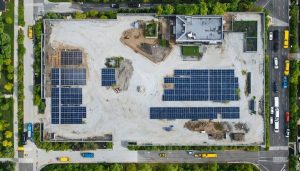
Aerial view of a sustainable construction site featuring solar panels, green roofs, and native landscaping, situated near green spaces and public transit.

7 Game-Changing Sustainability Strategies for Construction Management

Sustainable Site Selection and Planning
Sustainable site selection and planning are critical components of construction management that prioritize minimizing environmental impact while maximizing project benefits. When selecting a site, construction professionals should consider factors such as brownfield redevelopment, which involves transforming previously contaminated sites into usable spaces. This approach not only reduces the environmental footprint but also contributes to urban revitalization efforts. For examples of successful urban revitalization projects, you might explore how …

A futuristic construction site featuring drones, robotic machines, and workers using smart wearable technology to show the integration of advanced tools in modern construction.

7 Game-Changing Smart Tools Revolutionizing Construction in 2023

The construction industry is on the brink of a technological revolution, with smart tools poised to transform every aspect of building projects. From robotic bricklayers and self-driving excavators to AI-powered design software and IoT sensors, these cutting-edge innovations are reshaping how we plan, execute, and manage construction. As productivity soars, costs plummet, and safety reaches new heights, forward-thinking professionals must embrace this smart tool revolution or risk being left behind. In this article, we’ll explore the most game-changing technologies, their real-world applications, and the immense potential they hold …