
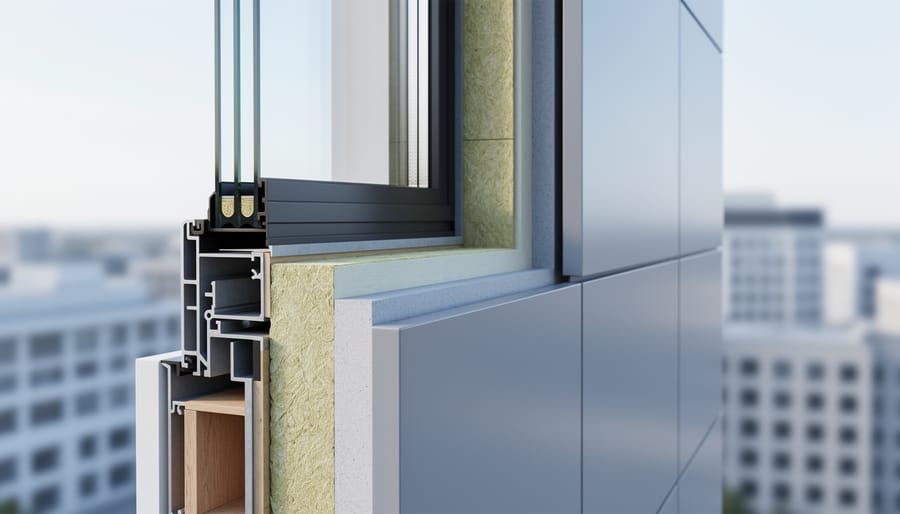
Energy-efficient building materials are construction products engineered or selected to minimize heat transfer, reduce energy consumption for heating and cooling, and lower a building’s overall environmental footprint throughout its lifecycle. These materials achieve performance gains through enhanced thermal insulation, reduced air leakage, reflective properties, thermal mass, or combinations of these characteristics.
The construction industry accounts for nearly 40 percent of global energy consumption, with operational energy use in buildings representing the largest share. Specifying the right envelope materials can cut HVAC loads by 30 to 50 percent in typical commercial and residential projects, translating directly to lower utility costs and carbon emissions. For professionals managing budgets and sustainability targets in 2026, material selection at the design phase carries more weight than ever. Tightening building codes, rising energy costs, and client demands for net-zero or near-net-zero performance have moved energy-efficient materials from nice-to-have upgrades to baseline requirements in many markets.
This article breaks down how energy-efficient building materials function, catalogs the primary types available for specification, and examines real-world applications across project scales. You’ll find technical explanations of R-values, thermal bridging, and phase-change behavior alongside practical guidance on where each material category delivers the strongest return on investment. We’ve also integrated insights from materials engineers and case study data from recent high-performance builds to give you a clear picture of what works in practice, not just in lab conditions.
Whether you’re specifying insulation for a multi-family retrofit, evaluating cladding options for a commercial office, or designing a custom home targeting Passive House certification, understanding the performance drivers and trade-offs in energy-efficient materials is essential to delivering projects that perform as modeled and meet long-term durability standards.
What Are Energy-Efficient Building Materials?
Energy-efficient building materials are construction products specifically designed and manufactured to minimize heat transfer, reduce energy consumption, and improve the thermal performance of buildings throughout their operational life. Unlike conventional materials that prioritize structural strength or cost alone, these advanced products integrate thermal resistance, moisture management, and durability to reduce heating and cooling demands while maintaining or exceeding structural requirements.
The defining characteristic of energy-efficient materials lies in their measurable thermal performance. Construction professionals evaluate these materials using standardized metrics that quantify how effectively they resist heat flow and store thermal energy. Understanding these performance indicators is essential for specification and compliance with new energy standards across the UK construction sector.
- U-value
- The rate of heat transfer through a building element measured in W/m²K; lower values indicate better insulation performance. A typical wall U-value in 2026 UK construction is 0.18 W/m²K or less.
- R-value
- The thermal resistance of a material measured in m²K/W; higher values mean greater insulating capacity. R-value is the inverse of U-value and helps compare insulation materials directly.
- Thermal mass
- The ability of a material to absorb, store, and release heat energy, helping to moderate internal temperature fluctuations. Dense materials like concrete and brick provide high thermal mass.
- Embodied energy
- The total energy consumed during extraction, manufacturing, transport, and installation of a material. Low embodied energy materials reduce the carbon footprint of construction before operational benefits begin.
- Thermal bridging
- A localized area of higher heat transfer where insulation is penetrated or interrupted by conductive materials. Eliminating thermal bridges is critical for achieving design U-values in practice.
Energy-efficient materials differ from conventional alternatives through intentional design that addresses U-value and thermal mass considerations simultaneously. Where traditional brickwork might achieve a U-value of 1.0 W/m²K, modern insulated concrete forms deliver 0.15 W/m²K while providing structural support.
The regulatory framework driving adoption centers on Part L of the Building Regulations, which sets minimum energy performance standards for new builds and major renovations. These requirements tighten progressively, pushing the industry toward materials that deliver verifiable thermal performance gains and whole-building energy reductions.
How Energy-Efficient Building Materials Work
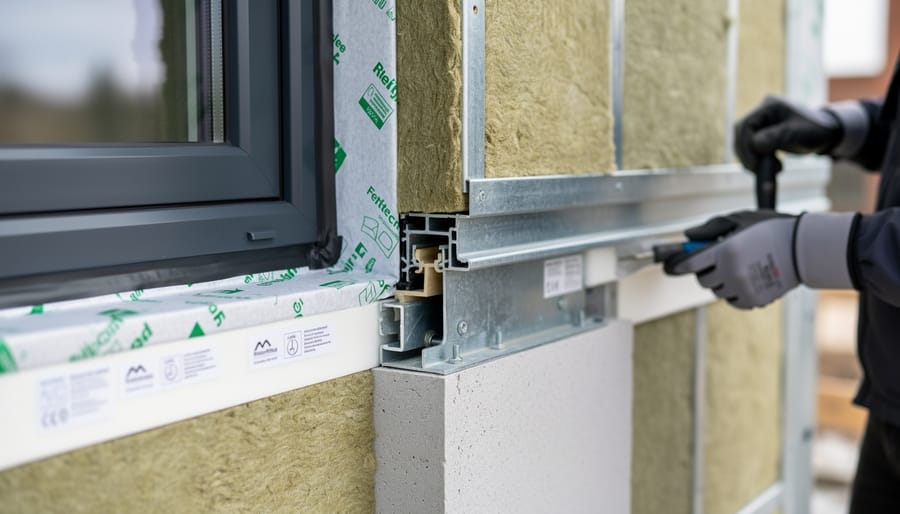
Thermal Performance Principles
Energy-efficient building materials minimise unwanted heat transfer by targeting three fundamental mechanisms: conduction, convection, and radiation. Understanding how materials address each mode is essential for specifying effective thermal solutions.
Conduction is the direct transfer of heat through solid materials. When exterior and interior surfaces differ in temperature, heat flows through the material’s molecular structure. Energy-efficient materials combat conduction by incorporating low-density structures or air pockets that interrupt this molecular pathway. Insulation materials achieve low thermal conductivity (measured in W/mK) by trapping still air within fibrous networks or cellular structures. Dense materials like concrete conduct heat readily, which is why insulated concrete forms pair high-density cores with insulating layers.
Convection involves heat transfer through moving fluids or gases. In building assemblies, air movement within cavities or through material pores can severely undermine thermal performance. Advanced materials address convection by creating closed-cell structures that eliminate air circulation, or by using extremely fine fibre matrices that restrict air movement. Vacuum insulated panels take this further by removing air entirely, eliminating convective heat transfer.
Radiation is electromagnetic heat transfer that occurs without physical contact or medium. All surfaces emit infrared radiation proportional to their temperature. Low-emissivity coatings on glazing and reflective barriers reduce radiant heat transfer by reflecting infrared wavelengths rather than absorbing and re-emitting them. Phase-change materials can also absorb radiant heat during temperature transitions, temporarily halting its progression through the building envelope.
Effective energy-efficient materials often address multiple heat transfer modes simultaneously, creating layered defence systems against thermal losses.
Lifecycle Energy Considerations
Selecting energy-efficient materials requires balancing two critical energy metrics: embodied energy and operational energy. Embodied energy encompasses all energy consumed during raw material extraction, manufacturing, transport and installation. A material with exceptional thermal performance may carry a high embodied energy cost that takes years to offset through operational savings.
Operational energy represents the ongoing consumption for heating, cooling and ventilation throughout a building’s lifespan. Materials with superior insulation properties or thermal mass capabilities reduce this demand significantly. The key decision point is the payback period, how long operational savings take to exceed the embodied energy investment.
For most building materials, operational energy savings far outweigh embodied energy over a typical 50-year building lifecycle. A 300mm layer of mineral wool insulation, for instance, pays back its embodied energy within two to three years through reduced heating demand. However, this equation shifts with highly processed materials like aerogel or vacuum insulated panels, where embodied energy is substantially higher.
Whole-life carbon assessments now guide material selection in UK projects, particularly for developments targeting BREEAM Outstanding or Passivhaus standards. These assessments reveal that optimising operational performance remains the priority, but specifying materials with lower embodied energy, such as timber-based insulation over petrochemical foams, delivers additional carbon savings without compromising thermal performance.
Types of Energy-Efficient Building Materials
High-Performance Insulation Materials
Advanced insulation materials push thermal performance far beyond traditional options, delivering exceptional R-values in minimal thickness. These solutions prove particularly valuable in space-constrained projects or retrofit applications where conventional insulation depths aren’t feasible.
Aerogel insulation stands as the current performance champion, offering thermal conductivity as low as 0.013 W/mK, roughly three times better than standard mineral wool. Available as blankets, boards, or granules, aerogel maintains its properties even when compressed, making it ideal for tight cavities and heritage building upgrades where wall thickness is limited.
Vacuum insulated panels (VIPs) achieve R-values of R-50 per inch through their evacuated core, wrapped in gas-tight foil. However, any puncture destroys their performance, so they require careful handling during installation and protection from fixings. VIPs work best in permanent applications like refrigerated warehousing or high-performance façade systems where their exceptional performance justifies the cost and installation precision.
Phase-change materials (PCMs) take a different approach, absorbing and releasing thermal energy as they transition between solid and liquid states. Incorporated into plasterboard or concrete, PCMs stabilize interior temperatures by storing excess heat during the day and releasing it at night. They don’t improve static R-values but significantly reduce temperature swings and peak heating loads.
Next-generation polyurethane and phenolic foam boards now reach R-values of R-7 per inch while incorporating flame retardants with lower environmental impact than previous formulations. These foams balance performance with practicality for mainstream commercial and residential applications.
Thermal Mass Materials
Thermal mass materials work by absorbing heat when temperatures rise and releasing it gradually as temperatures fall, creating natural temperature moderation that reduces heating and cooling demands. The effectiveness depends on a material’s density, specific heat capacity, and thermal conductivity working in combination.
Insulated Concrete Forms (ICFs) merge structural strength with thermal performance by sandwiching concrete between rigid foam insulation layers. The concrete core provides thermal mass whilst the insulation prevents rapid heat loss, delivering R-values typically between 20 and 25. ICFs suit both new builds and extensions where consistent indoor temperatures matter.
Autoclaved Aerated Concrete (AAC) offers lighter-weight thermal mass through its cellular structure, up to 80% air by volume. This porous composition provides inherent insulation (R-values around 1.0 per inch) whilst maintaining enough mass to dampen temperature swings. AAC blocks handle easier than dense concrete yet still moderate heat flow effectively in residential and low-rise commercial projects.
Engineered thermal mass systems include phase-change material (PCM) panels that store and release heat at specific temperatures, and high-density plasterboard with embedded minerals. These thin-profile solutions deliver thermal mass benefits where space or weight constraints rule out thick concrete walls, making them valuable for retrofit work and timber-frame construction.
Advanced Glazing and Window Systems
Modern glazing systems represent one of the most significant opportunities to reduce heat loss in buildings, as windows typically account for 25-30% of heating energy consumption. Triple-glazed units have become the de facto standard for energy-efficient construction, offering U-values as low as 0.8 W/m²K compared to 2.8 W/m²K for traditional double-glazing.
Low-emissivity (low-E) coatings form microscopic metallic layers on glass surfaces that reflect long-wave infrared radiation back into the building while allowing visible light to pass through. Hard-coat low-E works well in exposed applications, whilst soft-coat variants achieve superior thermal performance but require protection within the sealed unit. Gas-filled cavities between panes, typically argon or krypton, further reduce conductive heat transfer due to their lower thermal conductivity compared to air.
Smart glass technologies add dynamic control to thermal performance. Electrochromic glazing responds to electrical current to vary light transmission from clear to tinted states, reducing solar heat gain by up to 98% during peak summer months whilst maintaining winter solar gains. Thermochromic and photochromic variants respond automatically to temperature or light levels without active controls, though their transition characteristics are less precise for optimizing building energy management systems.
Energy-Efficient Structural Materials
Structural insulated panels (SIPs) deliver both load-bearing strength and exceptional thermal performance, combining two oriented strand board (OSB) skins with a rigid foam core, typically expanded polystyrene (EPS) or polyurethane. This sandwich construction achieves R-values of R-23 to R-50 depending on thickness, while maintaining structural integrity for walls, floors and roofs. SIPs reduce thermal bridging by up to 50% compared to timber frame construction, creating a continuous insulation layer that conventional stud walls cannot match.
Cross-laminated timber (CLT) offers impressive thermal mass alongside structural capacity. Each layer of solid timber, typically three to nine cross-directional plies, creates a dense, load-bearing element with lower embodied carbon than concrete or steel. While CLT’s inherent R-value (approximately R-1.4 per inch) requires supplementary insulation, its thermal mass stabilizes interior temperatures and reduces heating and cooling demand in multi-storey applications.
Insulated concrete forms (ICFs) combine permanent formwork with integral insulation, creating monolithic concrete walls with R-values between R-17 and R-26. The concrete core provides structural strength while expanded polystyrene forms on both faces minimize heat loss, proving particularly effective in commercial and industrial projects requiring fire resistance.
Reflective and Cool Roofing Materials
Reflective and cool roofing materials combat solar heat gain by reducing the amount of thermal energy absorbed through the roof surface, a critical consideration given that roofs can reach temperatures 50-90°C above ambient air temperature on summer days. These materials work by increasing solar reflectance (the fraction of sunlight bounced back) and thermal emittance (the ability to release absorbed heat).
Cool roof coatings use specialized pigments and binders to achieve solar reflectance values of 0.65-0.90, compared to 0.05-0.20 for conventional dark roofs. White elastomeric coatings, ceramic-infused membranes, and infrared-reflective pigmented systems can lower roof surface temperatures by 30-40°C, directly reducing cooling loads in commercial buildings. These coatings suit both new construction and retrofit applications on metal, concrete, or modified bitumen substrates.
Single-ply reflective membranes such as thermoplastic polyolefin (TPO) and polyvinyl chloride (PVC) combine high reflectance with proven waterproofing performance. Their light colour remains stable over time, maintaining thermal performance across 20-year service lives.
Green roof systems take an alternative approach, using vegetation and growing media to provide shade, evaporative cooling, and additional insulation. Extensive green roofs with shallow substrate depths of 80-150mm reduce peak roof temperatures while adding thermal mass, though they require careful structural assessment and waterproofing detailing.
Applications and Uses in Modern Construction
Integration with Building Systems
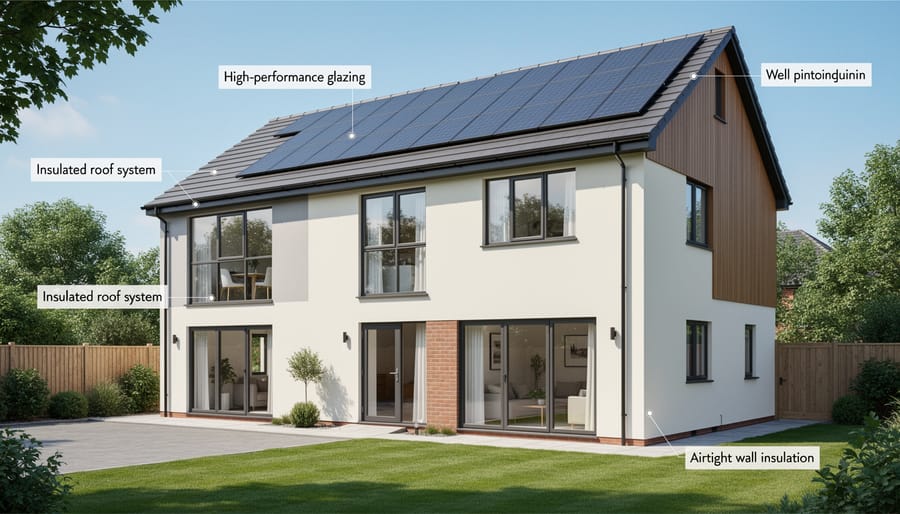
Energy-efficient building materials don’t operate in isolation, they form part of an integrated system that includes mechanical, electrical, and control technologies. The thermal performance of insulation, glazing, and structural materials directly influences HVAC system sizing and operational efficiency. When high-performance insulation reduces heat loss, heating equipment can be downsized, cutting both capital and running costs. Similarly, advanced glazing with low-E coatings and thermal breaks reduces solar heat gain, allowing for smaller cooling systems and lower peak energy demand.
Integration with renewable energy systems amplifies the benefits of efficient materials. Buildings with superior thermal envelopes retain passively captured solar heat longer, reducing the load on heat pumps or biomass boilers. Phase-change materials embedded in walls or ceilings can store excess energy from solar thermal or photovoltaic systems, releasing it during peak demand periods. This temporal shift optimizes renewable energy utilization.
Smart building tech enhances material performance through dynamic control. Sensors monitor temperature differentials across building envelopes, adjusting ventilation and heating based on actual thermal performance rather than programmed schedules. Automated shading systems work with high-performance glazing to balance natural light and thermal gain. This coordination between passive material properties and active building management systems delivers energy savings that exceed the sum of individual components, typically improving overall building efficiency by 20-30% compared to conventional approaches.
Specification and Selection Criteria
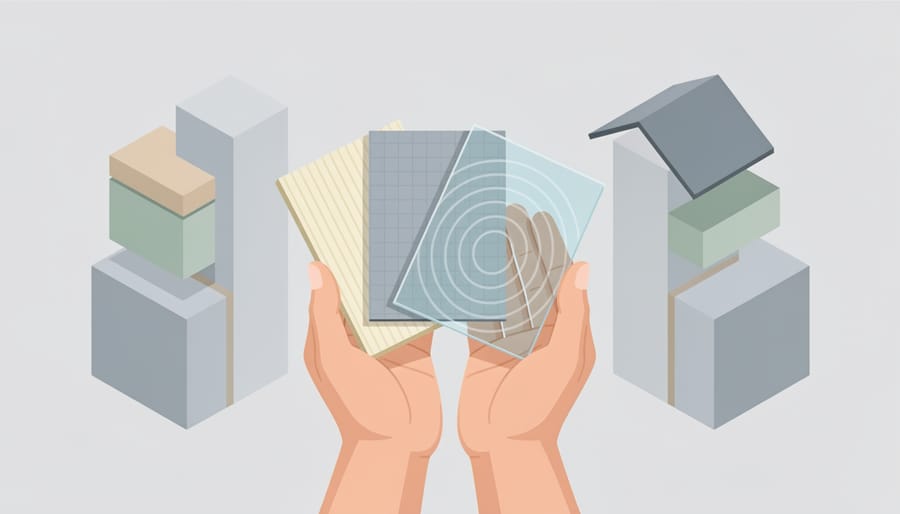
Selecting the right energy-efficient materials requires balancing multiple factors against project-specific constraints. Start by identifying your climate zone’s predominant thermal challenges, materials excelling in Scotland’s heating-dominated climate differ from those suited to London’s mixed conditions. A material’s U-value must meet Building Regulations Part L minimums, but specifying below these thresholds often delivers better long-term value.
Building use drives material priorities. Warehouses benefit from high thermal mass and reflective roofing to manage large internal heat gains, while residential projects prioritize insulation continuity and airtightness detailing. Commercial developments with 24-hour occupancy justify higher-performing glazing specifications that reduce HVAC loads.
Budget analysis should compare whole-life costs rather than initial outlay alone. A £15 per square metre premium on advanced insulation typically pays back within seven years through reduced heating bills, particularly in larger commercial projects.
Performance targets matter most. Projects pursuing BREEAM Excellent or Passivhaus certification demand materials with verified third-party testing and EPDs. Match thermal conductivity values to your energy model’s assumptions and verify compatibility with planned airtightness strategies. Always request lambda values at working moisture content, not laboratory-dry conditions, to avoid overestimating real-world performance.
Benefits and Performance Outcomes
Energy-efficient building materials deliver measurable returns that extend well beyond regulatory compliance. UK construction projects incorporating advanced insulation systems, thermal mass materials, and high-performance glazing routinely achieve 30-50% reductions in heating and cooling costs compared to buildings using standard materials. Recent London commercial developments using vacuum insulated panels and triple-glazed units report annual energy savings exceeding £15,000 per 1,000 square metres of floor space, with payback periods between five and eight years.
Carbon reduction follows directly from lower energy consumption. A 2026 study of retrofitted social housing in Manchester found that upgrading to aerogel insulation and ICF systems cut operational carbon emissions by 45% annually. Over a building’s typical 60-year lifespan, these material choices prevent hundreds of tonnes of CO₂ from entering the atmosphere. The embodied energy in manufacturing is typically recovered within two to four years of operation, making the lifecycle carbon case compelling.
Occupant comfort improvements prove equally significant. Thermal mass materials stabilize indoor temperatures, reducing daily fluctuations by up to 8°C and eliminating cold spots near exterior walls. Advanced glazing systems minimize condensation while maximizing natural light, and airtight insulation reduces drafts and noise transmission. These factors directly impact productivity in commercial spaces and wellbeing in residential settings.
Modern energy-efficient materials make compliance with Part L Building Regulations and BREEAM standards straightforward. They provide clear routes to achieving Enhanced Capital Allowances and meeting the government’s net-zero construction targets. Several integrated systems now make buildings 40% more efficient than 2020 baseline requirements, positioning projects ahead of anticipated regulatory tightening in 2028.
Performance monitoring from completed UK projects demonstrates consistency: specified U-values and thermal bridging calculations translate accurately to real-world performance when materials are properly installed and detailed.
Implementation Challenges and Solutions
Despite their proven benefits, energy-efficient building materials face several implementation hurdles that construction professionals must navigate carefully.
Cost and Budget Constraints
Higher upfront material costs remain the primary barrier. Advanced insulation systems and high-performance glazing can add 15-30% to initial material budgets compared to standard alternatives. The solution lies in lifecycle cost analysis rather than first-cost comparison. Present clients with projected energy savings over 10-20 years, demonstrating how initial premiums are recovered through reduced operating expenses. Integrating these materials into a broader total energy management strategy strengthens the business case by showing cumulative benefits across all building systems.
Supply Chain and Material Availability
Specialist materials often have longer lead times and limited supplier networks. Mitigate this by specifying materials early in the design phase and maintaining relationships with multiple suppliers. Consider approved equivalents in specifications to provide flexibility if primary products face delays. For critical path items like structural insulated panels, order well ahead of installation dates.
Installation Expertise Requirements
Many energy-efficient materials demand specialized installation techniques. Aerogel insulation, for instance, requires careful handling to maintain performance, while triple-glazed units need precise fitting to achieve rated U-values. Address this through pre-installation training sessions for site crews and requiring manufacturers to provide technical support during critical phases. Build learning curves into project schedules, particularly when teams are working with new materials for the first time.
Quality Control and Performance Verification
Thermal imaging surveys and blower door tests should verify that installed materials achieve specified performance levels, catching installation errors before handover.
Common Questions About Energy-Efficient Building Materials
What is the typical payback period for energy-efficient building materials?
Payback periods vary by material type and project scale, but most high-performance insulation and glazing systems achieve return on investment within 5-12 years through reduced heating and cooling costs. Materials with longer lifespans, such as structural insulated panels or advanced concrete systems, often deliver returns over 15-25 years while providing immediate benefits in occupant comfort and building performance.
Do energy-efficient materials require specialized installation skills?
Many advanced materials do require specific installation techniques and trained personnel to achieve their rated performance. Vacuum insulated panels, for instance, must be handled carefully to prevent puncture, while phase-change materials need precise placement to function optimally. Manufacturers typically provide detailed installation guides and certification programmes for trades working with their products.
How do these materials perform in UK climate conditions?
Energy-efficient materials are engineered to perform across varied climates, with specific products suited to the UK’s moderate, moisture-heavy conditions. Materials with high thermal mass work particularly well in temperate zones, while advanced moisture management capabilities in modern insulation prevent condensation issues common in British buildings.
Are energy-efficient materials compatible with traditional construction methods?
Most can integrate with conventional building techniques, though some require modified approaches. Cross-laminated timber panels demand different joinery methods than traditional framing, while insulated concrete forms replace standard formwork entirely. The key is early specification and coordination with trades to adapt workflows without compromising quality.
What regulatory standards must these materials meet?
All materials must comply with Building Regulations Part L (conservation of fuel and power) and achieve minimum thermal performance thresholds. Products targeting zero-energy buildings or Passivhaus certification face stricter requirements for air tightness, thermal bridging, and embodied carbon, with third-party testing and certification increasingly expected by specifiers.
How do upfront costs compare to long-term savings?
Premium materials typically add 8-15% to initial construction costs but reduce operational energy expenses by 30-50% over the building’s lifetime. When factoring in rising energy prices and potential carbon taxation, the financial case strengthens considerably, particularly for commercial projects with high heating and cooling demands.
Beyond these common queries, construction professionals should verify that product warranties align with expected service life, as some advanced materials offer 25-50 year guarantees that protect the investment. Material durability becomes critical in retrofit projects where access for replacement is costly or disruptive. Compatibility testing is advisable when combining multiple high-performance systems, as interactions between vapour barriers, insulation layers, and structural elements can affect overall performance if not properly coordinated during design.
how it works
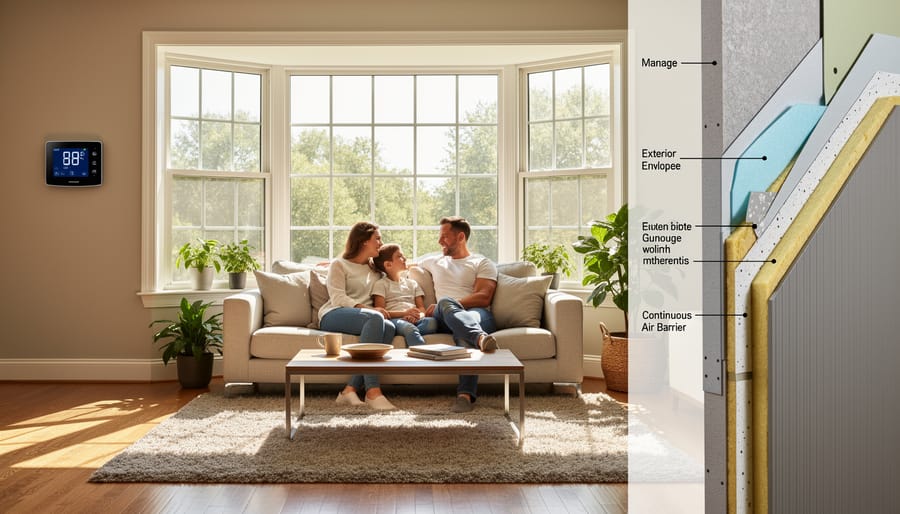
Energy-efficient building materials function by controlling heat transfer through the building envelope, the physical barrier between conditioned interior space and the external environment. At their core, these materials exploit three fundamental mechanisms to reduce unwanted heat flow.
First, they minimize thermal conductivity. Materials with low thermal conductivity contain trapped air pockets or cellular structures that slow the movement of heat molecules. Aerogels, for instance, achieve exceptional insulation by trapping air within a silica matrix where conduction becomes nearly impossible.
Second, they leverage thermal mass to absorb and store heat energy, releasing it gradually over time. This dampens temperature fluctuations inside buildings. Concrete and masonry materials with high density and specific heat capacity excel at this buffering effect, reducing heating and cooling demands during daily temperature swings.
Third, advanced materials incorporate reflective or low-emissivity surfaces that redirect radiant heat rather than absorbing it. Low-E window coatings reflect infrared radiation back into living spaces during winter while blocking solar heat gain in summer.
The most effective systems combine these principles strategically: a well-insulated wall might pair low-conductivity insulation with thermal mass and a reflective barrier, creating multiple lines of defense against energy loss.
Types or components
Energy-efficient building materials fall into several distinct categories, each addressing specific aspects of thermal performance and energy conservation in construction.
Insulation materials form the primary defense against heat transfer, including mineral wool, expanded polystyrene (EPS), extruded polystyrene (XPS), polyurethane foam, and advanced options like aerogel and vacuum insulated panels. These materials trap air or create near-vacuum conditions to minimize conduction.
Thermal mass components such as concrete, brick, rammed earth, and phase-change materials store and release heat gradually, dampening temperature fluctuations and reducing heating and cooling demands.
High-performance glazing encompasses double and triple-glazed units with low-emissivity coatings and inert gas fills that reduce heat loss while maintaining transparency.
Structural thermal breaks include insulated concrete forms, structural insulated panels, and thermally-broken window frames that eliminate conduction paths through the building envelope.
Reflective and cool materials for roofing and external cladding reject solar heat gain through high solar reflectance and thermal emittance properties, particularly valuable in warmer climates or for reducing summer cooling loads.
Energy-efficient building materials have moved from optional extras to essential components of responsible construction practice. For professionals navigating increasingly stringent building regulations and client demands for lower operational costs, these materials represent a proven pathway to compliance and long-term value creation. The evidence is clear: projects incorporating high-performance insulation, advanced glazing, and thermal mass systems consistently deliver 30-50% reductions in heating and cooling loads compared to conventional builds.
The UK’s evolving regulatory framework, particularly the trajectory toward net-zero carbon buildings, will make energy-efficient material specification not just advantageous but mandatory for most new construction within the next decade. Early adopters gain competitive advantage through accumulated expertise and established supply relationships.
Looking ahead, material innovation continues to accelerate. We’re seeing phase-change materials transition from niche applications to mainstream specification, aerogel insulation costs dropping toward economic viability for standard projects, and bio-based materials achieving thermal performance that rivals synthetic alternatives. Smart materials that respond to environmental conditions will likely become commonplace by the end of this decade.
For construction professionals planning projects in 2026 and beyond, the question isn’t whether to specify energy-efficient materials but which combinations will deliver optimal performance for your specific application. Start with a whole-building energy model, engage with specialist suppliers early in the design process, and build relationships with trades experienced in advanced material installation. The projects you deliver today will shape industry standards tomorrow.
