
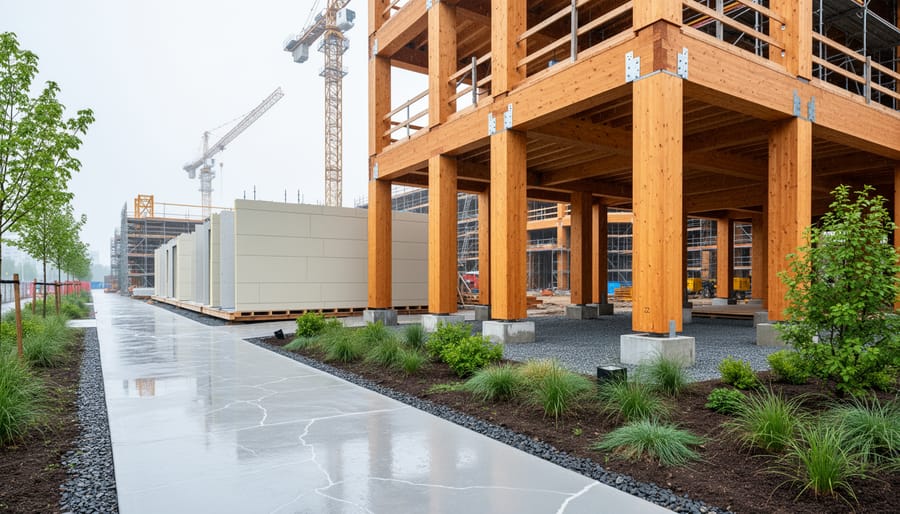
The construction industry stands at a pivotal moment. Products emerging today don’t simply improve on existing solutions; they fundamentally reshape what’s possible on job sites. From self-healing concrete that extends infrastructure lifespan by decades to modular building systems that cut project timelines by 40%, the materials and technologies available now represent the most significant shift in construction methodology since the widespread adoption of steel framing.
This transformation addresses the sector’s most pressing challenges. Labor shortages, tightening sustainability mandates, and demands for faster delivery have converged to create unprecedented demand for solutions that work smarter, not harder. The products gaining traction among specifiers share common traits: measurable performance improvements, verified field results, and clear return on investment.
Our analysis examines eight product categories currently making the strongest impact across commercial, residential, and infrastructure projects. Each section includes implementation data from active job sites, expert perspectives from materials engineers and project managers, and specific guidance on specification and procurement. You’ll find detailed case studies documenting how early adopters achieved tangible results, from a Houston office tower that reduced embodied carbon by 35% using advanced sustainable building materials to a bridge rehabilitation in Portland that slashed closure time through rapid-cure composite systems.
Whether you’re evaluating options for an upcoming project or tracking industry direction, this coverage delivers the practical intelligence needed to make informed decisions about which innovations merit serious consideration for your work.
Bio-Based and Carbon-Negative Materials
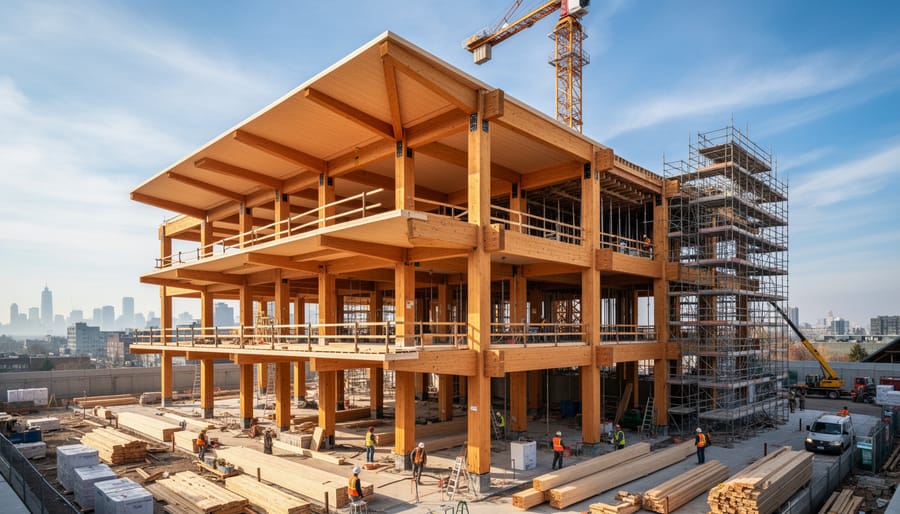
Mass Timber and Engineered Wood Products
Mass timber systems have moved from niche demonstration projects to commercially viable options across North America and Europe. Cross-laminated timber (CLT) panels, layers of lumber boards stacked crosswise and bonded under pressure, now compete directly with concrete floor and wall assemblies in mid-rise construction. Glued-laminated timber (glulam) beams and columns deliver structural capacity matching steel in many applications while sequestering carbon throughout the building’s lifespan. Nail-laminated timber (NLT) offers a cost-effective alternative where simpler fabrication requirements suit project budgets and regional supply chains.
Performance improvements in 2026 address earlier adoption barriers. Modern CLT panels incorporate adhesives with zero formaldehyde emissions and improved moisture resistance, expanding their use in humid climates. Fire resistance testing has yielded robust data: thick mass timber sections char predictably at approximately 1.5 inches per hour, creating an insulating layer that protects the structural core. Updated IBC fire-rating guidance now permits mass timber in buildings up to 18 stories with appropriate encapsulation strategies, removing regulatory obstacles that previously limited market penetration.
Supply chain maturation has reduced lead times and costs. Regional fabrication facilities across the Pacific Northwest, Quebec, and Scandinavia can now deliver custom CLT panels within six to eight weeks rather than the four-month windows common in 2023. This responsiveness makes mass timber competitive on construction schedules while maintaining the carbon storage benefits that appeal to owners targeting net-zero commitments.
Hemp and Agricultural Waste-Based Products
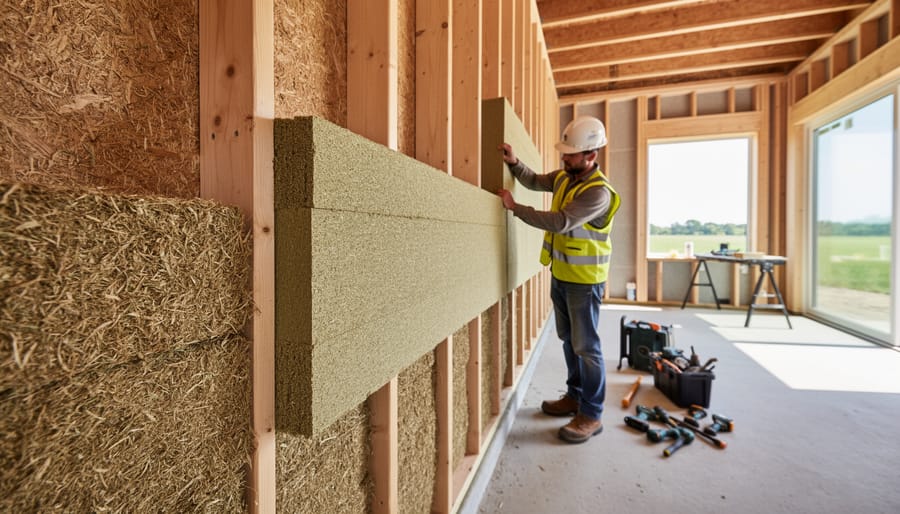
Hemp-based construction materials have progressed from niche experimental products to commercially viable options available through established supply chains in 2026. Hempcrete blocks, precast units combining hemp shiv with lime binder, now ship in standardized dimensions compatible with conventional masonry practices, eliminating the moisture-sensitive mixing and curing that previously limited adoption. These blocks deliver thermal resistance of R-2.5 per inch while sequestering approximately 110 kg of CO₂ per cubic meter, a performance profile attracting specifiers for net-zero projects where embodied carbon matters as much as operational efficiency.
Agricultural fiber insulation products leverage wheat straw, corn stalk, and rice hull waste streams that would otherwise burn in fields or decompose in landfills. Current formulations achieve R-values between 3.5 and 4.2 per inch, competitive with fiberglass batts, while maintaining breathability that reduces condensation risk in wall assemblies. Unlike mineral wool, these products require minimal processing energy and biodegrade safely at end-of-life, though installers must verify fire-retardant treatments meet local code requirements.
Straw-based structural panels now reach the market with certifications for load-bearing applications in residential construction. These oriented straw boards compress agricultural residue into rigid sheets with densities around 700 kg/m³, offering shear strength sufficient for sheathing and subflooring in wood-frame buildings. Early projects report installation speeds matching OSB while delivering superior acoustic damping and hygroscopic regulation, though long-term durability data remains limited to European case studies spanning eight to twelve years.
Circular Economy Construction Products
Recycled and Upcycled Materials
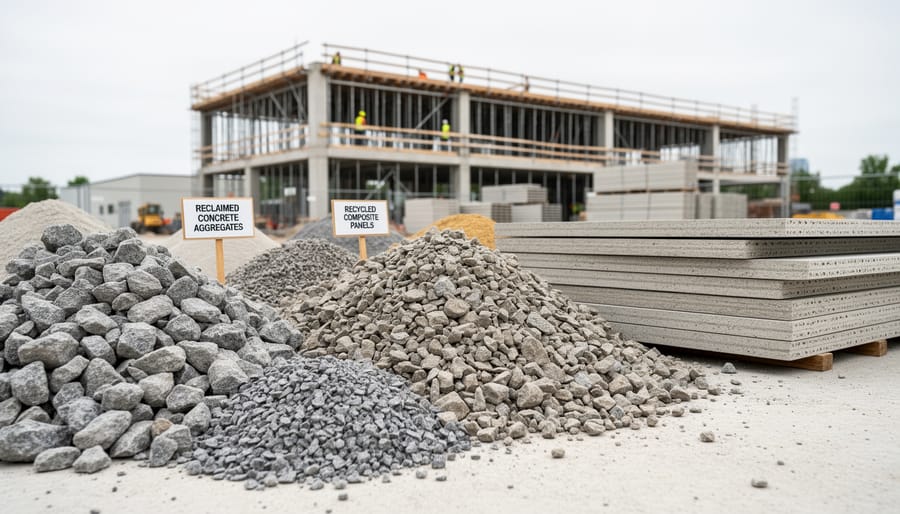
Reclaimed concrete aggregates now represent one of the most scalable pathways in the circular economy with advanced processing techniques delivering performance nearly identical to virgin aggregates. Modern crushing and washing systems remove adhered mortar more effectively, producing RCA suitable for structural applications beyond traditional road base uses. Projects in Europe and North America are specifying up to 30% RCA replacement in new concrete mixes without compromising strength or durability.
Recycled plastic composites are evolving beyond decking into structural applications. Polymer-fiber lumber now appears in formwork systems, temporary structures, and non-load-bearing walls, offering dimensional stability and moisture resistance that exceeds traditional wood products. Some manufacturers combine post-consumer HDPE with glass fiber reinforcement to achieve flexural strength approaching conventional lumber.
Industrial byproducts like fly ash and ground granulated blast furnace slag have matured from experimental additives to standard specifications. These pozzolanic materials replace 20-40% of portland cement in modern concrete mixes, cutting embodied carbon while often improving long-term durability and chemical resistance. Supply chain constraints as coal plants close are driving innovation in alternative supplementary cementitious materials, including calcined clay and limestone fines.
Design-for-Disassembly Systems
Design-for-disassembly systems represent a fundamental shift in how we conceive construction products, moving from permanent assemblies to temporary configurations. These systems prioritize mechanical fastening over chemical adhesion, enabling components to be separated intact rather than demolished. Bolted steel connections, clip-together facade panels, and dry-stacked masonry blocks eliminate the irreversible bonds that traditionally consign building materials to landfill at end-of-life.
Modular wall systems now feature standardized dimensional grids and exposed fixings that allow entire assemblies to be deconstructed and relocated. Manufacturers like DIRTT and NxtWall have refined partition systems where every component can be removed without damage, creating secondary markets for reclaimed panels and structural elements. Ceiling systems from Armstrong and Knauf incorporate drop-in tiles and snap-fit grids that facilitate component-level replacement and recovery.
Material passports have emerged as the critical documentation enabling product recovery at scale. These digital records, material passports explained in detail by industry authorities, track composition, manufacturing origin, installation date, and disassembly instructions for every major building element. The Madaster platform now catalogs over two million building products across Europe, creating transparency that transforms buildings into material banks rather than static structures. This documentation proves essential when contractors face decommissioning projects, providing the specific knowledge needed to recover value rather than dispose of waste.
Advanced Insulation and Thermal Performance Products
Advanced insulation and thermal performance products represent some of the most impactful innovations in construction, delivering substantial energy savings while shrinking embodied carbon footprints. These materials achieve higher thermal resistance per inch than traditional fiberglass or mineral wool, allowing thinner wall assemblies and more usable floor space without sacrificing performance.
Aerogel insulation stands out for its exceptional thermal performance, with R-values reaching 10 per inch compared to conventional insulation’s 3-4 per inch. Originally developed for aerospace applications, aerogel products now come in flexible blankets and rigid panels suitable for building envelopes. Their translucent variants enable insulated glazing systems that maintain daylight transmission while dramatically improving thermal performance. The primary drawback remains cost, though prices have declined roughly 40 percent since 2020 as manufacturing scales up.
Vacuum insulated panels (VIPs) deliver R-values between 25-50 per inch through an evacuated core wrapped in gas-barrier films. These ultra-thin panels prove particularly valuable in retrofit projects where space is constrained or in applications like cold storage facilities requiring maximum thermal resistance in minimal thickness. The challenge with VIPs lies in their fragility during installation and catastrophic performance loss if punctured, making edge detailing and careful handling essential.
| Product Type | R-Value per Inch | Typical Thickness | Primary Applications |
|---|---|---|---|
| Aerogel Blankets | R-10 | 0.4-0.8 inches | High-performance walls, pipe insulation |
| Vacuum Insulated Panels | R-25 to R-50 | 0.5-1.5 inches | Space-constrained retrofits, cold storage |
| Bio-Based Polyurethane Foam | R-6.5 | 2-4 inches | Continuous insulation, spray applications |
| Phase-Change Material Boards | R-3 (plus thermal mass) | 0.5-1 inch | Interior walls, thermal regulation |
Bio-based foam alternatives replace petroleum-derived blowing agents and polyols with plant-based chemistry, cutting embodied carbon by 30-60 percent. Soy-based and castor oil polyurethane foams maintain comparable R-values to conventional spray foams while using renewable feedstocks. Hemp fiber and wood fiber batts offer fully biodegradable options with decent thermal performance and excellent moisture management.
Phase-change materials absorb and release thermal energy as they transition between solid and liquid states, effectively storing heat or coolness to dampen temperature swings. Microencapsulated PCMs embedded in gypsum boards or plaster coatings help regulate indoor temperatures in buildings with high solar gain or inconsistent heating. While their R-value contribution is modest, PCMs reduce peak heating and cooling loads by 15-25 percent in appropriate climates, cutting operational energy without additional thickness.
Smart and Responsive Building Materials
Self-Healing and Self-Cleaning Materials
Self-healing concrete represents a significant advancement in construction material durability, addressing the persistent problem of crack formation and water ingress. The most commercially viable approaches in 2026 involve bacterial spores mixed into the concrete matrix, when cracks form and water penetrates, the dormant bacteria activate and produce limestone through metabolic processes, effectively sealing small fissures before they expand. Alternatively, microcapsule-based systems embed tiny polymer shells containing healing agents throughout the concrete; when cracks rupture these capsules, the released material polymerizes on contact with air or water, filling the gap.
Self-cleaning surfaces utilize photocatalytic titanium dioxide coatings that break down organic pollutants when exposed to UV light, keeping facades cleaner with minimal intervention. When sunlight hits these treated surfaces, the catalyst generates reactive oxygen species that decompose dirt, grime, and biological growth into harmless compounds that wash away with rain. This technology has proven particularly valuable for high-rise buildings where manual cleaning involves significant cost and safety considerations.
Both technologies reduce lifecycle maintenance expenses while extending material service life. Current limitations include the higher upfront cost, typically 15-25% more than conventional alternatives, and performance variability depending on environmental conditions and crack severity.
Adaptive Envelope Systems
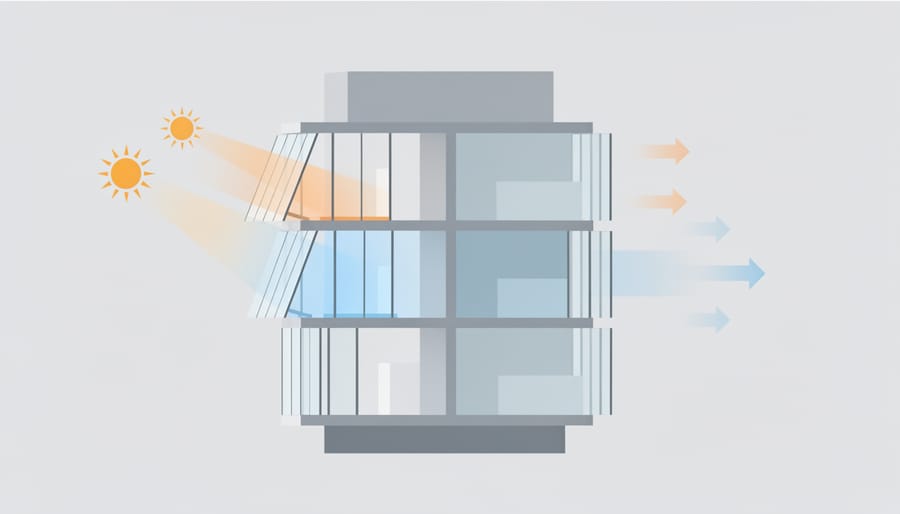
Adaptive envelope systems represent a fundamental shift from passive facade elements to active climate-responsive barriers. Electrochromic windows now dominate high-performance commercial specifications, with market-leading units achieving tint transitions in under three minutes while blocking up to 98% of solar heat gain. Unlike first-generation products that required manual switching, 2026 systems integrate building management platforms and use real-time weather data to optimize glazing states throughout the day, reducing HVAC loads by 20-30% in case studies from warm climates.
Thermochromic coatings offer a simpler implementation path for projects seeking responsive performance without active controls. These temperature-sensitive treatments automatically adjust their solar reflectance as surface temperatures rise, requiring no power input or control infrastructure. Current formulations maintain effectiveness for 15-20 years on vertical surfaces and prove particularly cost-effective for industrial and warehouse applications where sophisticated controls are impractical.
Kinetic facade systems remain premium solutions but deliver dramatic energy savings through mechanical adjustment of shading elements, louvers, or panel orientations. Deployments on large commercial projects demonstrate 35-40% reductions in peak cooling demand by tracking sun angles and blocking direct gain during high-load periods while maximizing daylight access during shoulder seasons.
Low-Carbon Concrete and Masonry Innovations
Concrete production accounts for approximately 8% of global carbon emissions, making it the construction industry’s most pressing sustainability challenge. The urgent need to decarbonize this fundamental building material has driven remarkable innovation across supplementary cementitious materials, alternative binders, and novel curing processes that are now commercially viable in 2026.
Supplementary cementitious materials (SCMs) have become standard practice for reducing the Portland cement content in concrete mixes. Fly ash and ground granulated blast-furnace slag, industrial byproducts that have served this role for decades, now face supply constraints as coal plants close and steel production shifts toward electric arc furnaces. This scarcity has accelerated adoption of calcined clays, which can replace up to 40% of cement while maintaining comparable strength and durability. Limestone calcined clay cement (LC3) technology has moved from laboratory trials to commercial deployment, with several ready-mix suppliers offering LC3 concrete that cuts embodied carbon by 30-40% compared to ordinary Portland cement concrete.
Carbon-cured concrete represents a fundamentally different approach, injecting CO2 into fresh concrete where it mineralizes within the mix, permanently sequestering carbon while accelerating strength development. CarbonCure and similar technologies are now installed in over 500 ready-mix plants globally, offering modest carbon reductions of 5-7% per cubic meter with no performance compromise and minimal cost increase. More aggressive carbon curing systems that replace larger portions of cement claim reductions exceeding 70%, though market penetration remains limited to specialized applications.
Geopolymer concrete, which eliminates Portland cement entirely by activating aluminosilicate precursors with alkaline solutions, has finally broken through commercial barriers that constrained adoption for years. Several precast manufacturers now offer geopolymer products achieving carbon reductions of 60-80%, particularly for applications like sewer pipes where acid resistance provides additional performance benefits. Cast-in-place geopolymer remains challenging due to supply chain logistics and contractor unfamiliarity, but pilot projects in Australia, India, and the UAE demonstrate growing confidence in large-scale deployment.
Innovative masonry products extend these carbon reduction strategies to block and brick applications. Companies are producing concrete masonry units with bio-aggregate fillers, recycled content exceeding 90%, and carbon-cured manufacturing processes. Compressed earth blocks and unfired clay bricks are gaining traction for low-rise construction where their thermal mass and breathability align with passive design strategies.
Case Study: Large-Scale Implementation of Innovative Products
The Denver Convention Center Expansion, completed in March 2026, demonstrates how multiple innovative construction products can integrate successfully at scale. The 320,000-square-foot addition achieved a 48% reduction in embodied carbon compared to conventional construction, while meeting aggressive cost and schedule targets.
The project team specified CLT panels for the primary structural system, displacing approximately 2,400 tons of structural steel and concrete. This decision required early coordination with the fabricator to accommodate mechanical penetrations and connection details, but reduced on-site construction time by six weeks. The panels arrived pre-cut with CNC precision, minimizing installation errors and waste.
For the building envelope, the team selected bio-based rigid foam insulation manufactured from agricultural waste instead of conventional polyisocyanurate boards. Initial cost premiums of 12% were offset by expedited installation due to improved workability and reduced respiratory protection requirements for installers. Thermal testing after occupancy confirmed R-values met design specifications, with no performance degradation observed during the first winter cycle.
The project incorporated carbon-cured concrete for elevated slabs and foundations, reducing cement content by 22% while maintaining structural performance. The contractor initially expressed concerns about setting times and finishing characteristics, prompting the general contractor to conduct mock-ups three months before placement. These trials revealed that minor adjustments to troweling techniques were necessary, but standard finishing equipment worked without modification.
Internal partition walls utilized hempcrete blocks for non-structural applications, providing additional thermal mass and moisture buffering. This represented one of the largest commercial deployments of hempcrete in North America, totaling 85,000 square feet of wall area. Subcontractor training was essential, as masonry crews required two days of instruction on proper installation techniques, which differ significantly from conventional CMU work.
Procurement decisions prioritized suppliers with established regional manufacturing presence and third-party performance certifications. The owner allocated 5% of the construction budget as contingency specifically for game-changing materials integration risks, though only 2% was ultimately needed.
The project’s greatest lesson involved lead times. Mass timber fabrication required 16 weeks from order to delivery, necessitating design finalization eight months before traditional steel procurement would have occurred. This compressed the design schedule but ultimately benefited overall project coordination by forcing earlier resolution of MEP conflicts and architectural details.
Procurement and Implementation Considerations
Successfully integrating innovative construction products requires a systematic approach to procurement and implementation that balances sustainability objectives with project feasibility. Construction professionals must evaluate several critical factors before committing to new materials or systems.
Supply chain maturity varies significantly across innovative product categories. Mass timber and recycled aggregate products now enjoy established distribution networks in most regions, while emerging materials like mycelium composites or bio-based insulation may require direct manufacturer relationships and extended lead times. Assessing supply chain sustainability and reliability prevents project delays and ensures material availability throughout construction phases.
Standards compliance presents both opportunities and challenges. Many innovative products now carry third-party certifications (LEED, BREEAM, Declare labels) that streamline specification processes. However, some cutting-edge materials may lack established performance standards, requiring additional testing documentation and building official coordination. Verify that products meet local building codes and have appropriate fire, structural, and durability ratings for their intended application.
When evaluating innovative products for projects, construction professionals should consider:
- Total lifecycle cost versus initial premium, including maintenance savings and energy performance benefits
- Contractor experience with installation and availability of qualified labor in your region
- Warranty terms and manufacturer track record for support and product longevity
- Integration compatibility with conventional building systems and construction sequencing
- Documentation requirements for green building certifications and carbon reporting
Cost-benefit analysis extends beyond material prices. While innovative sustainable products often command 10-30% premiums over conventional alternatives, operational savings, reduced embodied carbon, and potential incentives or tax credits can offset higher upfront costs. Request lifecycle cost analyses from manufacturers and examine performance data from completed projects.
Contractor familiarity significantly impacts installation quality and project risk. Pre-bid workshops, manufacturer training sessions, and mock-up requirements help ensure trades understand proper handling and installation procedures. Projects incorporating multiple innovative products benefit from phased implementation strategies that allow teams to develop expertise progressively rather than simultaneously managing numerous unfamiliar systems.
The construction industry stands at an inflection point. The innovative construction products profiled here represent more than incremental improvements, they signal a fundamental shift in how we conceive, source, and assemble the built environment. From bio-based materials sequestering carbon to circular systems enabling component recovery, these products provide tangible pathways toward decarbonization that were theoretical just five years ago.
Market adoption is accelerating beyond early-adopter projects. Major contractors now routinely specify mass timber, recycled aggregates, and low-carbon concrete on commercial work. Supply chains have matured, with manufacturers scaling production and regional availability expanding across most markets. This mainstream acceptance matters: sustainable construction products must move past boutique applications to achieve the emissions reductions necessary by 2030.
Regulatory frameworks are tightening in parallel. Embodied carbon limits, whole-life carbon assessments, and material disclosure requirements are becoming standard procurement criteria rather than voluntary benchmarks. Projects breaking ground in 2026 face specifications that would have seemed aspirational three years ago. This regulatory momentum creates both pressure and opportunity, pressure to adapt quickly, opportunity for those positioned with sustainable product knowledge and supplier relationships.
The trajectory is clear. Construction products delivering verifiable environmental benefits while meeting performance and cost thresholds will capture growing market share. Those specifying projects today shape the industry’s carbon trajectory through 2030 and beyond. The products exist. The challenge now is implementation at scale.
