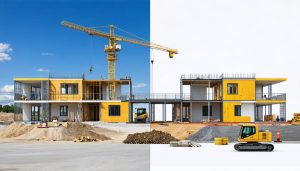

A futuristic construction site depicting digital transformation with workers using tablets, IoT sensors on equipment, and a digital dashboard displaying analytics.

Digital Construction Transformation: How Industry Leaders Are Revolutionizing Project Delivery

Digital transformation is revolutionizing the construction industry, driving unprecedented efficiency gains of up to 25% in project delivery times and cost reduction. By integrating cloud-based project management platforms, IoT sensors, and advanced analytics, construction firms are reimagining traditional workflows and achieving remarkable results in safety, productivity, and sustainability.
The construction sector stands at a critical inflection point where digital innovation isn’t just an option—it’s a competitive necessity. Leading firms leveraging Building Information Modeling (BIM), artificial intelligence, and …

A group of diverse construction professionals reviewing inclusive blueprints on a digital screen, surrounded by high-contrast wayfinding signs and tactile models, depicting an inclusive and accessible construction project in progress.

Inclusive Graphics Transform Construction Projects: Design That Works for Everyone

Inclusive graphics transform construction projects from merely compliant to truly accessible, serving diverse user populations while enhancing property value and market reach. As demographics shift and accessibility regulations tighten, implementing universal design principles through thoughtful graphic elements has become a cornerstone of modern construction excellence.
The integration of inclusive graphics—from high-contrast wayfinding systems to tactile building directories—represents more than regulatory compliance; it demonstrates a commitment to creating spaces that welcome and accommodate all users. Research indicates …

Conceptual artwork of a construction site with digital networks and IoT symbols representing advanced material management systems.

Smart Material Management That Prevents Construction Site Chaos

Effective material management on construction sites directly impacts project timelines, costs, and sustainability outcomes. Modern construction demands precision tracking of resources, from structural steel to finishing materials, with research showing that poor material management can increase project costs by up to 15-20%. Digital inventory systems, integrated with IoT sensors and real-time tracking capabilities, now enable project managers to maintain optimal stock levels while preventing costly delays and waste. By implementing structured material management protocols, construction firms can significantly reduce storage costs, minimize…

Aerial view of 2 World Trade Center under construction, featuring its stepped design and surrounded by symbols of global teamwork with various international flags.

2 World Trade Center’s Global Workforce Reshapes NYC’s Construction Landscape

Rising majestically at 2 World Trade Center, Foster + Partners’ innovative 1,350-foot tower marks a pivotal moment in New York City’s architectural evolution and post-9/11 resurgence. As of 2024, this transformative project has reached critical construction milestones, with foundation work completed and structural steel assembly progressing steadily upward. The tower’s distinctive stepped design, featuring cascading terraces that create a dramatic diagonal silhouette, represents both technical excellence and symbolic resilience.
The construction progress showcases unprecedented collaboration between international …

Futuristic city incorporating modern construction technologies and climate adaptation elements such as elevated buildings, solar panels, green roofs, and advanced smart materials, illustrating a harmonious relationship between architecture and nature.

Future-Proof Construction: Smart Climate Adaptation Strategies That Work

As climate-driven challenges reshape the construction landscape, implementing robust adaptation strategies has become critical for long-term project resilience. Leading construction firms worldwide are transitioning from reactive measures to proactive climate adaptation frameworks, integrating comprehensive risk assessment protocols and innovative building solutions into their core operations.
The construction industry faces unprecedented challenges from intensifying weather patterns, rising sea levels, and extreme temperature fluctuations. These environmental shifts demand a fundamental transformation in how we approach project …

"A creative depiction of a construction site overlaid with digital elements, showcasing a smart procurement process flowchart connecting various digital procurement tools and steps."

Transform Your Construction Projects with Smart Procurement (Industry-Proven 7-Step Process)

Streamline your construction operations with a systematic project procurement management framework that drives efficiency and cost control. In today’s complex construction landscape, a well-structured seven-step procurement process separates industry leaders from their competitors, delivering up to 18% in cost savings and 40% faster project completion rates.
The procurement process forms the backbone of successful construction projects, ensuring timely material delivery, vendor …

Conceptual illustration of a smart manufacturing facility integrating renewable energy and digital monitoring systems for carbon reduction.

Smart Manufacturing: Proven Carbon Reduction Methods That Actually Work

Manufacturing’s carbon footprint represents one of the most pressing challenges in modern industry, with the sector accounting for nearly 30% of global carbon emissions. Implementing effective zero carbon manufacturing strategies has become imperative for survival in an increasingly regulated and environmentally conscious market.
Leading manufacturers are already demonstrating that substantial emissions reductions of 40-60% are achievable through strategic …

Illustration depicting a modern construction site with electric vehicles connected to smart charging stations, showing energy flow between the vehicles and the power grid, symbolizing vehicle-grid integration.

Vehicle-Grid Integration: The Future of Construction Site Power Management

Vehicle-grid integration (VGI) stands at the forefront of construction site electrification, transforming how the industry manages power distribution and sustainability. By connecting electric vehicles (EVs) to the power grid, construction companies can create bidirectional energy flow systems that optimize power consumption, reduce operational costs, and enhance grid stability during peak demand periods.
This revolutionary approach enables construction sites to utilize EV batteries as mobile power storage units, providing emergency backup power during outages and supplementing grid capacity during high-demand construction …

An infographic representing the collaboration between food industry associations and construction standards, showcasing logos, building schematics, and food safety symbols to highlight innovation and compliance in food facility design.

Inside Food Industry Associations: Building Better Construction Through Strategic Partnerships

Food industry associations shape the critical intersection of construction standards and food facility design, driving innovation and compliance across the built environment. These organizations establish crucial guidelines that influence everything from commercial kitchen layouts to food processing plant specifications, impacting billions in construction investments annually.
Leading associations like the International Association for Food Protection (IAFP) and the Institute of Food …

A futuristic smart building with digital blue light and overlaying digital circuitry patterns symbolizing cybersecurity protection.

Smart Building Security Breaches Are Rising: Here’s How to Protect Your Assets

Critical vulnerabilities in smart building systems have surged by 74% since 2021, creating unprecedented risks for modern facilities. Sophisticated cyber attacks now target everything from HVAC controls to access management systems, with potential cascading effects that can paralyze operations and compromise occupant safety. The convergence of IT and operational technology in building automation has expanded the attack surface exponentially, making traditional security measures insufficient against …