
A dynamic construction site depicting the K-Cycle program transforming waste into sustainable building materials with advanced technology integration.

K-Cycle Innovation Transforms Construction Waste Into High-Performance Building Materials

Revolutionizing construction waste management, the K-cycle recycling program represents a paradigm shift in how the construction industry handles material recovery and reuse. This innovative closed-loop system achieves up to 95% waste diversion rates by implementing advanced sorting technologies, specialized processing equipment, and real-time tracking mechanisms. Unlike traditional recycling methods, K-cycle technology systematically breaks down complex construction materials into …

Illustration depicting concrete degradation processes through chemical, physical, and biological factors, along with sustainable innovations like biodegradable and recyclable concrete solutions.

The Truth About Concrete’s Biodegradability: What Construction Professionals Need to Know

In the evolving landscape of sustainable construction, concrete’s environmental impact remains a critical concern for industry professionals. While concrete doesn’t biodegrade in the conventional sense, its interaction with environmental factors presents complex challenges for long-term infrastructure planning and environmental compliance. The calcium-silicate-hydrate (C-S-H) bonds that give concrete its legendary durability also make it resistant to natural decomposition processes, persisting in the environment for centuries. However, concrete does undergo gradual deterioration through carbonation, chemical attack, and …

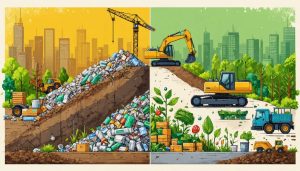
An illustration of a construction site showing a stark contrast between traditional plastic waste and innovative biodegradable packaging solutions used in modern construction practices.

Revolutionary Biodegradable Packaging Transforms Construction Waste Management

In today’s construction landscape, biodegradable packaging materials represent a critical shift toward sustainable building practices, aligning with emerging zero waste initiatives in construction. Recent industry data reveals that construction sites implementing biodegradable packaging solutions reduce landfill waste by up to 60% while cutting disposal costs by 40%. This transformation extends beyond environmental benefits, offering tangible advantages in regulatory compliance, …

A creative arrangement of innovative building materials like recycled plastic bricks, hempcrete, and mycelium insulation against an urban skyline, symbolizing sustainable architecture.

9 Game-Changing Sustainable Building Materials Revolutionizing Architecture

Recycled Plastic Bricks
Recycled plastic bricks are an innovative building material that transforms plastic waste into durable, eco-friendly construction components. The production process involves collecting, sorting, and cleaning plastic waste before shredding it into small pieces. These plastic fragments are then mixed with additives and heated to create a homogeneous mixture that is molded into brick shapes and cooled. The resulting bricks are lightweight, strong, and resistant to moisture, insects, and extreme temperatures.
Using recycled plastic bricks in construction offers numerous benefits. By repurposing plastic …

A futuristic construction site where a manager uses a digital tablet surrounded by holographic blueprints and data interfaces, representing advanced construction resource management.

How Mastering Construction Resource Management Can Supercharge Your Projects

Harness the power of construction resource management to supercharge project success. Effective resource management is the linchpin that aligns manpower, materials, and equipment with project goals. It’s the key to delivering quality work on time and under budget.
Construction firms that master resource planning, allocation, and tracking gain a massive competitive advantage. They’re able to optimize utilization, minimize waste, and adapt nimbly to changes. Top performers leverage cutting-edge technologies like BIM, IoT sensors, and AI-powered analytics to take their resource management to the next level.
In this …

Conceptual image of a construction site implementing zero waste principles with modular structures, greenery, and digital recycling processes.

How Zero Waste Initiatives are Transforming the Construction Industry

Implement waste audit processes to accurately assess and categorize construction site waste streams. Identify valuable materials for recycling or reuse, and collaborate with specialized waste management companies for efficient processing. Design buildings with a focus on sustainability by integrating modular and prefabricated construction methods to reduce excess material use and minimize on-site waste. Prioritize the use of local, sustainable materials and innovative construction technologies to enhance the eco-friendliness of your projects, ensuring compliance with relevant environmental standards. Engage all stakeholders—architects, …