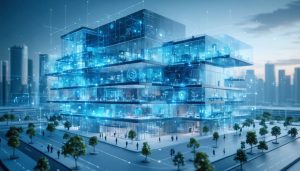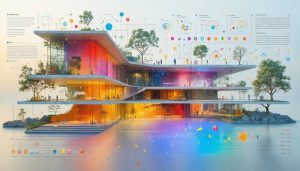

A 3D illustration of a smart building highlighting IoT sensors, AI systems, and interconnected structures with dynamic data flow lines.

Smart Building Systems Are Transforming Energy Management (Here’s How)

Smart building systems represent a transformative leap in modern construction, integrating smart building technology with advanced automation to revolutionize how structures operate, consume energy, and serve their occupants. These intelligent ecosystems leverage IoT sensors, artificial intelligence, and real-time analytics to create buildings that actively respond to environmental conditions, occupancy patterns, and operational demands. By connecting HVAC, lighting, security, and facility …

Conceptual illustration of a digital network connecting global property management operations, featuring a holographic Earth with interlinked major cities and data analytics symbols.

How One Global Property Management is Transforming Construction Operations Worldwide

In today’s interconnected construction landscape, one global property management emerges as the defining approach for multinational real estate portfolios. Leading organizations leverage unified management systems to standardize operations across continents, driving operational efficiency gains of up to 30% while reducing compliance risks by 40%. This transformation from fragmented regional approaches to a cohesive global strategy has become imperative as construction firms expand internationally, facing complex regulatory frameworks and diverse market demands.
The integration of advanced property management technologies, …

A conceptual image depicting a modern building infused with sensory data, alongside representations of the five human senses, illustrating the impact of sensory design in architecture.

Sensory Design: The New Frontier in Construction That’s Transforming User Experience

Sensory design transcends traditional architectural approaches by orchestrating spatial experiences that engage all five human senses, fundamentally reshaping how we interact with built environments. This sophisticated design methodology addresses core human needs through carefully calibrated environmental stimuli, transforming ordinary spaces into immersive, multi-sensory experiences that enhance occupant wellbeing and performance.
Recent neuroscientific research reveals that …

Conceptual image showing a traditional infrastructure asset with an overlaid digital grid, displaying real-time data streams and cybersecurity elements, illustrating the concept of cyber digital twins enhancing infrastructure protection.

Cyber Digital Twins Are Revolutionizing Infrastructure Risk Management

In an era where cybersecurity threats pose unprecedented risks to critical infrastructure, cyber digital twins emerge as a revolutionary approach to safeguarding industrial systems. These sophisticated virtual replicas simulate real-world operations in real-time, enabling organizations to predict, detect, and neutralize cyber threats before they impact physical assets. By creating an exact digital counterpart of operational technology (OT) environments, cyber digital twins provide infrastructure managers with a powerful platform for testing security protocols, conducting vulnerability assessments, and orchestrating incident response …

Split-screen image of a modern, smart office space with advanced lighting and collaborative areas next to a digital display showing brain activity patterns and neural connections.

Smart Buildings Get Smarter: How Cognitive Design Reshapes Modern Architecture

Cognitive design revolutionizes how we create spaces that enhance human performance, wellbeing, and productivity through scientific understanding of mental processes. By merging neuroscience with human-centric architectural design, professionals now shape environments that actively support cognitive function rather than merely housing occupants.
Recent advances in environmental psychology reveal that thoughtfully designed spaces can improve decision-making by 287%, boost creative …

Futuristic building with green walls, smart solar panels, and interactive digital displays, illustrating the integration of technology and nature.

Future-Proof Architecture: How Smart Buildings Adapt to These 7 Core Human Needs

In an era where architectural innovation intersects with human psychology, understanding the seven fundamental human needs has become critical for creating spaces that truly serve their occupants. Modern construction professionals face an unprecedented challenge: designing environments that not only meet technical specifications but also satisfy deep-rooted human requirements for safety, connection, and well-being.
Recent studies in architectural psychology reveal that buildings meeting all seven human needs demonstrate 42% higher occupant satisfaction rates and 31% better long-term functionality. This data underscores a paradigm …

Conceptual visualization of quantum computing disrupting traditional cryptographic defenses with visual elements representing quantum waves breaking through an RSA key.

Quantum Computing Threatens Infrastructure Security – Here’s How We’re Fighting Back

Quantum computing’s emergence represents an unprecedented threat to current cryptographic systems, with experts predicting that quantum computers could break widely-used RSA encryption within the next decade. Organizations must urgently implement quantum-resistant security measures to protect their digital infrastructure against this looming cybersecurity challenge. The convergence of quantum computing capabilities and existing security protocols creates a critical vulnerability window where traditional encryption methods become increasingly susceptible to quantum attacks.
This next-generation computing paradigm will …

Modern cityscape with skyscrapers featuring vertical gardens and living walls, abundant natural light, and water features, illustrating nature's integration into urban architecture for enhanced wellbeing.

Biophilic Design: How Nature is Revolutionizing Urban Architecture

Biophilic design revolutionizes modern urban architecture by systematically integrating nature into built environments, delivering measurable improvements in human health, productivity, and well-being. This evidence-based approach transforms conventional construction paradigms through strategic incorporation of natural elements, living systems, and organic patterns into structural frameworks.
Recent research from the International Well Building Institute demonstrates that occupants of biophilic spaces experience a 15% increase in well-being, 15% higher levels of creativity, and a remarkable 6…

Futuristic construction site displaying sustainable materials, digital twin technology, and solar-powered equipment, highlighting decarbonization strategies in the building industry.

Carbon-Smart Construction: Proven Decarbonization Strategies That Actually Work

Decarbonization stands as the construction industry’s most pressing challenge, with buildings accounting for nearly 40% of global carbon emissions. Leading construction firms are revolutionizing their approaches through three critical pathways: materials innovation, process optimization, and operational efficiency. By implementing science-based targets and embracing circular economy principles, the sector can achieve up to 50% emissions reduction by 2030.
The transformation toward carbon-neutral construction demands immediate action across the entire building lifecycle. From specifying low-carbon concrete alternatives to …

Conceptual illustration of a globe connected with HVAC components, symbolizing international collaboration and innovation in the HVAC industry, with elements of sustainability and technology integration.

HVAC Industry Powerhouses: Key Associations Shaping Tomorrow’s Standards

HVAC industry associations stand as the backbone of professional excellence and innovation in heating, ventilation, and air conditioning. These organizations shape technical standards, drive sustainability initiatives, and foster collaborative relationships that define modern HVAC practices. From ASHRAE’s research-driven approach to ACCA’s contractor-focused programs, these associations collectively represent over 200,000 professionals worldwide and influence more than $80 billion in …