
Illustration showing the integration of traditional Gantt charts and agile kanban boards in construction management with AI analytics enhancing workflow on a modern construction site.

AI-Powered Hybrid Project Management Transforms Construction Efficiency

Combine traditional Waterfall milestones with Agile sprints to maximize efficiency in large-scale construction projects, leveraging both methodologies’ strengths while mitigating their individual weaknesses. Modern hybrid project management, enhanced by AI’s impact on construction management, delivers unprecedented control over complex building initiatives. Leading construction firms have reported 30% faster project completion and 25% cost reduction by implementing hybrid frameworks that merge…

Conceptual image showing a divided cityscape representing the collaboration between public governance and private innovation in urban real estate development, featuring modern buildings, transit systems, and green spaces.

Public-Private Partnerships Are Revolutionizing Real Estate Development – Here’s How

Public-private partnerships (PPP) have revolutionized real estate development, creating a powerful collaboration model that maximizes resource efficiency while minimizing risk exposure. By combining government oversight with private sector innovation, these partnerships have transformed urban landscapes across global markets, delivering projects that neither sector could accomplish independently.
Recent data reveals that PPP real estate developments consistently …

Construction site with AR overlay showing holographic 3D BIM models, viewed through AR glasses by construction professionals, symbolizing the integration of digital and physical realms in modern construction.

BIM + AR: The Future of Construction is Already Here

Building Information Modeling (BIM) merged with augmented reality (AR) is revolutionizing construction project visualization and execution, enabling real-time overlay of 3D models onto physical construction sites. This powerful integration allows construction professionals to detect clashes, verify installations, and make informed decisions directly in the field, reducing errors by up to 40% and accelerating project timelines by 25%.
Today’s construction managers leverage BIM-AR solutions to bridge the gap between digital models and physical reality, transforming how teams interpret complex spatial data and coordinate multiple…

Conceptual illustration showcasing the interconnected components of an off-grid renewable energy system, including solar panels, wind turbines, batteries, and control systems, over a modern building.

Off-Grid Power Systems Transform Modern Building Energy Independence

Off-grid renewable energy systems represent a transformative shift in how we power buildings and communities beyond traditional utility infrastructure. These autonomous power solutions combine solar panels, wind turbines, energy storage systems, and smart controls to deliver reliable electricity without grid dependency. As construction costs decrease and energy security concerns rise, off-grid systems have evolved from remote cabin solutions to viable alternatives for commercial buildings, manufacturing facilities, and entire communities.
The integration of advanced battery technology, predictive analytics, and hybrid power …

Conceptual image depicting a modern construction site with workers, connected equipment, and digital security elements like padlocks and data networks.

Construction’s Digital Security Crisis: Protecting Your Project’s Digital Infrastructure

Digital transformation in construction demands immediate, robust cybersecurity measures as threat actors increasingly target building information modeling (BIM) systems, project management platforms, and connected jobsite equipment. Recent statistics show that 75% of construction firms experienced cyber incidents during their digitalization journey, with an average cost of $5.2 million per breach. Understanding these cybersecurity risks in construction has become mission-critical for survival in today’s interconnected building environment.
Forward-…

Conceptual illustration showing digital fortress representing blockchain infrastructure under attack, with abstract representations of smart contracts, consensus mechanisms, and private key management being targeted by cyber threats.

Critical Blockchain Security Flaws Putting Infrastructure Systems at Risk

Fortifying blockchain infrastructure demands immediate attention as cybercriminals exploit emerging blockchain security challenges with increasing sophistication. Recent attacks on major infrastructure projects have exposed critical vulnerabilities in smart contracts, consensus mechanisms, and private key management systems, resulting in losses exceeding $2 billion across the construction sector in 2023 alone.
Smart contract auditing tools now detect an average of 3.5 critical …

A safety officer in a hard hat using a digital monitoring system at a construction site, surrounded by scaffolding and workers in proper PPE, depicting EHS compliance and safety integration with technology.

How Smart EHS Compliance Keeps Your Construction Site Safe and Legal

Maintaining EHS regulatory compliance in construction demands a strategic blend of proactive risk management, continuous monitoring, and unwavering commitment to safety standards. Recent industry data reveals that companies with robust EHS programs experience 70% fewer workplace incidents and save up to $4 for every $1 invested in safety protocols. Construction leaders must navigate an increasingly complex regulatory landscape while balancing productivity targets and workforce protection.
The stakes have never been higher, with OSHA penalties reaching up to $156,259 per violation in 2024, and heightened scrutiny on environmental …

A digital illustration of a network protected by AI-powered defense systems, featuring a glowing core surrounded by a holographic grid with cyber threats hovering outside.

AI-Powered Network Defense: The New Frontier in Infrastructure Security

Modern network security demands a proactive stance against increasingly sophisticated cyber threats. AI-powered threat detection systems now form the backbone of advanced infrastructure defense, enabling organizations to identify and neutralize threats before they compromise critical systems.
Traditional signature-based detection methods no longer suffice in an era where attackers deploy polymorphic malware and zero-day exploits. Today’s threat landscape requires real-time…

Split image showing an architect working with blueprints on one side and an interior designer with material samples on the other, highlighting their distinct yet interconnected roles.

Beyond Aesthetics: The Critical Boundaries Between Interior Design and Architecture

While both architects and interior designers shape our built environment, the fundamental distinction between these professions extends far beyond aesthetic choices. Architecture encompasses the structural integrity, spatial organization, and exterior envelope of buildings, focusing on how structures interact with their surroundings and meet functional requirements. Interior design, conversely, specializes in optimizing internal spaces through careful selection of finishes, furniture, and ambient elements to enhance human experience and functionality.
This critical differentiation affects project scope, legal responsibilities, and …

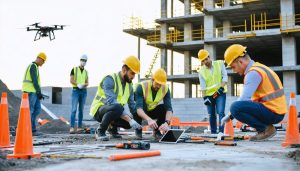
Group of diverse construction professionals analyzing risk assessment plans and tools at a site, emphasizing teamwork and technology in construction risk management.

Smart Construction Risk Management That Actually Works

In today’s complex construction landscape, implementing a robust construction risk management plan stands as the cornerstone of project success. Construction professionals who master the six-step risk management process gain a significant competitive advantage, reducing costly setbacks and ensuring project delivery within scope and budget.
Recent industry data reveals that 30% of construction projects fail due to inadequate risk assessment, while companies implementing structured risk …