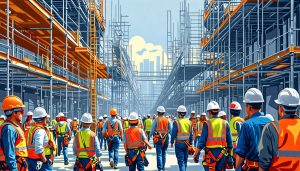

A representation of comprehensive construction safety standards, depicting guardrails, scaffolding, and a worker with fall protection gear.

7 Critical Safety Standards Every Construction Pro Must Know

Ensure strict compliance with OSHA standards, the baseline for construction safety in the U.S. Implement a comprehensive safety training program for all workers, covering site-specific hazards, PPE usage, and emergency protocols. Foster a strong safety culture through management commitment, worker engagement, and regular safety audits. Stay current on evolving industry best practices and technologies to mitigate risks on your jobsites.
Fall Protection Standards
Guardrail Systems
Guardrail systems are a critical component of fall protection in construction. OSHA standards require guardrails to be at least 42 inches …

A futuristic city skyline blending international landmarks, symbolizing global public-private partnerships and their impact on urban development, sustainability, and innovation.

5 Inspiring Public-Private Partnerships Shaping Our Cities’ Futures

Delve into the transformative power of public-private partnerships (PPPs) through inspiring success stories that span the globe. From pioneering smart city initiatives that redefine the future of urban development, to groundbreaking infrastructure projects that connect communities, these exemplary collaborations showcase the immense potential of strategic alliances between government entities and private sector innovators. Witness how PPPs are harnessing cutting-edge technology, sustainable practices, and visionary thinking to tackle …

A group of business professionals sitting at a conference table, discussing sustainable supply chain strategies, with graphical elements representing environmental and social responsibility.

5 Key Pillars of Supply Chain Sustainability: Building a Greener Future

Sustainability in supply chain management is no longer a buzzword – it’s a business imperative. As consumers, investors, and regulators increasingly demand more responsible practices, companies must integrate environmental, social, and governance (ESG) considerations into every aspect of their supply chains. This article explores the five key pillars of a sustainable supply chain: reducing carbon emissions, minimizing waste, promoting fair labor practices, sourcing responsibly, and fostering transparency and collaboration. By examining real-world examples and best practices, we provide actionable insights for supply chain …

Cityscape of an emerging market showcasing a dynamic skyline with ongoing construction projects, highlighting the rapid urbanization and infrastructure development.

Emerging Markets: The Next Frontier for Construction Industry Growth

Explore the vast potential of emerging markets, where rapid urbanization, growing populations, and rising incomes are fueling an unprecedented need for new infrastructure. Capitalize on surging demand for housing, commercial properties, and public works as these dynamic economies lay the foundations for future growth. Leverage resilient technology and innovative building methods to overcome resource constraints, skill gaps, and logistical challenges unique to these developing regions. Establish strategic partnerships with …

Diverse construction workers utilizing modern technology to solve skilled labor shortages on a collaborative building site.

Confronting the Construction Labor Crisis: Strategies to Overcome Skilled Worker Shortages

The skilled labor shortage in the construction industry has reached crisis levels, threatening the very foundation of our built environment. As demand for new projects soars, contractors struggle to find enough qualified workers to complete jobs on time and within budget. This shortage is not just a temporary inconvenience – it’s a systemic issue with far-reaching consequences for the entire sector.
From rising costs and delayed schedules to compromised quality and safety risks, the impacts of the labor crunch are felt across every facet of construction. As experienced tradespeople retire and fewer young people enter the…

A futuristic city with buildings being constructed by advanced 3D printers and construction robots, illustrating the technological revolution in the construction industry.

3D Printing Revolution: How It Will Transform Construction in the Next Decade

The future of 3D printing in construction holds exciting potential to revolutionize the industry over the next decade. From rapid prototyping and customized components to entire buildings constructed with large-scale 3D printers, this transformative technology promises to reshape how we design and build. As materials advance and costs decrease, 3D printing stands poised to dramatically improve efficiency, sustainability, and design possibilities – ushering in a new era of innovation for the …

Conceptual illustration showcasing interconnected gears and digital timelines representing integrated risk management in construction projects.

7 Proven Risk Mitigation Strategies to Prevent Project Management Nightmares

Identify and assess potential risks early in the project lifecycle through comprehensive risk analysis and stakeholder input. Develop a clear risk management plan that outlines mitigation strategies, contingencies, and responsibilities for each identified risk. Implement regular risk monitoring and reporting processes to track the effectiveness of mitigation efforts and adapt strategies as needed. Foster a proactive, risk-aware culture within the project team through open communication, collaboration, and continuous learning from past experiences.
Identify and Prioritize Risks Early

Illustration of construction professionals and researchers collaborating on futuristic building designs using holographic technology, symbolizing innovation and partnership in the construction industry.

Unleashing Innovation: 7 Proven Strategies to Fund Your Groundbreaking Construction Projects

Leverage government grants and tax incentives to fund innovative construction projects that align with national priorities. Forge strategic partnerships with universities, research institutions, and industry leaders to access cutting-edge knowledge and resources. Explore crowdfunding platforms to tap into a broader investor base and validate market demand for your innovation. Develop a compelling pitch that showcases the unique value proposition, scalability, and impact of your innovative solution to attract venture capital and angel investors.
Leveraging Government Grants and Tax Incentives

Conceptual illustration depicting the use of geothermal energy to power a futuristic city, with glowing pathways beneath the earth connecting to the urban skyline, symbolizing the integration of sustainable energy in construction.

The Explosive Rise of Geothermal: Powering the Future of Construction

Geothermal energy is revolutionizing the construction industry, offering a sustainable, cost-effective, and efficient solution for heating and cooling buildings. As the demand for renewable energy surges, geothermal systems are emerging as a game-changer in the built environment. By harnessing the Earth’s constant underground temperatures, these innovative systems provide a reliable, environmentally friendly alternative to traditional HVAC methods. From residential homes to commercial complexes, geothermal technology is being …

An innovative industrial building surrounded by green landscapes and equipped with solar panels, showcasing the integration of eco-friendly design, efficient structure, and comfortable workspaces.

7 Key Elements of Highly Functional Industrial Building Design

Design an industrial building with purpose, efficiency, and safety at the forefront. Consider the specific operational needs and workflow of the facility to optimize layout and functionality. Incorporate sustainable features like energy-efficient systems, natural lighting, and eco-friendly materials to reduce environmental impact and operating costs. Prioritize employee well-being with ergonomic workspaces, proper ventilation, and amenities that promote a healthy, productive work environment. Ensure compliance with all relevant building codes, safety regulations, and industry standards to create a structurally sound, hazard-free facility…